-
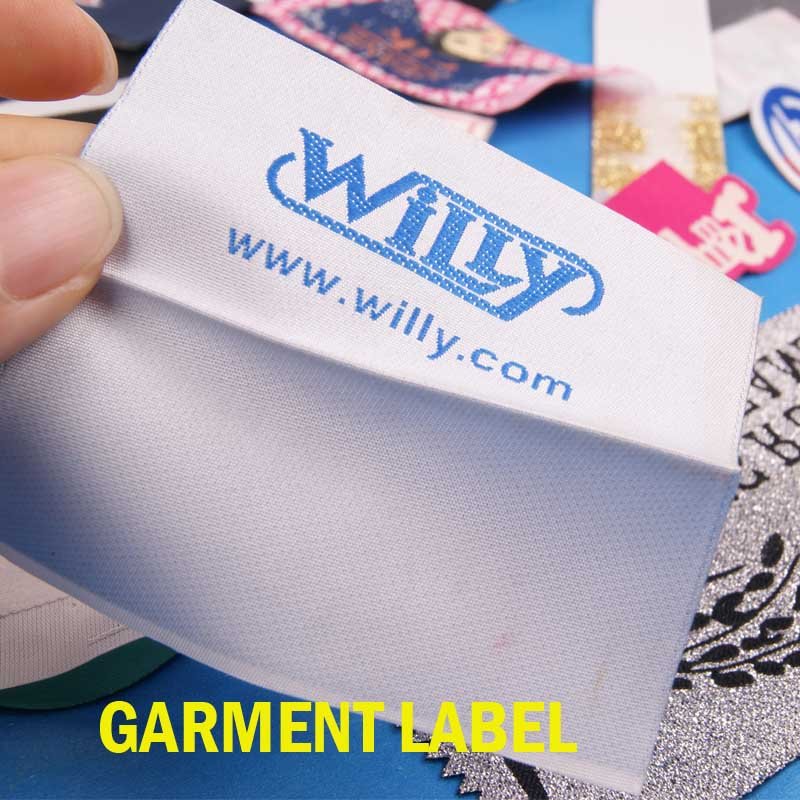
IMG-WV26 · 800×800 Damask weave, macro -
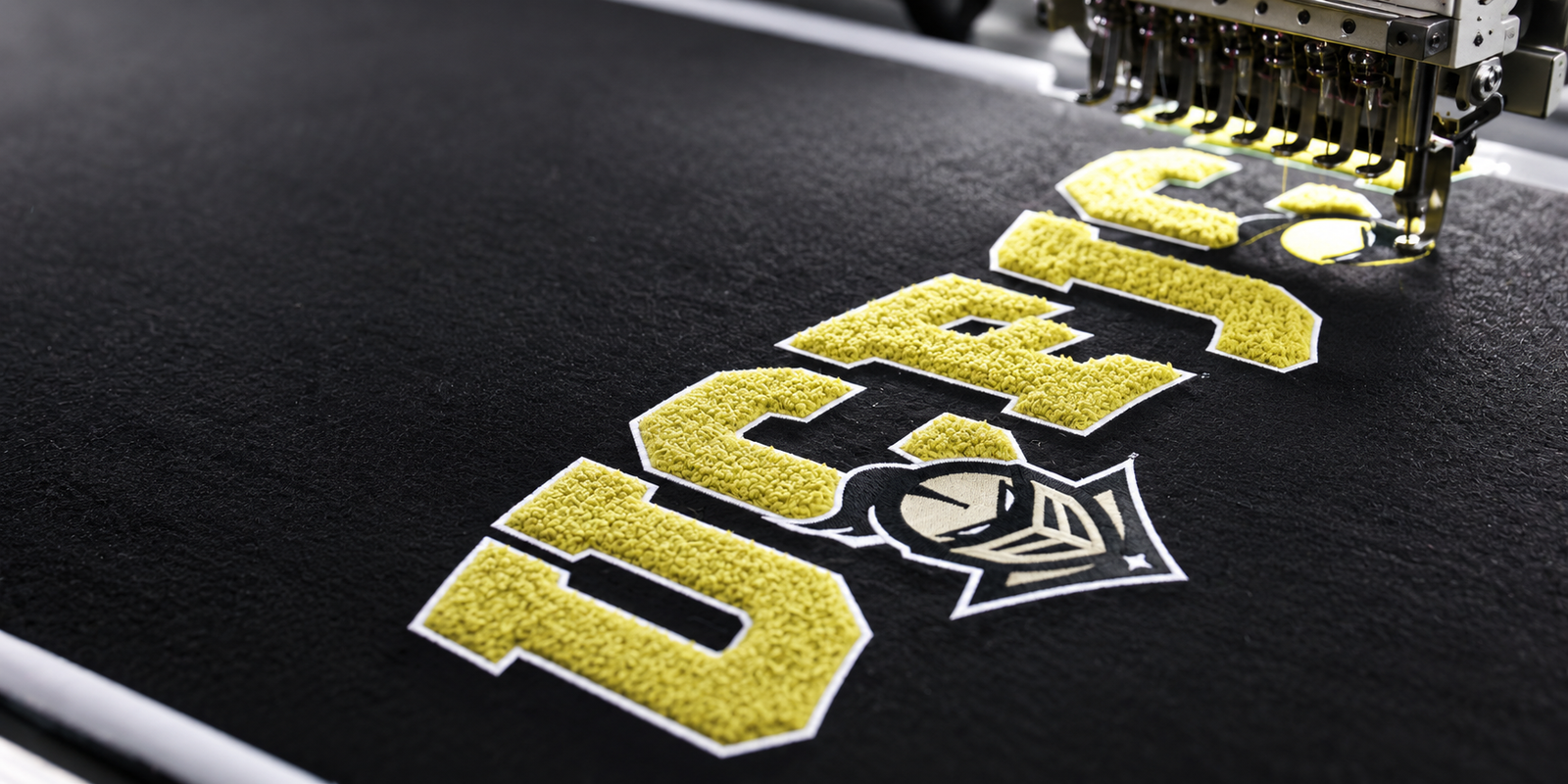
IMG-WV27 · 800×800 Small text at actual size -
IMG-WV28 · 800×800 Satin tape surface -
IMG-WV29 · 800×800 Heat-cut edge
Woven products
What we weave.
Nine items at a time, newest first.
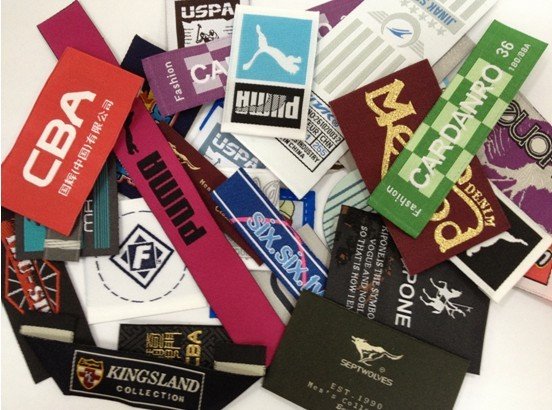
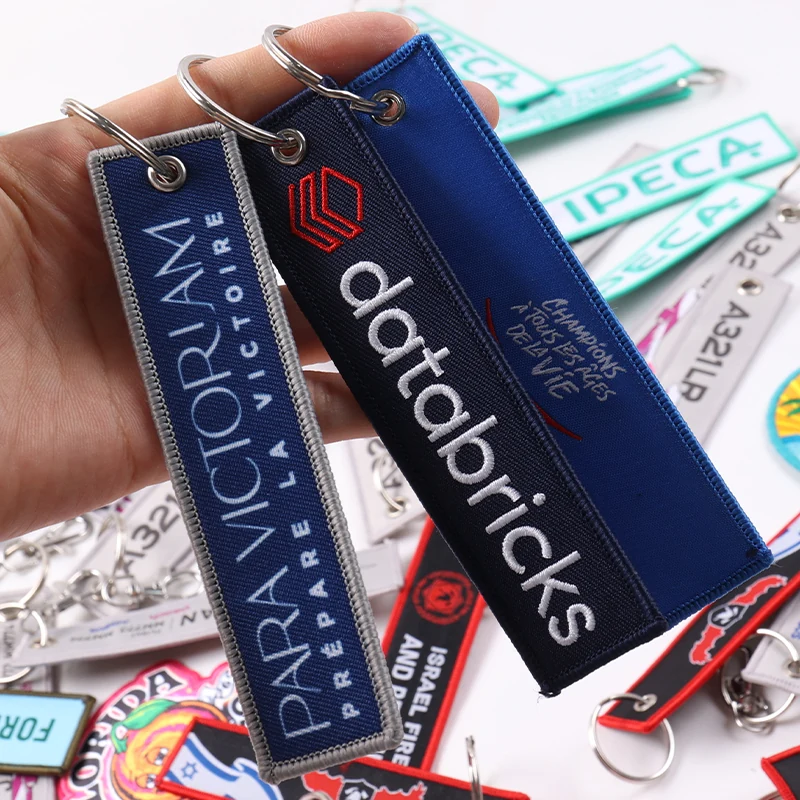
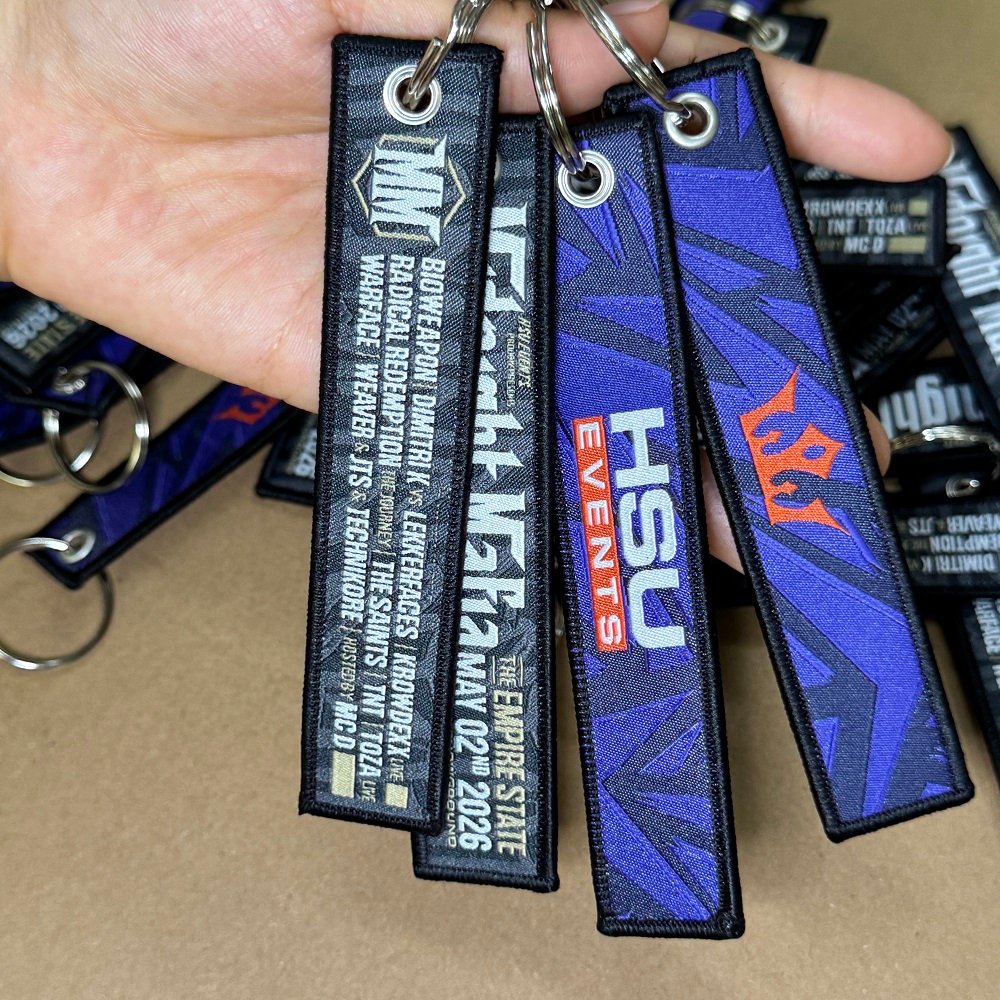
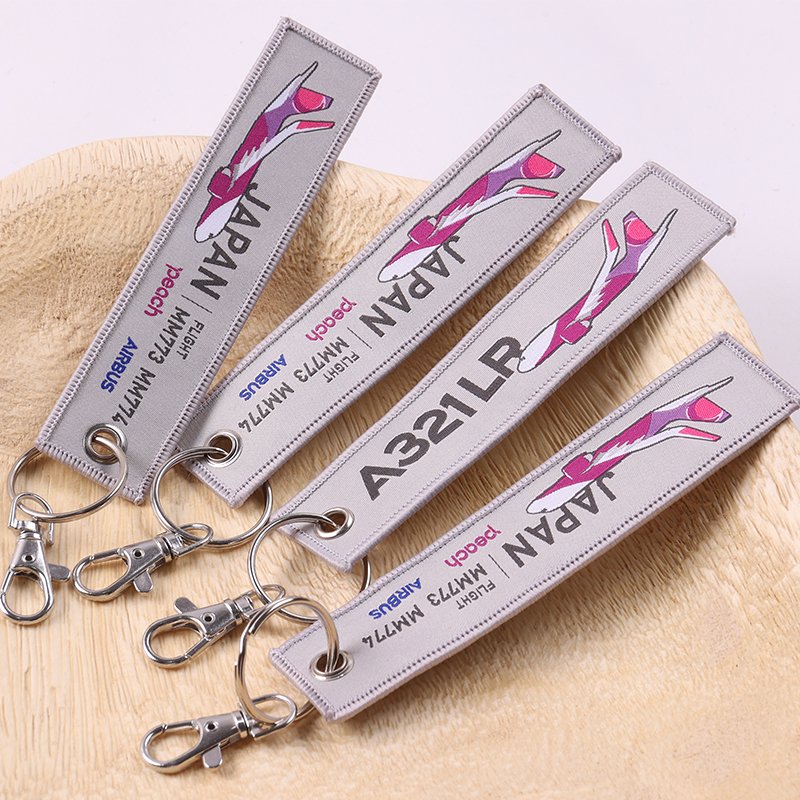
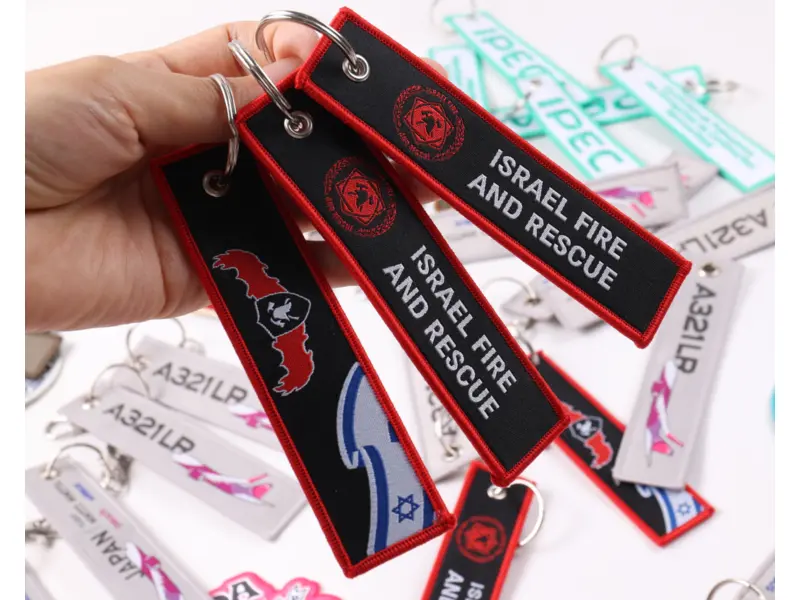
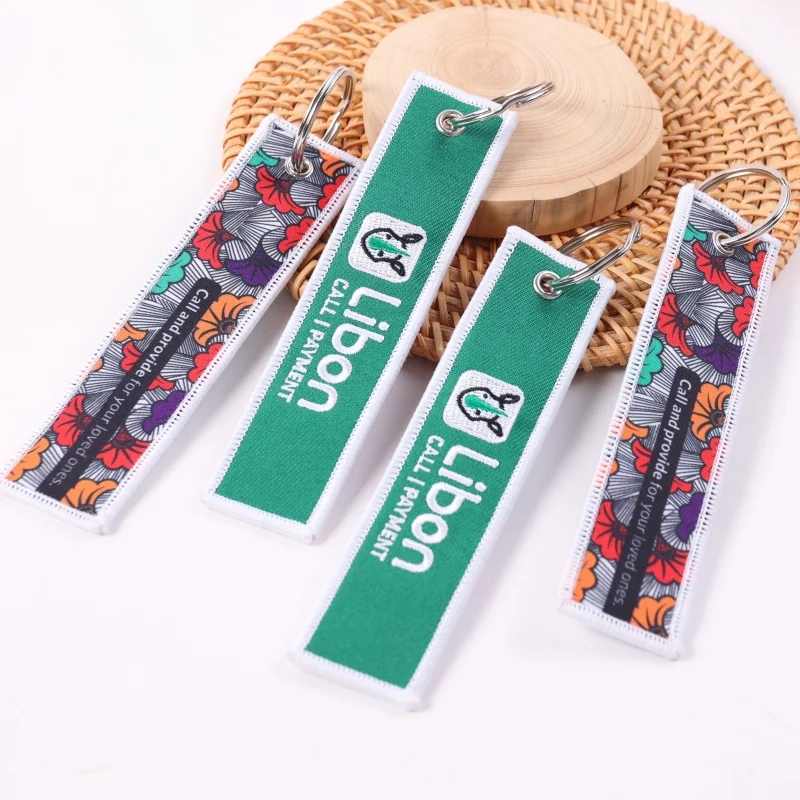
7 woven items
Ask about a woven specification we have not listedThe making
From artwork file to woven piece.
Five stages, each with an owner and a record. The sample you approve is what every piece in the run is measured against.
-
Step 01
Artwork review
Line weight, the smallest text, colour count, thread references and the finished size are checked before anything is quoted.
-
Step 02
Weave draft & proof
The artwork becomes a weave draft — structure and density with the colours set to your references — and a proof goes back for sign-off.
-
Step 03
Sample
A woven sample in the real size and fold, for your approval — often inside 2–3 days when capacity allows.
-
Step 04
Weaving & finishing
Approved tape runs, then cutting, folding, edge finishing and any backing or attachment step.
-
Step 05
QC & packing
Inspected against the sample you approved: weave density, line weight, small text, colour, finished size and quantity.
Weave structures
Six structures to choose from.
The weave sets how fine the detail can go; the format sets how the piece is cut, finished and attached.
Damask weave
The detailed weave used for main labels and emblems: tight density, fine line work and several thread colours in one tape.
Satin weave
A smooth, light-catching tape for main labels and size tabs, where the weave is read as much as the logo it carries.
High-density weave
The densest structure we quote for woven labels — the route when the smallest line of your artwork has to stay readable.
Woven patch, merrowed border
Woven, then cut and finished as a patch with a thread-wrapped border — the badge format rather than the label format.
Woven patch, laser-cut contour
Irregular outlines, lettering and inside cut-outs cut on the contour by our vision-guided machines instead of by hand.
Woven tape, cut to length
Repeat artwork or logo tape cut to length and supplied loose, for a production line that applies it in-house.
Detail limits
What weaving holds, and what it does not.
Weave density decides the smallest legible line — not the marketing photo. It is tested on your artwork at its finished size rather than published as one number.
Two outcomes at the same size
The same artwork woven at two sizes: open letterforms and separated lines on the left, merged thread on the right.
Artwork review tests the smallest element at its finished size and tells you the readable minimum before sampling. Where a design needs gradients, photographs or per-piece data, printing holds it better; where it needs relief and abrasion resistance, PVC does.
What artwork review checks
- Line weight
- Smallest text
- Colour count
- Weave density
- Thread colour
- Fold
- Finished size
- Edge finish
- Attachment
- Backing
Not sure which process your artwork needs? Send it at the finished size and the review will say — including when the answer is not woven.
Applications
Where woven work goes.
Seams, tabs, waistbands and badges — the places where the mark has to read clearly at a very small size.
-
IMG-WV60 · 480×480
Neck & centre back
The main label, folded into the neck or centre-back seam.
-
IMG-WV61 · 480×480
Side seam & hem tabs
A small tab where the brand mark is all it has to carry.
-
IMG-WV62 · 480×480
Waistband & size tabs
Waistband and size labels, where the fold decides how it sits.
-
IMG-WV63 · 480×480
Emblems on apparel & caps
Woven badges finished with a merrowed border or a cut contour.
-
IMG-WV64 · 480×480
Headwear, bags & travel goods
Tabs, tapes and emblems that take daily handling.
-
IMG-WV65 · 480×480
Uniforms, workwear & promo
Repeat programmes where wording and colour come back identical.
Structure
Fold, edge and attachment.
The fold decides where the piece sits, the edge decides whether it frays, and the attachment decides who applies it. All three are confirmed on the spec sheet before sampling.
Fold options
-
End fold
Folded at both ends, for a label caught in a seam.
-
Centre fold
Folded once in the middle — the common choice for centre-back and side-seam labels.
-
Miter fold
Corners folded to the reverse, for a label sewn on all four sides.
-
Loop fold
Folded back on itself to form a loop, for a tab that hangs free.
-
Straight cut
No fold. Sewn flat or supplied loose.
Attachment
-
Sewn into a seam
The label is folded and caught in the seam on your own production line.
-
Sewn flat
The label sits on the surface and is stitched around the edge or at the ends.
-
Supplied loose
Cut to length and packed loose, applied by your line.
-
Adhesive or hook-and-loop
Where a label needs a backing structure, the patch options — iron-on, heat-seal, adhesive, hook-and-loop — are confirmed for the label.
Edge finishes
-
Woven edge
The tape keeps its own selvedge: soft and flat against the skin.
-
Heat-cut edge
Sealed by heat, giving a clean edge with no loose ends — the standard for a cut label.
Manufacturing
Cut, finished and checked under one roof.
Weaving runs to the sample you approve; the cutting, backing, finishing, inspection and packing happen in our 7,000 m² facility in Guangzhou, under one production record.
7,000 m²
Owned plant
Cutting, backing, finishing, inspection and packing in one building.
80+
Staff
Finishing and inspection teams working from one specification.
30+
Vision cutting machines
Camera-guided contour cutting for patch outlines, lettering and inside cut-outs.
4
Backing structures
Iron-on / heat-seal, hook-and-loop, self-adhesive and sew-on, applied on our own finishing line.
Cutting and contour finishing on the vision-guided line that also cuts our patches.
Weave density, thread colour and the smallest text checked against the approved sample.
Counting, packing and carton marks before the shipment leaves the plant.
Keep exploring
The pages buyers read next.
The woven range carries the specification; the process and procurement pages cover material choice, artwork, samples and dates.
- Woven Patches Full specification
- Woven Labels Fold, edge and attachment
- Brand Labels Woven, printed, PVC & leather
- Embroidery Process When a raised stitch is the point
- Chenille Process Raised yarn on felt
- PVC / Rubber Process Moulded 2D and 3D
- Artwork Review What to send
- Samples & Approval How a sample is signed off
- Pricing & MOQ How a quote is built
- Knowledge Guides and case studies
Page last updated · Maintained by the LOVECOLOUR artwork and technical team in Guangzhou
FAQ
Woven questions.
Short answers to what buyers ask before sending artwork. Anything project-specific is confirmed in writing at review.
Should my design be woven or embroidered?
They are not a better-and-worse pair; the artwork decides. Embroidery gives a raised, tactile surface and suits bold shapes, borders and larger lettering. Weaving holds fine lines, small text and dense logos at the size a label or badge actually is, which is why it is the route for logo-heavy artwork. Send the artwork at its finished size and we will say which of the two reproduces it.
How small can the text be on a woven patch or label?
It depends on the weave density, the number of lines and how dense the logo is around the text. We test the smallest element of your artwork at the actual finished size and tell you the readable minimum before sampling, rather than quoting one figure that would be wrong for half the pieces we make.
What artwork do you need for a woven order?
Vector artwork — AI, PDF, EPS or SVG with fonts outlined — is ideal, and a high-resolution raster file also works. Artwork review then checks line weight, the smallest text, colour count, thread references, the fold and the finished size before the weave structure is confirmed.
Can a woven patch carry a border and a backing?
Yes. A woven patch is finished either with a thread-wrapped merrowed border or with a contour cut along the artwork outline on our vision-guided cutting machines. Backing follows the same four structures as our other patches — iron-on / heat-seal, hook-and-loop, self-adhesive and sew-on — and is confirmed on the spec sheet before sampling.
What is the MOQ, and does weaving differ from embroidery?
Each product has its own standard MOQ, and for many custom items it starts at around 100 pieces. A woven structure carries a loom setup that an embroidered patch does not, so woven minimums are usually structured differently, and below the standard MOQ the unit price can increase. The figure is confirmed for your specification rather than published as one number.
How long does a woven order take, and can you rush it?
Bulk production usually takes 7–12 days after artwork approval, and a sample can be ready in about 2–3 days when capacity allows. Rush orders are reviewed case by case against production capacity, material, artwork status and shipping method, so a rush date is confirmed rather than promised.
Direct factory collaboration
Send artwork, get a real answer.
Include the finished size, quantity, fold and how the piece will be attached. We test the smallest detail at that size, recommend the structure that holds it, and come back with a factory-direct quote — or tell you plainly that a different process suits the design better.