One Brand, Three Accessories: Coordinating Patches, Labels and Keychains
A patch on the outside of a jacket, a label sewn into the garment and a keychain included with the order can make a collection feel unmistakably connected. But producing all three from the same logo file does not guarantee they will look like a family.
Each accessory has a different surface, scale and job. The patch must be recognizable on the garment. The label must stay readable after it is folded and sewn. The keychain has to work as a piece of merchandise someone would actually keep. Coordinating them means deciding which brand details must stay consistent—and which details should change to suit the product.
The project below is an illustrative production scenario, intended to show how a buyer and manufacturer can plan this kind of range.
One Collection, Three Ways Customers Encounter the Brand
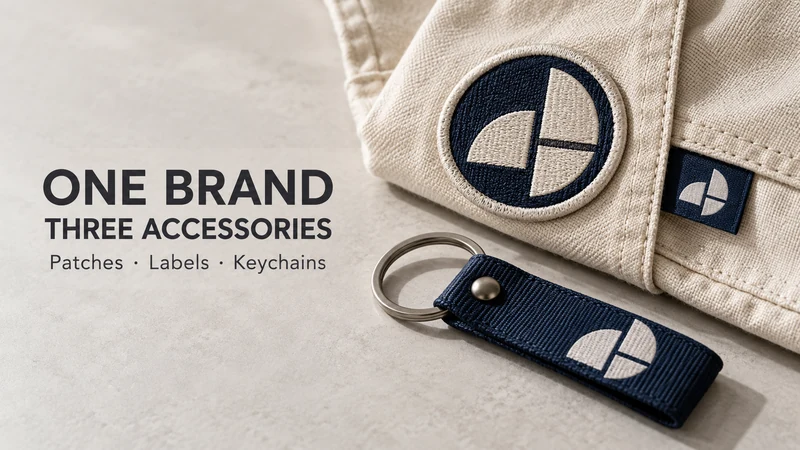
Consider an apparel brand preparing a jacket launch. The buyer wants a visible logo patch for the jacket, a woven label for the garment and a keychain that can be sold or included in a launch pack.
These items do different work. A customer might notice the patch across a room, find the label when checking the garment and use the keychain long after the packaging is gone. That gives the brand three useful touchpoints—but also three chances for the logo to become inconsistent.
The first decision is where each item belongs in the collection:
| Accessory | Intended use | Key design decision |
|---|---|---|
| Embroidered patch | Visible jacket or bag branding | What details remain clear at the chosen patch size? |
| Woven label | Garment identity at the neck, hem or seam | What remains visible after folding and sewing? |
| Branded keychain | Retail merchandise or a launch-pack extra | Which shape and material make it useful beyond the campaign? |
Before selecting materials, the buyer should agree on those roles. If the keychain is a retail product, its finish and presentation may need more attention than an item packed as a giveaway. If the patch is the collection’s main visual feature, its size and placement deserve approval on an actual garment—not only on a screen.
How Do You Adapt One Logo to Three Materials?
The starting point is a single approved brand file. From there, each accessory needs artwork prepared for its own production method.
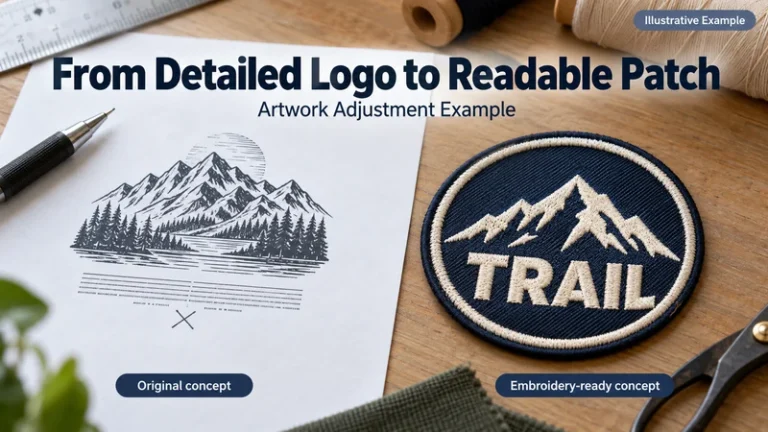
For the embroidered patch, thread gives the logo texture and presence. It can also make very fine lines or tiny lettering harder to read. The practical fix may be to enlarge a detail, increase the space between letters or remove secondary text that contributes little at the finished size.
The woven label has almost the opposite challenge: it is usually small, and part of it may disappear into a fold or seam. Its artwork should be judged by the visible area after sewing, not just the dimensions on a specification sheet. A beautifully detailed proof is not useful if the brand name sits inside the seam allowance.
For the keychain, the decision depends on its material and shape. A fabric strap can carry a textile interpretation of the logo that feels connected to the patch and label. A different keychain material may call for a simpler silhouette. One relevant example is LOVECOLOUR’s woven label keychain with embroidery detail, which shows how woven and embroidered branding can appear together on a short fabric strap. Buyers considering other formats can also review the keychains and small merchandise range.
The goal is recognition, not identical construction. Keep the brand’s main shape, lettering style and color direction consistent. Then let the patch, label and keychain use the amount of detail each can reproduce well.
Approving Colors and Sizes Without Relying on a Screen
Suppose the brand’s main colors are navy and cream. That sounds straightforward until the samples arrive. Embroidery thread, woven yarn and keychain material can reflect light differently. Two materials may follow the same color reference and still look different when placed next to each other.
A buyer should therefore send the original color references and review the physical samples as one set. Check them in ordinary daylight and against the garment fabric. Ask whether the products feel consistent together, rather than expecting every material to have an identical surface appearance.
Size needs a similarly practical check. A large patch can support a bolder logo; the label may need a simplified version. For the keychain, check both the logo size and the finished product in someone’s hand. An accessory can look well proportioned in an enlarged artwork proof and surprisingly small when attached to a real key ring.
This is the moment to put the samples where they will be used:
- Position the patch on the intended jacket or bag.
- Fold and place the label at the planned seam.
- Attach the keychain to keys or a bag.
- Lay all three together and compare the brand details.
That simple review catches problems a separate approval email for each product may miss.
Where Multi-Product Approvals Can Go Wrong
A common mistake is writing “logo approved” when only the original artwork has been approved. The buyer and manufacturer may then assume that the same approval covers three sizes, three materials and three different finished items.
It is clearer to keep one master brand reference and one approval record per accessory. Each record should identify the finished size, artwork version, material colors, construction and attachment details. For the patch, that includes its edge and backing or sewing method. For the label, it includes the fold and usable logo area. For the keychain, it includes the strap or body, ring and other hardware.
If a detail changes after sampling, note which SKU the change affects. A small lettering adjustment on the label does not automatically mean the patch and keychain artwork should change too. Buyers reviewing a supplier’s inspection approach can refer to the quality control page and ask how approved samples are used when checking the finished goods.
Packaging and Delivery: Keep the Three SKUs Easy to Identify
The collection may be visually coordinated, but the order still contains three separate products. Packaging instructions should make that distinction clear.
For example, the brand might want patches shipped to a garment workshop, labels delivered to a sewing partner and keychains packed for its own warehouse. Or it might want all three items prepared as complete launch packs. These are different handover plans. They should be agreed before bulk packing, along with the quantities and identifiers for each SKU.
A useful packing brief answers a few plain questions: Are the accessories packed separately or as sets? Which color and design version belongs to each SKU? What information should appear on each outer carton? Who will attach the patches and labels to the garments?
For a buyer managing several suppliers or delivery locations, these details are as much a part of the product as the logo. The most carefully matched colors will not help if the warehouse cannot tell which carton contains which accessory.
What Should the Buyer Send Before Requesting Samples?
A good first inquiry does not need a finished technical drawing for every item. It does need enough information for a useful artwork and production discussion. Send:
- The original logo artwork and available color references.
- The intended garment or merchandise application.
- Approximate dimensions and quantities for each accessory.
- Preferred patch attachment, label position and keychain format.
- Whether the products will be delivered separately or packed as sets.
- Any launch or handover date that affects the sampling plan.
Photographs of the garment or a simple placement sketch are particularly helpful. “A patch for a jacket” leaves a lot open; a photograph showing the proposed position makes the conversation much more concrete.
A Coordinated Range Is Approved Together
The strongest version of this project is not three accessories that happen to carry the same logo. It is a range in which the patch feels right on the jacket, the label remains clear once sewn, and the keychain is useful enough to earn its place in the collection.
Review each sample for its own construction. Then place all three together before bulk approval. That final comparison is where a collection starts to look intentional.
If you are planning custom brand accessories for an apparel or merchandise launch, send your artwork, intended uses, sizes and quantities through the contact page. Those details provide a practical starting point for discussing artwork, samples and packing.
FAQ
Can the exact same logo file be used for patches, labels and keychains?
Use it as the master reference. The production artwork may need different line thicknesses, spacing or levels of detail for each material and finished size.
Should all three accessories use exactly the same color?
They should follow the same approved brand color direction. Review physical samples together because thread, woven yarn and other materials can make a color appear different.
Which sample should be approved first?
Start with the item that sets the collection’s visual direction—often the most visible patch—while reviewing the label and keychain at their real finished sizes. Approve the three together before bulk production.
What is most often overlooked on a woven garment label?
The area lost to folding or sewing. Confirm where the logo will remain visible after the label is attached.
Can the accessories be packed together as one retail set?
That can be discussed as part of the order. Specify which items go into each set, their quantities and who will assemble the final pack before approving packaging.
What information helps a manufacturer quote this type of project?
Artwork, product choices, approximate sizes, quantities, material or attachment preferences, packaging requirements and the intended application for each item.