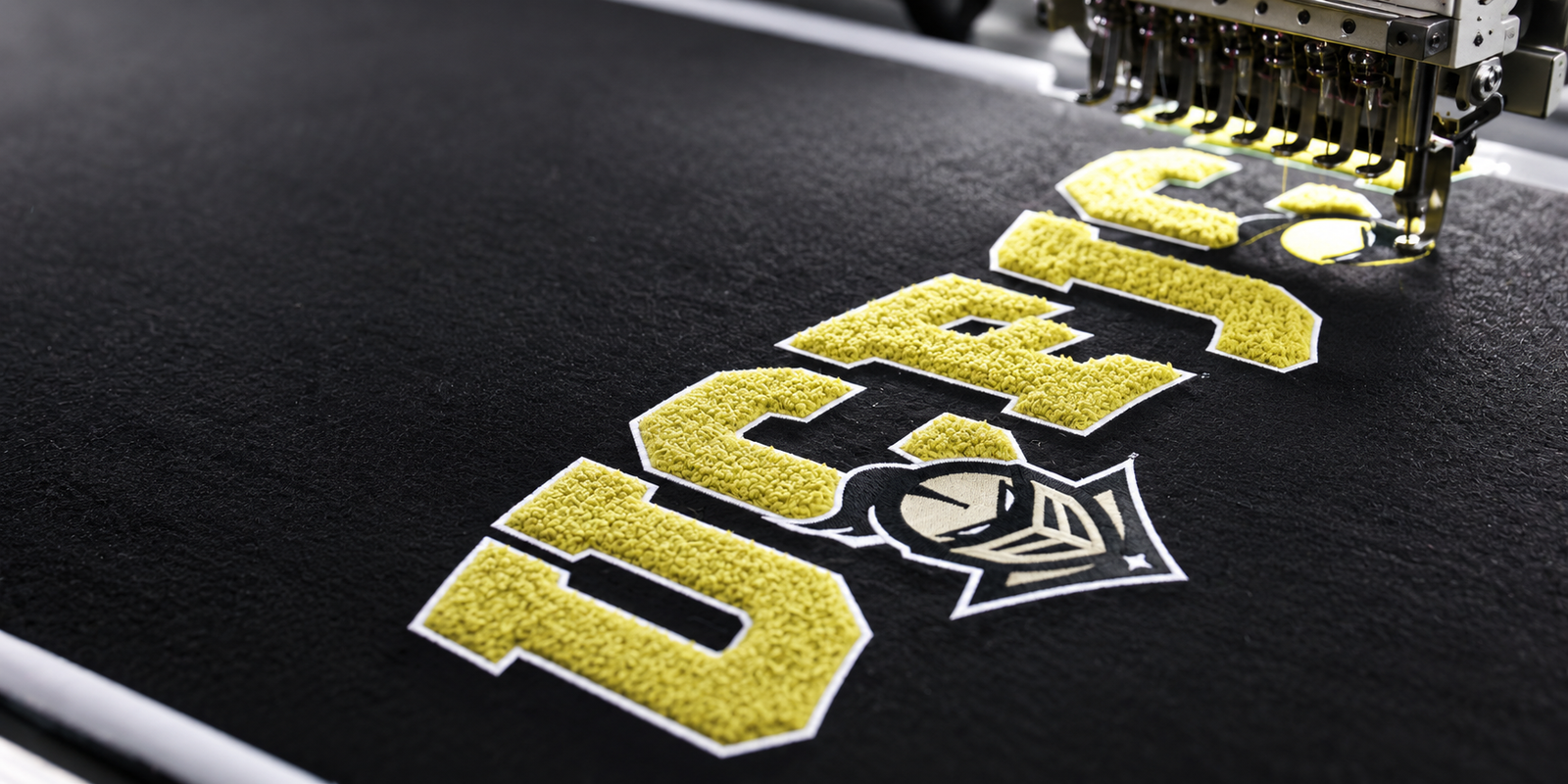
The published figure
One figure, stated in the words we already publish.
Sample turnaround, transit time and a rush turnaround are all real questions. None of them is answered with an estimate here: the material settles them per order, so they are confirmed on your order instead of published as a promise.
- Production lead time
- Usually 7–12 days after artwork approval. Rush orders accepted. This is the wording our product pages carry, and it is the only lead-time figure on this page: a production window, not a door-to-door date.
- Counted from
- The production release — the five conditions below, all met. Not from the first message, the first file or the first price.
- Sitting outside it
- International transit, customs and any handling at the destination. Arrival is given as an estimated arrival inside a delivery range, with the risk disclosed, rather than as an absolute arrival date.
- Confirmed where
- On the order, in writing, together with the delivery requirement and — where the project has a fixed date — the date the goods have to be in hand.
- If your date cannot move
- Say so at the start, with the in-hand date. A date that has to be held is a rush decision, and it is handled as one rather than absorbed quietly.
- Where the sample sits
- A physical sample is produced before bulk production, and release requires the sample or artwork to be approved. The material gives no sample turnaround, so this page states none.
The release gate
The clock starts when the order is released.
Five conditions, all of them true, and the production window begins. Nothing before them counts — which is why two identical orders can carry different dates without anything having gone late.
All five, before the clock starts
- 01 Order information complete
- 02 Final artwork ready
- 03 Sample or artwork approved
- 04 Payment status meets the agreement
- 05 Delivery requirement confirmed
It does not start from
- The first inquiry
- The first logo you send
- The first quotation
- A verbal OK
Incomplete production data blocks release even after payment has arrived: the order file is completed and reconfirmed first, and only then is the order released. A verbal OK or an older artwork version cannot release it either, because only the final approved version is allowed to reach the line.
What moves a date
Seven things sit between a quotation and a ship date.
Most of them are decided before production starts, which is why the earlier they are settled the fewer of them can move anything. Each tile below is the rule behind the delay it prevents.
Artwork that needs another pass
Sample rounds
Quantity and capacity
Process and material
Packing and labelling
Your season, event or launch
How fast confirmations come back
A quotation is built from the file, the product type, the size, the quantity, the application, the backing and the destination country, and it stays valid for 30 days. Once it has expired, material, labour, quantity, FX, freight and capacity are re-confirmed rather than quietly carried over — the same applies to a slot that was reserved but not released.
Rush orders
A rush date is confirmed by production, never promised by a reply.
Rush orders are accepted, and the request is worth making early: the checks below take longer to answer than the message that asks for them.
Checked before a rush date can be committed to
- 01 Capacity
- 02 Material
- 03 The process itself
- 04 Artwork status
- 05 The sample requirement
- 06 The shipping method
- 07 The date you need it in hand
- Sales cannot commit to a rush schedule on its own. Production confirms feasibility first, against the same conditions that release any order.
- A rush order may carry an extra cost. It is quoted before it is committed to, never added afterwards.
- Holding a date that has already moved re-opens the schedule as a rush rather than squeezing the standard window.
- Even then, arrival stays an estimated arrival inside a delivery range with the risk disclosed — not an absolute arrival date.
No expedited turnaround is published on this page. The material fixes a rush date per order, against the checks above, so a number printed here would be a promise nothing has verified. What the factory can do is confirm the schedule honestly, which is why the first answer to a rush request is a set of conditions rather than a date.
Responsibility
Who carries what when a date moves.
A lead time is only useful if the buyer knows which part of it the factory owns. This is that boundary, in the material's own terms.
A late shipment, wrong documentation, an arrangement error.
Carrier delay, customs, weather, a flight or port problem.
Artwork, sample approval, payment, a missing detail.
You are not left to chase the answer. Artwork and sample confirmed, bulk production started, production finished, QC completed and shipment released are reported without being asked, and anything that goes wrong is reported immediately rather than after a question. Sales stays your single point of contact from the first file to the delivery record, while logistics and the merchandiser work the case internally.
Keep reading
The pages that hold the rest of the answer.
Each one takes a stage of the flow this page has just put a date on — the file, the sample, the shipment, the order.
- How We Work The order, stage by stage
- Samples & Approval What is approved and when
- Global Shipping & Delivery Packing, documents & arrival
- Start a Project Send artwork & the in-hand date
Prefer to ask directly? Write to Bella at info@lovecolour.com.cn or call +86 183 1957 4312 — the artwork, the quantity, the packing requirement and the in-hand date all reach the same desk.
Page last updated
Fixed-date project?
Send the file and the date it has to land.
Artwork, quantity, packing requirement and the date the goods have to be in hand. The first answer says what the file needs and what the schedule can honestly hold — a rush included, and confirmed by production rather than by a reply.