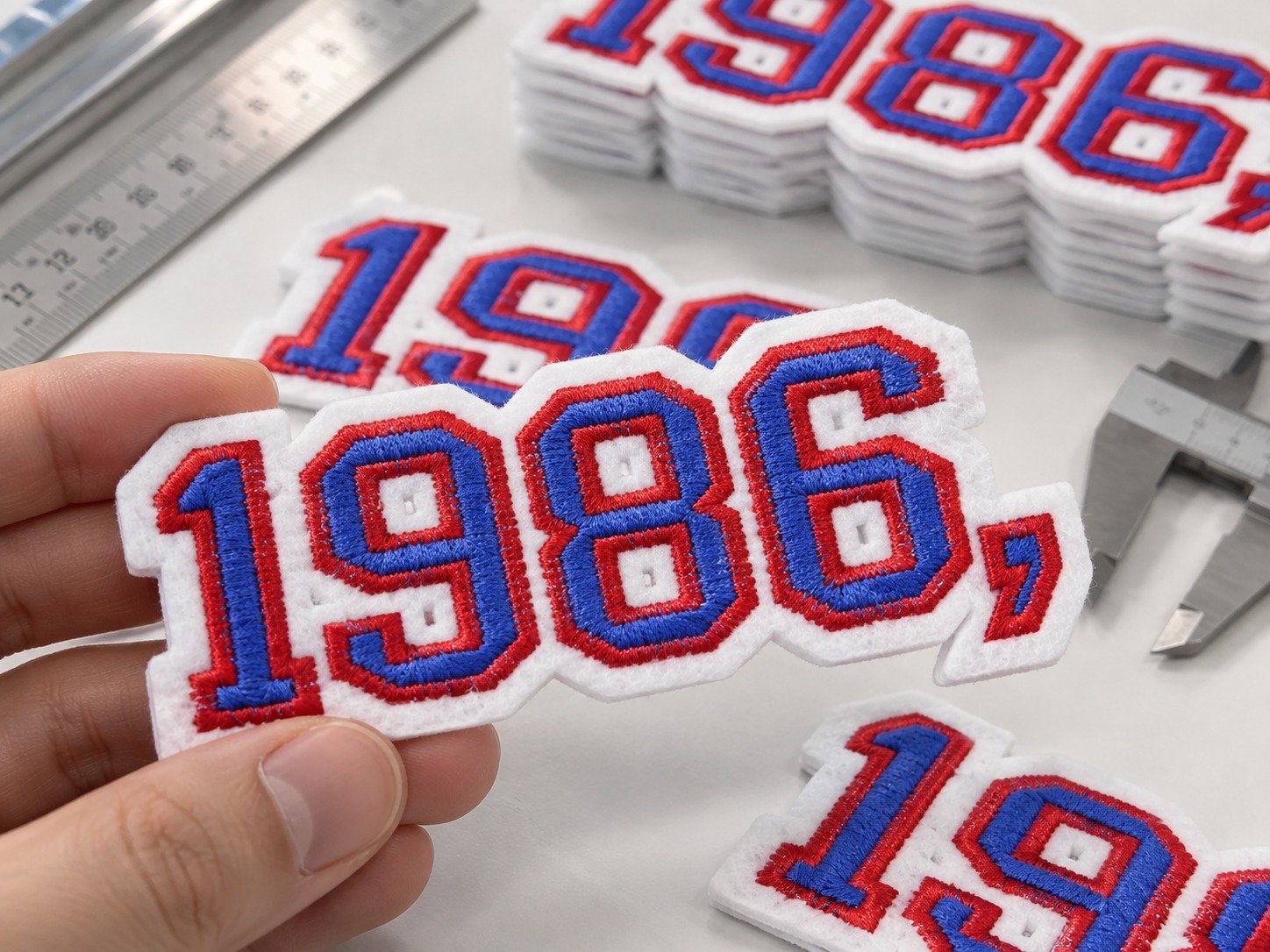
The reason for a sample
A screen cannot confirm a product.
A digital proof shows the design, the layout and the colour count. It cannot show what a thread does on a woven ground, how a moulded layer sits at the edge, or what the piece feels like in the hand. A physical sample is how a specification stops being an intention and becomes something you can hold, measure and approve.
Not every order needs one. Production can run from the final approved production artwork alone — and where a sample is made and approved, that sample becomes the standard the bulk run is measured against.
Orders where we advise a physical sample
- New design
- Complex artwork
- Dense small text
- High colour requirement
- Special process
- Special material
- Large order
- Important event
- High consistency requirement
Where the sample route is advised, the reason is the risk in the order rather than the order's size alone. A project with a high colour requirement is advised to approve a physical sample rather than a screen, because a colour reference does not survive a move from thread to moulded rubber to woven fabric identically.
Stage by stage
From a file arriving to an approved sample.
Five steps, in the order they run. Under each one is what that step produces, because an artefact you can check is what keeps the stage honest.
-
Step 01
Artwork and the brief
The file, plus what the piece has to do with it: product type, size, quantity, material and backing, application, packaging requirement, destination country and — for a dated project — the date it has to be in your hand.
What it produces A workable brief. Nothing is quoted from a file that has not been read, and a quick reply is never an inaccurate rough price.
-
Step 02
Engineering assessment
The file is read against the process that would make it: logo proportion, small-text clarity, fine-line feasibility, stitch direction and density, thread colour, border structure, finished size and backing for stitched work; colour matching, layer definition, small-text feasibility, line width, surface effect, edge quality, dimensions and backing strength for moulded work.
What it produces A process recommendation, and a plain statement of what the design carries at the size you need — including where it does not, and what to change.
-
Step 03
Production artwork and digital proof
The production file is built and shown back to you as a digital proof: the base confirmation everything physical is made from, and the last point at which a wrong colour count or a stray detail is still cheap to fix.
What it produces Production artwork, and a proof you can comment on line by line.
-
Step 04
Physical sample
Where the work calls for one — the conditions listed below — the piece is produced as a physical sample. Custom samples are normally charged, and any reduction or offset against a bulk order is approved before it is promised rather than assumed.
What it produces A piece in your hand, made on the sample line from the approved file.
-
Step 05
Your comments, then approval
Comments come back against the digital proof and the finished size. The file is corrected and the approved version is recorded: from that point the approved version is the only one that can be produced, and an earlier file cannot reach the line by anyone.
What it produces An approved sample, with the artwork version it was made from, attached to the order number.
Steps 02 and 03 are the artwork review in detail: Artwork Review covers what a file has to carry before anything physical is built from it. How a sample is charged, and what an approval covers, are set out below.
The standard
What the approval actually covers.
An approved sample is not one decision, it is four. Each of them is recorded against the order number, which is why a repeat starts from a known specification instead of a conversation.
The finished dimensions
The colour, and how it was confirmed
Process, edge and backing
Packaging and label
Where something is still undecided when the sample is approved, it is raised then rather than assumed: an undecided backing or packing instruction is a decision the machine operator would otherwise make on your behalf.
Changes
Nothing is changed quietly, and nothing is produced from a guess.
Approval is a point in the process, not the end of the conversation. These are the four rules that decide what happens when something moves after it.
-
01
The approved version is the only version
-
02
A serious risk found after you confirmed
-
03
A change after bulk has started
-
04
A new idea after the bulk has been approved
A change is not refused for being inconvenient: it is quantified — feasibility, extra cost, lead time — and then it is your decision, taken with the numbers in front of you.
Sample & bulk
What the bulk run is measured against.
With a physical sample, the production standard is the final production artwork plus the approved physical sample. Without one, it is the final approved production artwork. Neither standard is a verbal approval, and both are attached to the order number rather than held by the person who handled the order.
Inspection compares the run with that standard rather than with memory: first piece or first batch approval, in-process inspection, finished-goods inspection and pre-packing review. A defective piece is removed rather than counted as qualified and is remade to the full quantity; unless a production tolerance was agreed before the order, the order quantity is delivered in full.
A sample that stays unapproved does not hold a slot. It is reminded on a fixed rhythm and then paused — the original production slot is not kept, and the lead time is reconfirmed when the order restarts. If a pause runs past the validity of a quotation or a schedule, price, material, capacity and lead time are reconfirmed instead of being carried over silently.
The same standard is what makes a repeat order possible: the approved sample and the approved artwork version are quoted from, not rebuilt. Quality control in detail sets out the inspection stages, and Repeat Orders covers the reorder itself.
Questions
What buyers ask about this stage.
Six questions that come up before a sample is made. Each answer is the rule this page is built on, not a reassurance.
Does a sample cost anything?
A custom sample is normally charged. Where a project justifies it, a reduction or an offset against the bulk order can be agreed — and it is approved internally before it is promised rather than assumed. The sample fee is its own line on the quotation, so it is never buried in the unit price.
How many rounds of changes can I make?
No fixed number of rounds is published. What matters is the record: comments are made against the digital proof and the finished size, each round produces a version, and only the final approved version can be produced. A change requested after approval is handled as a change — feasibility, extra cost and lead time are worked out, and you reconfirm before work continues.
Do I need a sample for every order?
No. A physical sample is advised where the risk sits: a new design, complex artwork, dense small text, a high colour requirement, a special material or process, a large order, an important event or a high consistency requirement. Otherwise production follows the final approved production artwork, and that file is the standard.
How do we agree the colour?
Pantone is used as the production reference, and it is not a 100% physical guarantee from one material to another — thread, moulded rubber and woven fabric each read a colour differently. Confirmation comes from a thread colour card, a PVC colour sample, a material sample or the physical sample. Where no Pantone is supplied, the closest colour is matched from the artwork and the difference a screen introduces is pointed out before the sample is made.
What happens if the sample is never approved?
It is reminded on a fixed rhythm and then paused. The original production slot is not held, and the lead time is reconfirmed when the order restarts. If the pause runs past the validity of the quotation or the schedule, price, material, capacity and lead time are reconfirmed rather than carried over.
Is the approved sample kept for later orders?
Yes. The approved sample and the artwork version it was made from are recorded against the order number, so a reorder is quoted against a specification that already exists instead of being rebuilt from the beginning.
Keep reading
One question, one page.
Each guide below takes one part of the order above and answers it properly — what to send, what a sample costs, what a date depends on.
- How We Work The ten-stage buying process
- Artwork Review What the file has to carry
- Lead Times & Rush Orders Dates & rush scheduling
- Start a Project Send your artwork
Page last updated
Start here
Send the file, and the sample path starts.
Artwork, product, quantity, backing, packing and the date you need it reach the same desk. The first answer is what the file needs and how it will be made — not a number pulled out of the air.