 01
01
الشارات المطرزة
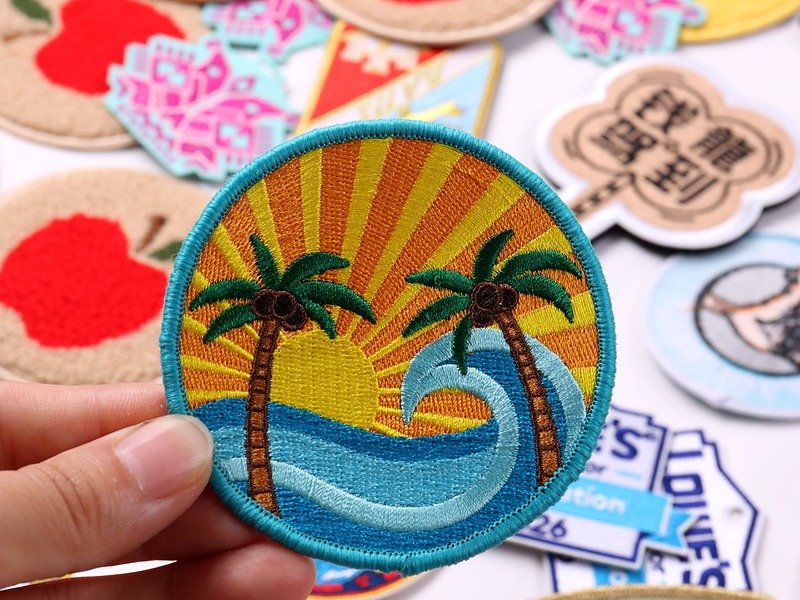
Stitched with coloured thread on twill, felt or canvas. The right process when you want a raised, tactile surface and a border that reads as a badge at a distance.
Process guide
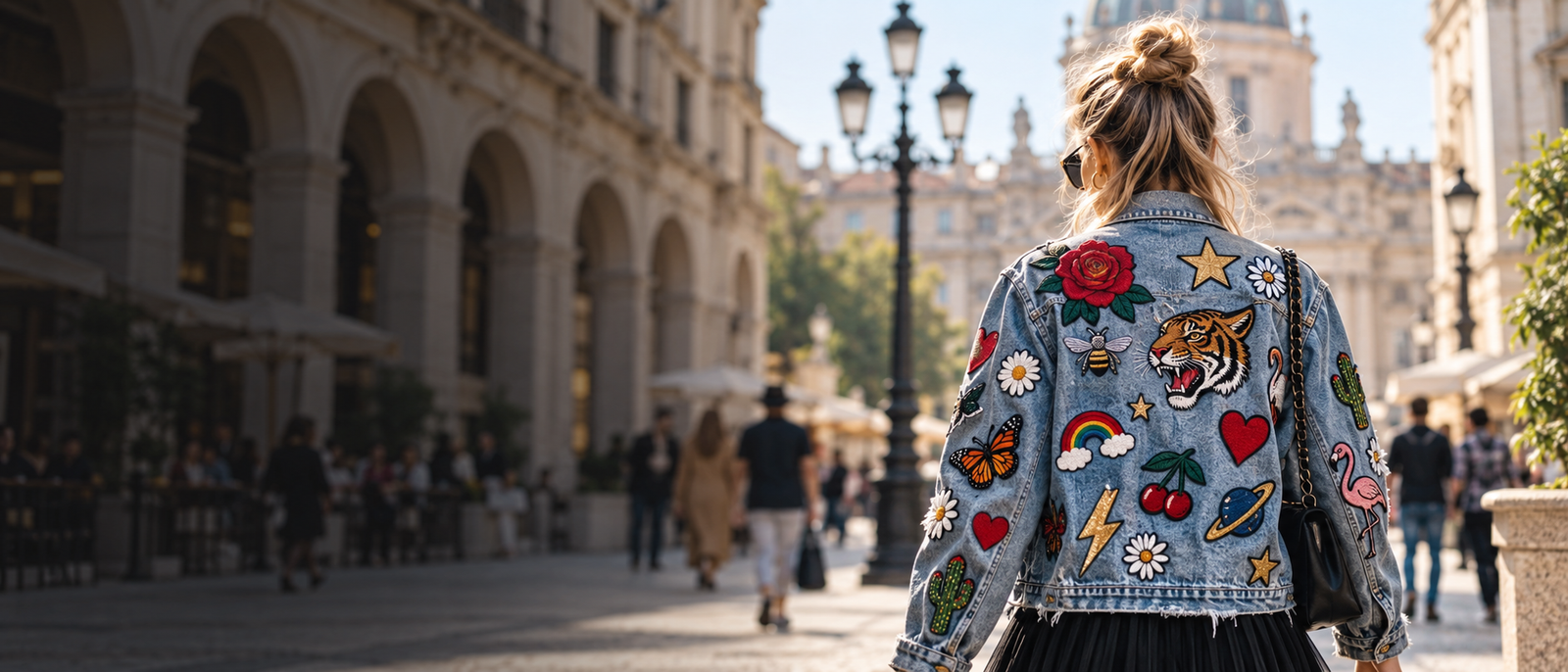
Line weight, small text and edge detail decide the process, not preference. Send the artwork at its final size and we will say which of these reproduces it faithfully.
01
Stitched with coloured thread on twill, felt or canvas. The right process when you want a raised, tactile surface and a border that reads as a badge at a distance.
 02
02
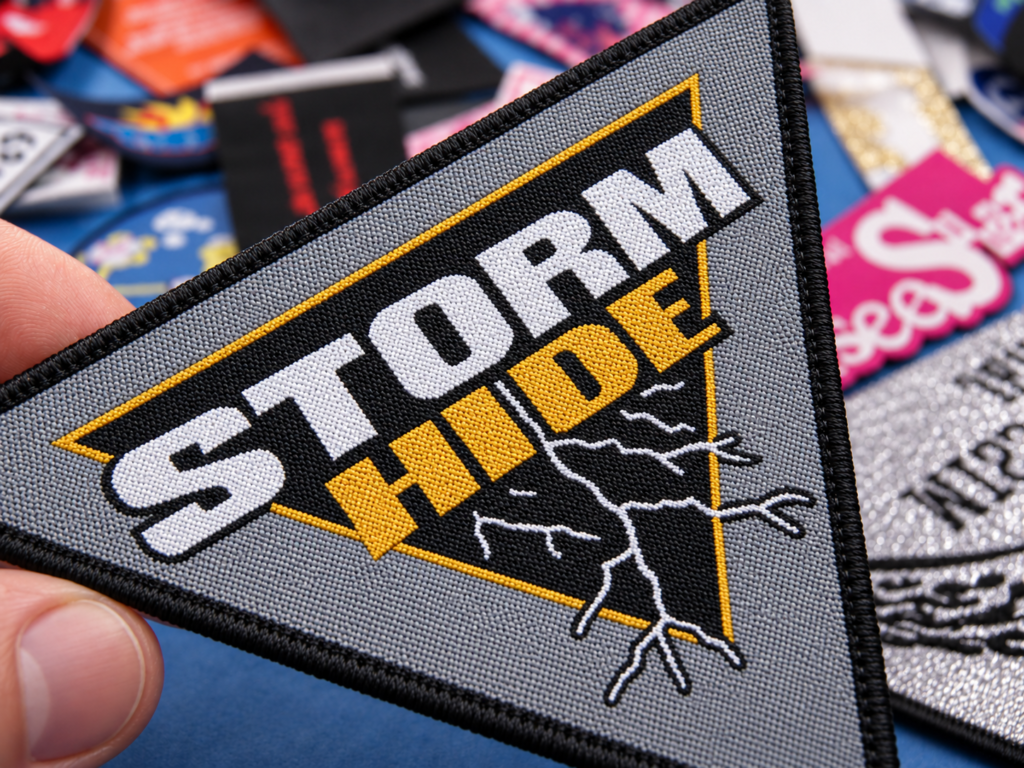
Woven on a loom rather than stitched, so letterforms stay legible at small sizes and fine lines survive. The better choice for dense text, small logos and detailed line artwork.
 03
03
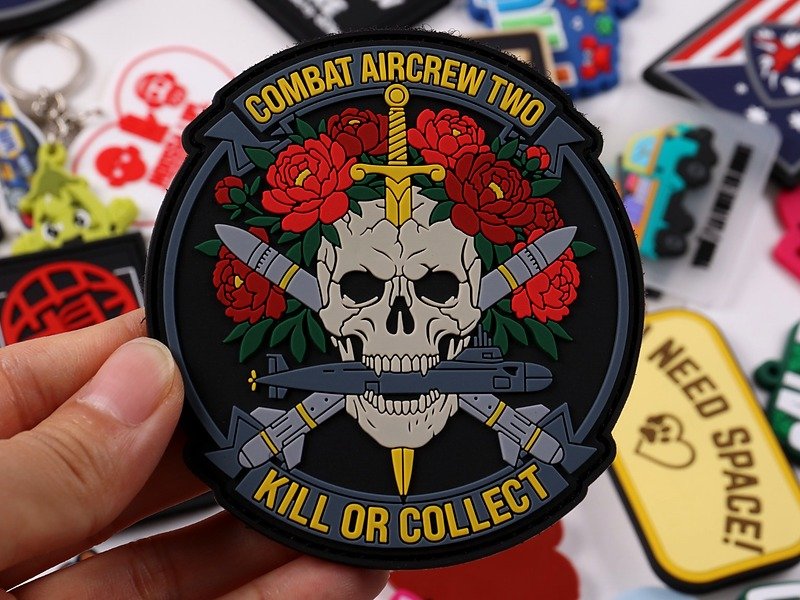
Moulded rather than sewn. Supports 2D and 3D relief, multi-layer construction and Pantone colour matching, with a surface that tolerates water, abrasion and outdoor use.
 04
04
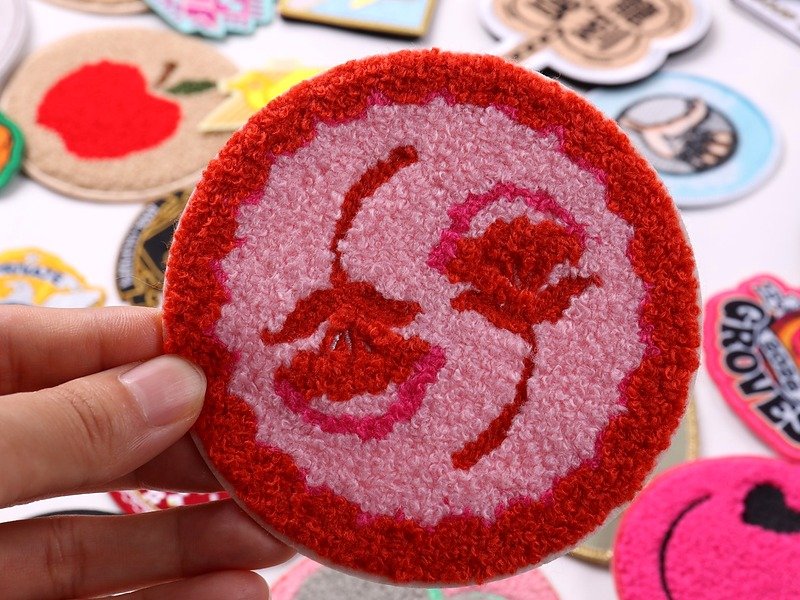
A raised, soft yarn surface on a felt base, usually combined with embroidered outlines or lettering. Built for varsity, collegiate and heritage-style branding.
 05
05
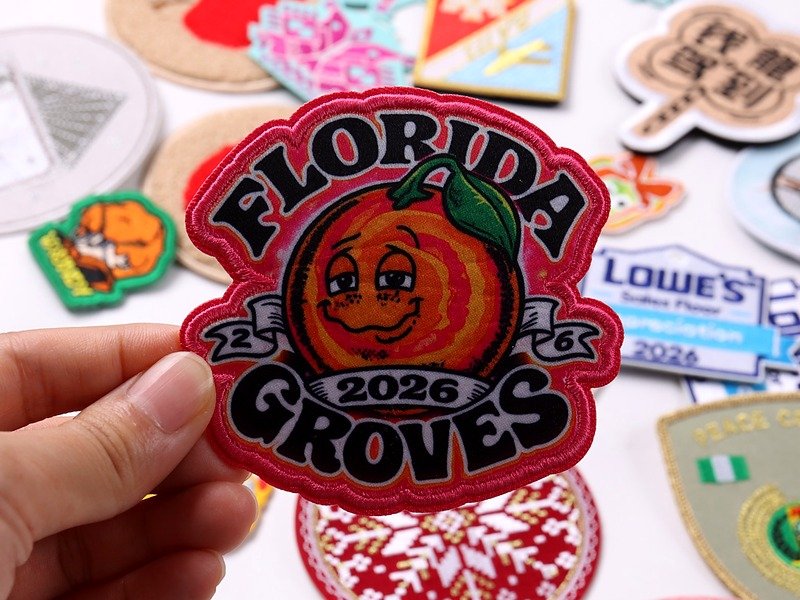
Artwork is printed onto fabric instead of stitched, so gradients, photographic detail and unlimited colour counts stay possible at a lower cost per piece.
Specifications
The backing decides how the patch attaches to the product; the edge decides how it looks and whether it frays; the size decides what detail the artwork can carry. All three are confirmed on the spec sheet before sampling, so nothing is left to assumption at bulk.
Size is quoted per project as width × length in centimetres, for example W2.5 × L3.5 cm. We do not publish a size chart, because the workable minimum depends on the process, the line weight and how small the smallest text is.
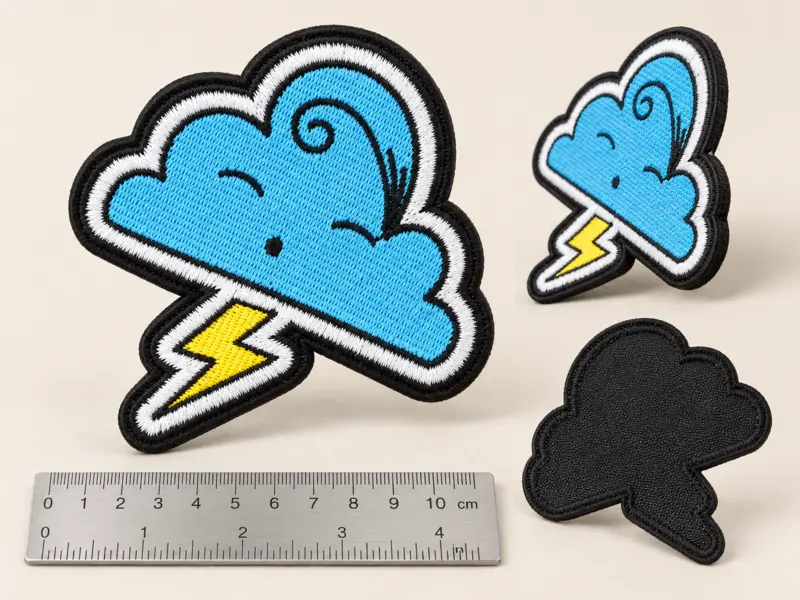
Spec sheet · IMG-S01 · 800×600 Face · backing · edge
A heat-activated adhesive film applied with a heat press. Suits retail apparel, tees and caps.
The hook side is attached to the patch and matching loop tape is supplied for uniforms, tactical gear and bags.
A pressure-sensitive backing for temporary use on hard surfaces, packaging, name badges and trade-show material.
Plain fabric back with no adhesive. The most durable option where the patch is stitched onto the product.
A thread-wrapped edge sealing the perimeter. Standard for circles, shields, ovals and rectangles.
Cut on the outline by our 30+ vision-guided cutting machines, for irregular shapes, lettering and inside cut-outs.
A sealed edge with no thread wrap, giving a flat borderless finish for woven and printed patches.
Circles, ovals, shields, squares and rectangles are quoted from a size you specify, from small cap badges upward.
Irregular outlines, letters and inside cut-outs are cut on the contour by our vision-guided cutting machines rather than by hand.
Embroidery holds bolder lines; woven holds fine lines and small text. We check the smallest element of your artwork and recommend the process that keeps it legible.
Materials & buyers
Material choice follows the application: what the patch is attached to, how often it is washed and how much abrasion it meets.
Development speed, colour consistency and detail quality on the first order, then the same result on every reorder.
Programmes where the badge has to survive laundering and field use, which usually means sew-on or hook-and-loop structures.
Fixed dates and mixed orders, so packing by set, artwork version control and an honest answer on rush feasibility matter as much as price.
A small test run before a full production order, packing that ships to the end customer, and repeat production from stored artwork and an approved sample.
Polyester, cotton twill, satin, nylon, RPET, chenille yarn, felt, and leather.
Soft PVC and rubber compounds in 2D and 3D, colour-matched against Pantone references.
Heat-activated adhesive film, pressure-sensitive adhesive, hook-and-loop tape, and plain stabiliser for sew-on.
Metal, neoprene and composite constructions, or a material you already work with — reviewed and confirmed before quoting.
Manufacturing
Patches are produced in our 7,000 m² facility in Guangzhou rather than subcontracted, so artwork versions, thread colours, backing and packing stay under one production record.
Embroidery, cutting, finishing, inspection and packing in one facility.
Digitizers, machine operators, finishing and inspection teams working from one specification.
Computerized multi-head machines supporting flat, high-density, metallic, sequin and multi-colour embroidery.
Camera-guided contour cutting for irregular shapes, lettering and a clean edge finish.
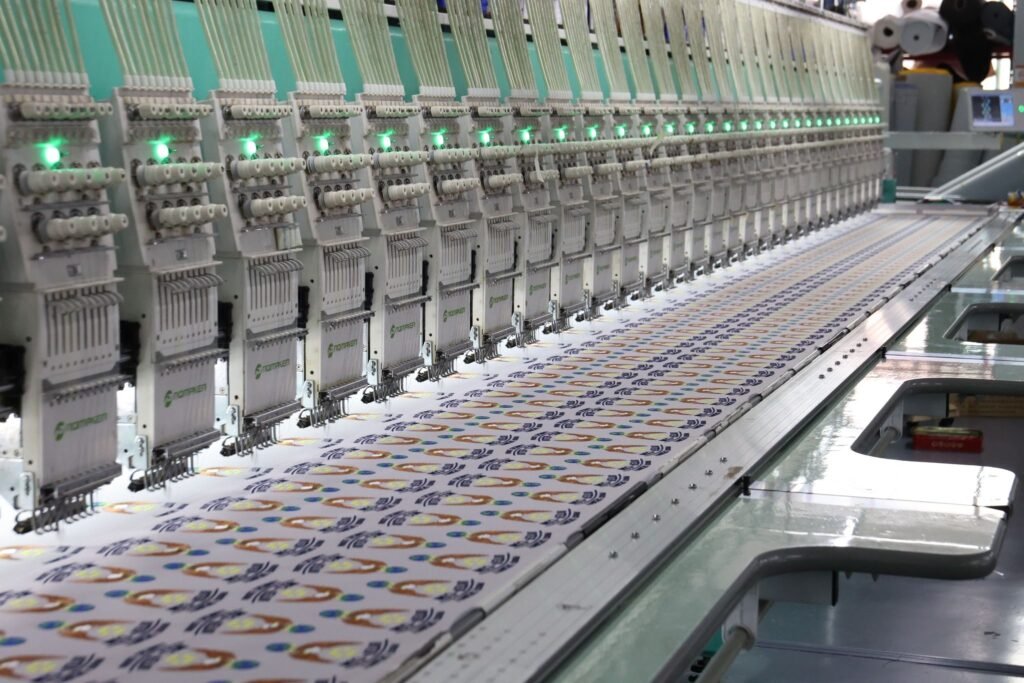
Computerized embroidery floor, producing embroidered patches, keychains and lanyards on the same lines.
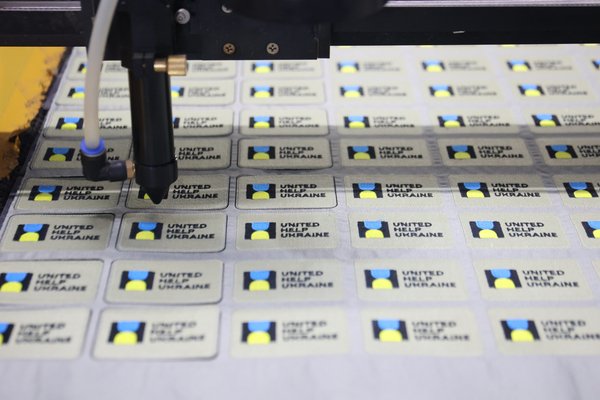
Vision-guided cutting stations finishing irregular contours, lettering and inside cut-outs.
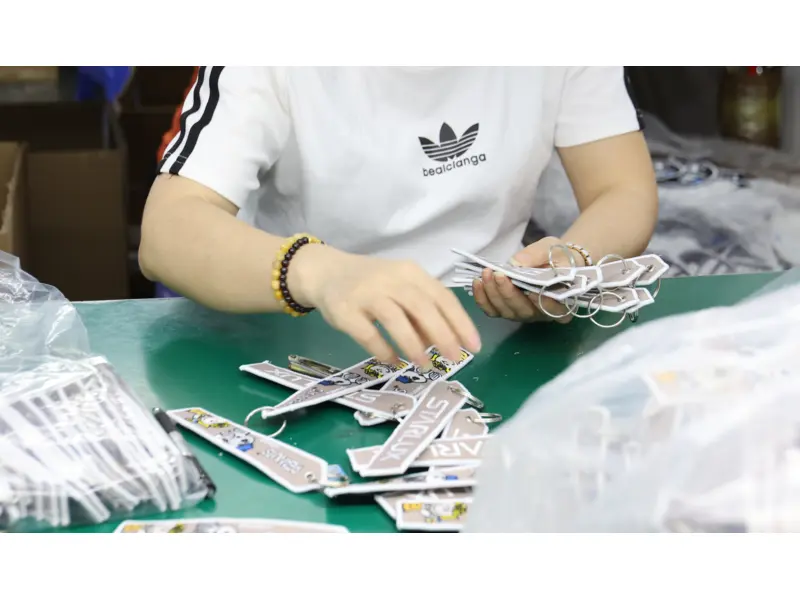
Inspection against the approved sample: colour matching, logo proportion, small-text clarity, dimensions, backing and quantity.
كيف يسير الطلب
Each stage has an owner and a record, which is why a reorder is faster than the first order.
Send artwork with the intended size, quantity, material and backing. We check proportions, small text and line weight, and confirm which process reproduces it.
The artwork is prepared for the process — stitch file or mould drawing — with thread or Pantone colours, and a digital proof goes back for sign-off.
A physical sample is produced and sent for approval. That approved sample becomes the reference for the bulk run and for every reorder.
Approved work runs across the embroidery and cutting lines, then backing is applied, pieces are trimmed and finished.
Inspection against the approved sample, packing to your requirement, carton marks and export documentation before dispatch.
الأسئلة الشائعة
Short answers to what buyers ask before sending artwork. Anything project-specific is confirmed in writing during review.
Each product has its own standard MOQ, and for many custom items it starts at around 100 pieces. There is limited flexibility depending on the process, the artwork and how the order is structured. Below the standard MOQ the unit price may increase, so we confirm the figure for your specification during artwork review instead of publishing one number for everything.
Vector artwork (AI, PDF, EPS or SVG with fonts outlined) is ideal, and a high-resolution raster file also works. We review logo proportions, small text, fine lines, stitch direction, density, thread colours, border and finished size before quoting. If a design is not suitable for standard embroidery we say so, and recommend adjusting the size, simplifying the artwork or switching to woven, PVC or another process, rather than producing a specification that cannot hold the detail.
Embroidery gives a raised, tactile surface and suits bold shapes and borders. Woven holds small text and fine lines that embroidery cannot resolve. PVC and rubber give 2D or 3D relief with colour matching for gear that meets water and abrasion. Chenille gives the raised varsity look on a felt base. Send the artwork with its final size and we will recommend the process that reproduces it faithfully.
Bulk production usually takes 7–12 days after artwork approval. Rush orders are possible but confirmed case by case against production capacity, material, process, artwork status, sample requirements and shipping method, so we do not promise a rush date before those are checked. When conditions allow, a sample can be produced in about 2–3 days and some bulk runs in 5–8 days.
Iron-on and heat-seal performance, adhesive and hook-and-loop attachment, colour matching and thread colour are all inspection points in our QC process, and bulk consistency is checked against the sample you approved. For garments that are laundered heavily we usually recommend a sew-on structure, or a stitched perimeter in addition to the adhesive backing.
تابع الاستكشاف
Sub-categories go into the process and specification for one patch type; the procurement pages cover quoting, dates and artwork.
آخر تحديث للصفحة
تعاون مباشر مع المصنع
Include the size, quantity, material and backing you have in mind. We review the detail, recommend the process that holds it, and come back with a factory-direct quote — or tell you plainly if we are not the right factory for the job.