A corporate logo patch may look perfectly consistent on the first batch of uniforms. Six months later, a new branch orders replacement jackets, the purchasing team submits an older logo file, and a different fabric requires another patch construction. Suddenly, employees wearing the same company brand have noticeably different logos.
This is not always an embroidery defect. Often, it is a specification management problem.
For uniform distributors, corporate procurement teams and workwear brands, the challenge is to reproduce one approved company identity across different garments, departments, locations and production runs without assuming that every patch must be physically identical.
This guide introduces a practical Corporate Patch Master Specification framework for coordinating artwork, brand colours, garment-specific patch constructions, sample approvals, purchase orders, change control and repeat production.
It is designed for buyers managing bulk corporate uniform patches, multi-location workwear programs and recurring company logo orders.
Quick answer: To keep corporate uniform logo patches consistent, maintain one approved master logo, define a separate technical specification for each garment application, approve the relevant samples, assign version identifiers, and use those references for every new production run. Reorders should be checked against the approved standard, not reconstructed from a product photograph or an old email.
For available patch constructions and factory-direct quotations, visit our custom patch manufacturing solutions.
Why Corporate Uniform Logo Consistency Is a Procurement Problem
Businesses often use the same company logo on different products: employee polo shirts, work jackets, warehouse uniforms, hospitality aprons, service caps and promotional merchandise.
At first, the project may appear straightforward. The buyer sends the company logo and orders custom patches.
However, complications develop when the purchasing program expands:
- Different branches purchase uniforms at different times.
- Several uniform suppliers use the same company artwork.
- Employees require replacement garments.
- Different fabrics need different patch constructions.
- Logo colours are interpreted differently between materials.
- Older artwork versions remain in email attachments.
- New staff or purchasing managers cannot find the approved sample.
These risks cannot be solved simply by requesting “the same quality as last time.”
The buyer needs a controlled reference that defines what “the same” means.
A useful distinction is between brand consistency and construction uniformity.
Brand consistency means the approved logo, proportions, visual hierarchy and colour intent remain recognizable across the program.
Construction uniformity means every patch uses the same material, dimensions, backing and manufacturing process.
These objectives are not always identical. A low-profile woven patch on a polo shirt and an embroidered patch on a work jacket may represent the same brand more successfully than using one heavy patch construction on both garments.
The Corporate Patch Master Specification: A Practical Framework
For corporate uniform purchasing, we recommend establishing one master branding record and connecting it to separate approved patch specifications for each garment type.
This framework is a suggested procurement tool, not a certification program or proprietary industry standard.
Level 1: The Approved Master Brand Record
The master record identifies the company branding elements that should not change without authorization.
- Official company logo and approved artwork version
- Logo proportions and permitted variants
- Brand colour references
- Required lettering and graphic elements
- Rules for orientation and logo usage
- Company contact responsible for brand approval
The master record should be held by the company or its designated procurement team, rather than existing only inside a supplier’s email history.
Level 2: Garment-Specific Patch Specifications
Each approved uniform application should have its own technical record.
For example, a polo shirt and a warehouse jacket can share the same company logo while using different patch dimensions, backing methods or manufacturing techniques.
Each technical record should identify the finished size, material, process, colour reference, edge construction, attachment method and approved sample.
Level 3: Production and Reorder Records
The production record connects the approved specification to a specific purchase order.
It should identify the approved revision, individual SKU, order quantity, packing requirements and any confirmed changes.
For repeat orders, the team should check whether the previously approved specification is still valid before releasing production.
Example: Corporate Patch Master Specification Table
The following table is an illustrative template. It does not describe an actual LOVECOLOUR customer or production order.
| Control Field | Illustrative Entry | Purpose |
|---|---|---|
| Master Logo ID | BRAND-001 | Identifies the approved company branding |
| Artwork Revision | REV-B | Prevents use of an outdated logo |
| Application ID | POLO-01 | Links the logo to a garment-specific patch |
| Finished Size | Confirmed width and height | Controls proportions and garment fit |
| Production Method | Woven or embroidered, as approved | Defines the construction |
| Colour Reference | Approved brand and material references | Supports visual consistency |
| Backing | Approved attachment construction | Controls garment application |
| Sample Reference | Approved physical sample ID | Provides a comparison standard |
| Purchase Order | Unique order reference | Connects production to procurement |
| Change Approval | Approver and approval date | Documents authorized changes |
Buyer recommendation: Store these records in a shared purchasing system or controlled specification file. The format can be a spreadsheet, product data management system or another suitable document structure. The important point is that the current approved version is identifiable and accessible.
How to Use One Corporate Logo Across Different Uniform Fabrics
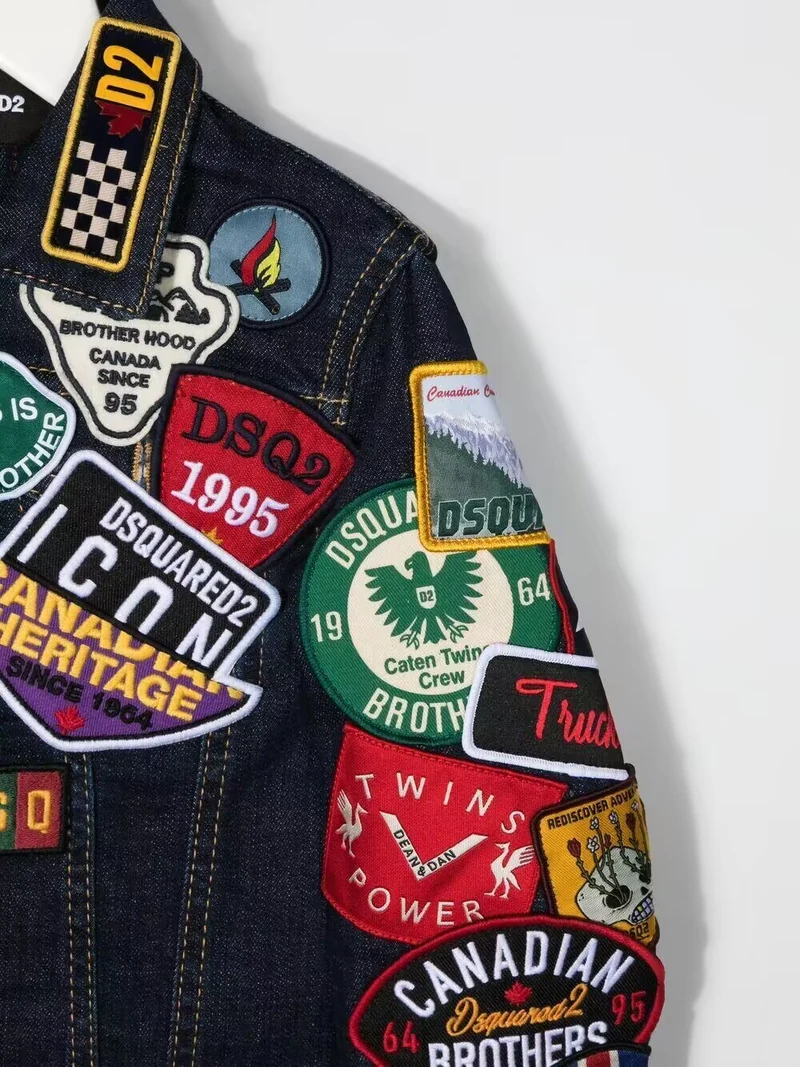
One of the most common purchasing mistakes is assuming that a logo patch approved for one garment will automatically be suitable for every uniform in the company.
Patch construction should be assessed against the intended fabric and application.
Corporate Polo Shirts
Polo shirts, especially lightweight or stretch constructions, may require a relatively low-profile patch. Patch thickness, weight and attachment can affect the drape of the garment.
A woven construction may be worth evaluating for compact logos with fine lettering. A suitable embroidered construction may also be appropriate where the desired stitch texture can be retained.
Warehouse and Industrial Work Jackets
Structured work jackets can support a wider range of patch constructions. However, the attachment method, garment seams, patch location and expected wear conditions still require review.
For garments exposed to frequent rubbing or repeated cleaning, product suitability should be evaluated against the actual conditions of use.
Hospitality and Service Uniforms
Hospitality uniforms and service apparel often prioritize a consistent professional appearance, wearer comfort and practical garment care.
Different garment fabrics may require different patch constructions or attachment methods. No patch should be described as suitable for frequent industrial laundering without relevant testing of the intended combination.
Corporate Caps and Accessories
Caps introduce curved panels and limited decoration areas. A logo that fits a jacket chest patch may require adjusted dimensions or a different production method for headwear.
The approved master logo should guide the adaptation, but the cap patch requires its own technical assessment.
Practical Material Selection Matrix
| Garment | Construction to Evaluate | Critical Approval Point |
|---|---|---|
| Lightweight polo shirt | Woven or suitable lightweight embroidery | Flexibility, logo clarity and fabric compatibility |
| Structured work jacket | Embroidered or suitable PVC construction | Attachment, patch thickness and wear conditions |
| Hospitality work shirt | Embroidered or woven patch | Professional appearance and care requirements |
| Staff apron | Suitable textile patch | Placement and cleaning compatibility |
| Corporate cap | Compact woven or embroidered patch | Curved surface and available decoration area |
| Stretch performance uniform | Low-profile compatible construction | Stretch, movement, drape and attachment |
These are recommendations for evaluation rather than universal rules. The appropriate construction depends on the specific material, logo and expected product use.
For compact graphics and fine lettering, see our woven patch manufacturing guide.
Why Pantone Matching Alone Cannot Guarantee Identical Uniform Patches
Brand colour consistency matters, especially when employees from different branches appear together at events, trade shows or customer locations.
However, specifying a Pantone reference does not guarantee that embroidered thread, woven yarn, moulded PVC and garment fabrics will look visually identical.
Different materials interact with light differently. Thread direction, surface texture, material finish and lighting conditions can affect perceived colour.
A digital image also cannot reliably establish the final physical appearance.
A Better Colour Approval Method
- Provide the official brand colour reference.
- Confirm the actual patch manufacturing method.
- Review an available physical thread, yarn or material reference where colour is critical.
- Approve the relevant production sample.
- Identify the approved sample and colour reference in the specification.
- Recheck material availability and appearance before a later repeat run when necessary.
Important distinction: Colour references guide manufacturing, while the agreed sample and acceptance criteria define what the buyer has approved.
If a company changes from embroidery to woven production, it should not assume that both materials will have an identical reflective appearance.
Managing Multiple Departments Without Losing Brand Consistency
A corporate uniform program may include customer service, warehouse operations, maintenance, facilities, administration and field service teams.
Some departments may use different uniforms, while others may require additional role identifiers.
A clear procurement structure separates the company-wide logo from the optional department-specific information.
What Should Stay Consistent?
- Approved corporate identity and logo proportions
- Required company name or core graphic
- Approved brand colour intent
- Restrictions on changing the artwork
- Identification of the current approved logo version
What Can Vary by Department?
- Garment style and patch dimensions
- Selected material and manufacturing technique
- Backing or attachment method
- Department labels where authorized
- Quantity and packing instructions
For personalized name patches, use a separate verified data file rather than embedding individual employee names inside the master corporate logo record.
This helps keep the shared company identity distinct from employee-level information that can change frequently.
Multi-Location Uniform Rollouts: How to Organize the Purchase Order
When a business operates multiple locations, the sourcing challenge extends beyond manufacturing. The buyer must identify which items belong to which site and how the products will be packed, shipped and recorded.
A project with 800 patches distributed across six locations should not be treated as 800 identical pieces unless the artwork, size, construction and other approved specifications are actually the same.
The following example shows a practical approach to organizing an order. All quantities and identifiers are illustrative.
| Location | Patch SKU | Uniform Application | Quantity |
|---|---|---|---|
| Site A | POLO-01 | Employee polo shirt | 180 |
| Site A | JACKET-01 | Work jacket | 80 |
| Site B | POLO-01 | Employee polo shirt | 220 |
| Site B | JACKET-01 | Work jacket | 120 |
| Site C | POLO-01 | Employee polo shirt | 120 |
| Site C | JACKET-01 | Work jacket | 80 |
In this example, the company has 800 patches but only two distinct approved patch SKUs.
That distinction matters because the production quantity for each unique specification may influence manufacturing setup, MOQ and unit pricing.
Location-based packing should be identified separately from the actual production SKU.
Recommended Order File Structure
Use one line per combination of location, patch SKU and packing requirement. Avoid combining several different specifications into a single quantity field.
For each line, include:
- Location or distribution reference
- Approved patch SKU and revision
- Quantity
- Garment application
- Individual packing or bundle requirements
- Required label information
- Delivery destination and date
Buyers should also clarify whether all goods are shipped to one central distributor or require separate destination arrangements. Freight, sorting and fulfilment costs depend on the actual shipment plan.
The Five Approval Gates for a Corporate Uniform Patch Program
For repeatable multi-location purchasing, we recommend five approval gates. Each gate should have an identifiable output and a person responsible for approval.
This is a suggested buyer management structure, not a claim that every factory uses the same procedure.
Gate 1: Brand Identity Approval
Confirm the master logo, colour references, permitted variations and authorized approver.
Required output: Approved master branding record.
Gate 2: Garment and Construction Approval
Review the patch dimensions, manufacturing method, backing and intended garment for every application SKU.
Required output: Garment-specific technical specification.
Gate 3: Physical Sample Approval
Where sampling is required, review the finished product for logo detail, material, colours, dimensions, edge finishing and backing. Conduct any necessary garment application tests.
Required output: Approved sample or documented approval record.
Gate 4: First Production and Bulk Inspection
Confirm that the production run follows the final approved specification. Compare finished pieces against the agreed standard and inspection requirements.
Required output: Production and quality approval under the agreed inspection arrangement.
Gate 5: Packing and Dispatch Approval
Verify quantities, design versions, SKU labels, packing instructions and shipment details before release.
Required output: Approved packing and shipment records.
For a more detailed explanation of LOVECOLOUR’s existing sampling workflow, see Samples & Approval. Our Quality Control page explains the factory’s documented inspection stages.
How to Handle Corporate Uniform Patch Reorders Without Version Confusion
Reorders are not automatically identical to the original production simply because the customer requests “the same patches again.”
The buyer should confirm which approved version needs to be reproduced and whether any important conditions have changed.
Before Releasing a Repeat Order, Check These Seven Points
- Artwork: Is the approved company logo revision unchanged?
- Construction: Is the material and embroidery or weaving method still the same?
- Dimensions: Are the finished size and border specifications unchanged?
- Colours: Are the approved material and colour references still applicable?
- Backing: Will the patch be attached to the same type of garment?
- Quantity and packing: Have branch allocations and SKU requirements changed?
- Schedule: Have material availability and manufacturing dates been reconfirmed?
If any of these conditions has changed, the buyer should decide whether a new quotation, approval or physical sample is required.
When Is a New Sample Worth Considering?
A new sample may be appropriate when the logo has changed, the construction is different, the garment has changed, critical materials have been substituted, or the original approved reference is missing.
It may not be necessary for every unchanged repeat order. The decision should reflect the product’s risk and the agreed sourcing arrangement.
What if the Previous Supplier Is No Longer Available?
Provide the original approved artwork, finished dimensions and a retained physical sample where available.
A new manufacturer can use those references to evaluate a replacement construction. However, a visually identical result cannot be guaranteed without considering the original materials, process and acceptable tolerances.
A photograph is helpful for initial review but is generally less informative than a complete specification and physical sample.
How to Approve a Logo Change Without Mixing Old and New Uniform Stock
A particularly important issue arises when a company refreshes its brand identity while some locations still hold uniforms with the previous logo.
Changing a logo file in the purchasing system does not automatically update garments or patches already in inventory.
The buyer should define a controlled transition rather than silently replacing artwork during a repeat order.
Recommended Change-Control Steps
- Assign a new logo revision and record the approval date.
- List the uniform SKUs affected by the change.
- Identify remaining stock of the previous design.
- Confirm whether old and new designs can coexist during the transition.
- Approve any revised patch constructions or samples.
- Set a clear effective date for future purchase orders.
- Communicate the change to purchasing, garment suppliers and distribution teams.
Common failure point: A branch requests a replacement order using an old purchase order number, while another branch has already adopted the new logo revision.
The solution is to reference the approved artwork revision explicitly rather than assuming the latest or previous version will be understood by every supplier.
What Should Corporate Uniform Buyers Inspect Before Shipment?
Quality inspection should be conducted against the approved specification and agreed acceptance criteria, not solely against an attractive product photograph.
For multi-location corporate workwear programs, inspection should also include the correct artwork version and packing distribution.
| Inspection Point | What to Verify | Evidence |
|---|---|---|
| Artwork revision | Correct approved logo version | Order specification and artwork record |
| Logo appearance | Lettering, proportions and required graphic details | Approved sample or reference |
| Colour | Agreed colour and material appearance | Approved references |
| Dimensions | Finished patch size and shape | Measurements against agreed tolerances |
| Construction | Correct process, border and backing | Approved technical specification |
| Workmanship | Relevant stitching and edge condition | Inspection results |
| Quantity | Correct number of units per SKU | Order and packing list |
| Location allocation | Correct sorting and labels | Distribution and packing instructions |
| Shipment | Correct destination and agreed terms | Shipping documentation |
For projects requiring formal defect classification, an inspection sampling plan or performance testing, the applicable standard and acceptance levels should be agreed before production.
Do not assume that a generic visual inspection establishes wash resistance, long-term durability or compliance with a particular destination-market regulation.
Why the Cheapest Unit Price May Not Be the Lowest Procurement Cost
For a corporate uniform program, the purchase price per patch is only one component of the total procurement cost.
Other costs can arise from sample development, different production setups, packing requirements, shipping, inventory mismatches, rework, delays and replacement stock.
A useful way to compare sourcing options is to identify the total cost of achieving the approved result rather than comparing two unit prices that may reflect different specifications.
Simple Total Procurement Cost Model
Total project cost = product cost + applicable sample and setup charges + special packing + freight and applicable import costs + documented correction or replacement costs.
This is a budgeting framework, not a claim that every order incurs all of these charges.
For example, a buyer may receive two different quotations for a 1,000-piece order. Before comparing the prices, confirm that both quotations specify the same size, construction, backing, artwork versions, packing and delivery terms.
If one quotation excludes branch sorting or special packaging, the two offers are not yet equivalent.
LOVECOLOUR explains its itemized quotation structure on the Pricing & MOQ page. Actual minimum quantities and pricing depend on the approved product specifications.
Working With a Corporate Uniform Patch Manufacturer in China
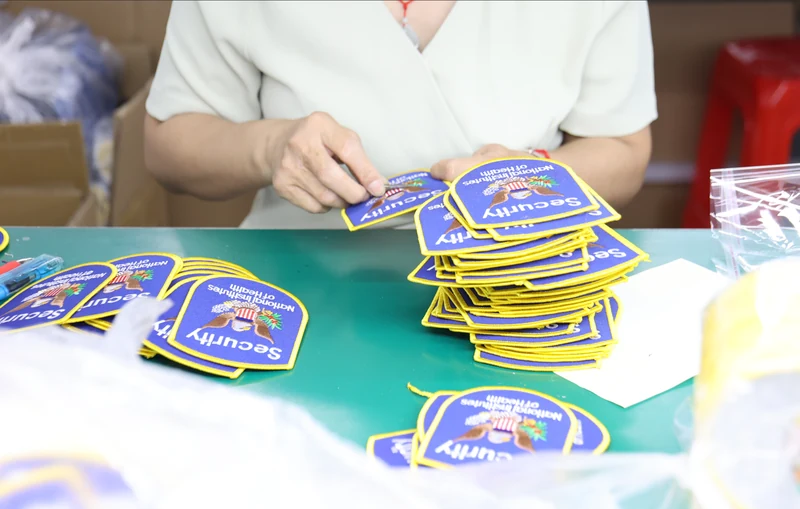
For international workwear suppliers and corporate buyers, factory communication should focus on accurate specifications and clearly defined purchasing responsibilities.
Guangzhou Lovecolour Garment Accessories Co., Ltd. is a direct custom patch manufacturer in Guangzhou, China, with embroidery, cutting, post-processing, inspection and packing capabilities.
When sourcing from China, it is useful to distinguish manufacturing lead time from international shipping time and the date the finished goods must be available for uniform distribution.
For US Corporate Uniform Distributors
US buyers coordinating uniform programs across different states or business locations should clarify whether patches will be shipped to one central garment decorator or distributed to several locations.
If the patches will be attached after import, confirm which company is responsible for garment application and whether the patch backing is suitable for the intended fabric.
For UK and European Workwear Suppliers
UK and European buyers should provide relevant garment specifications, care requirements, packing expectations and any applicable destination-market requirements.
For multi-location programs, identify the actual receiving destinations and whether packing must be separated by branch, garment SKU or company department.
For Australian Uniform and Promotional Merchandise Buyers
Australian buyers managing scheduled rollouts should provide the required in-hand date and allow for artwork review, sample approval when applicable, bulk manufacturing and international transit.
Customs clearance and import-related costs should be considered according to the agreed delivery terms.
Buyer recommendation: An overseas manufacturing quotation should identify the product specification, quantity, charges, production schedule and shipping arrangement clearly. Geographic proximity to the final user should not be assumed merely because a supplier serves that market.
Explore our Guangzhou factory and manufacturing information for more about our production facility.
Copyable Corporate Uniform Patch RFQ Checklist
When requesting a factory quotation for a multi-location uniform program, use the following checklist to reduce missing information and avoid unnecessary quotation revisions.
- Company name and purchasing contact
- Approved master company logo
- Artwork revision or version reference
- List of all required patch SKUs
- Finished size for each SKU
- Intended garment fabric and application
- Preferred embroidery, woven or other construction
- Colour and material references
- Edge finishing and backing requirements
- Quantity per unique patch specification
- Number of business locations or departments
- Any specialized packing or distribution requirements
- Sample approval and inspection expectations
- Delivery destination and required in-hand date
- Expected repeat-order schedule, if known
For a first enquiry, not every detail must already be finalized. Clear artwork, quantities and garment information provide a useful starting point for technical review.
Send Your Corporate Uniform Patch Requirements to LOVECOLOUR →
Frequently Asked Questions About Corporate Uniform Logo Consistency
How can a company keep uniform logo patches consistent across multiple branches?
Use one approved master logo, define garment-specific patch specifications, maintain approved artwork revisions, and reference the correct sample or specification for every purchase order. Branch allocation and packing should be recorded separately from the actual production SKU.
Must every uniform patch use exactly the same material?
No. Different uniforms may need different patch constructions. Brand consistency can be maintained through approved logo artwork, proportions and colour references while using suitable technical specifications for each garment.
Can an embroidered company logo be converted into a woven patch?
It may be possible, but the artwork should be reviewed for the new manufacturing method. Stitch and weave constructions have different characteristics, so a revised production file or sample may be required.
How can buyers reduce colour differences between repeat orders?
Keep the approved colour references, material specifications and physical sample where appropriate. Reconfirm materials and review a new sample when important conditions change. Do not assume that a digital Pantone reference alone guarantees identical appearance across all materials or batches.
What is the most important document for reordering company logo patches?
A complete approved production specification is more useful than an old product photograph. It should identify the artwork revision, finished size, construction, colours, backing, border and applicable sample reference.
What happens when a company changes its logo?
Assign a new artwork revision, identify affected uniform SKUs, approve updated specifications and establish a transition plan for existing stock. Future orders should state the intended revision explicitly.
Can multiple locations order the same corporate patch together?
Yes, when the required specifications are identical, quantities can be consolidated for manufacturing review. Distribution sorting and packing requirements should still be identified separately. MOQ and pricing are confirmed according to the actual order structure.
Should a repeat order always require a new sample?
Not necessarily. Sampling depends on changes to artwork, materials, construction, application and the risk associated with the order. If the approved specification remains valid, the manufacturer and buyer can evaluate whether additional sampling is necessary.
What should buyers do when switching corporate patch suppliers?
Provide the approved artwork, complete technical specification and physical reference sample if available. The new supplier should assess the construction and identify any differences requiring approval before bulk production.
Can a manufacturer guarantee identical patches across different production years?
An unconditional guarantee of identical appearance across different materials or production periods should not be assumed. Consistency depends on the available materials, approved specifications, manufacturing controls and agreed tolerances. Critical differences should be reviewed before production.
Final Recommendation: Treat the Logo as a Controlled Specification
The most reliable way to manage corporate uniform logo patches is to stop treating the patch as a one-time decoration and start managing it as a repeatable, version-controlled purchasing item.
Keep the approved brand identity separate from garment-specific technical specifications. Record each approved design version. Confirm changes before production. Compare finished goods against agreed references, and maintain clear SKU and packing records for every location.
This approach can reduce avoidable confusion during uniform rollouts, replacement orders and future sourcing changes.
It does not eliminate every manufacturing risk, but it makes the important decisions visible and gives buyers and suppliers a clearer standard to work against.
Request a Corporate Uniform Patch Manufacturing Review
Guangzhou Lovecolour Garment Accessories Co., Ltd. manufactures custom patches and garment accessories for apparel brands, uniform suppliers and wholesale buyers.
For corporate uniform programs, send your approved logo, garment requirements, quantities and intended delivery schedule. Our team can review the proposed construction and prepare a specification-based quotation.
Manufacturer: Guangzhou Lovecolour Garment Accessories Co., Ltd.
Location: Guangzhou, Guangdong, China
Email: info@lovecolour.com.cn
Request a Factory-Direct Corporate Patch Quote →
Related Manufacturing and Procurement Resources
- Custom Patch Manufacturing — Compare available patch products and constructions.
- Custom Woven Patches — Learn about fine detail and low-profile woven logos.
- Samples & Approval — Understand the physical sample and artwork approval process.
- Quality Control — Learn about inspection against approved samples and specifications.
- Pricing & MOQ — Review quotation factors and minimum-order considerations.
- Factory & Manufacturing — Explore the LOVECOLOUR production facility in Guangzhou.
Editorial note: The master specification, approval gates, example SKUs and procurement tables in this guide are recommended management frameworks and illustrative examples. They are not descriptions of specific customer orders, verified performance tests or universal manufacturing standards. Product specifications and commercial terms must be confirmed for each project.