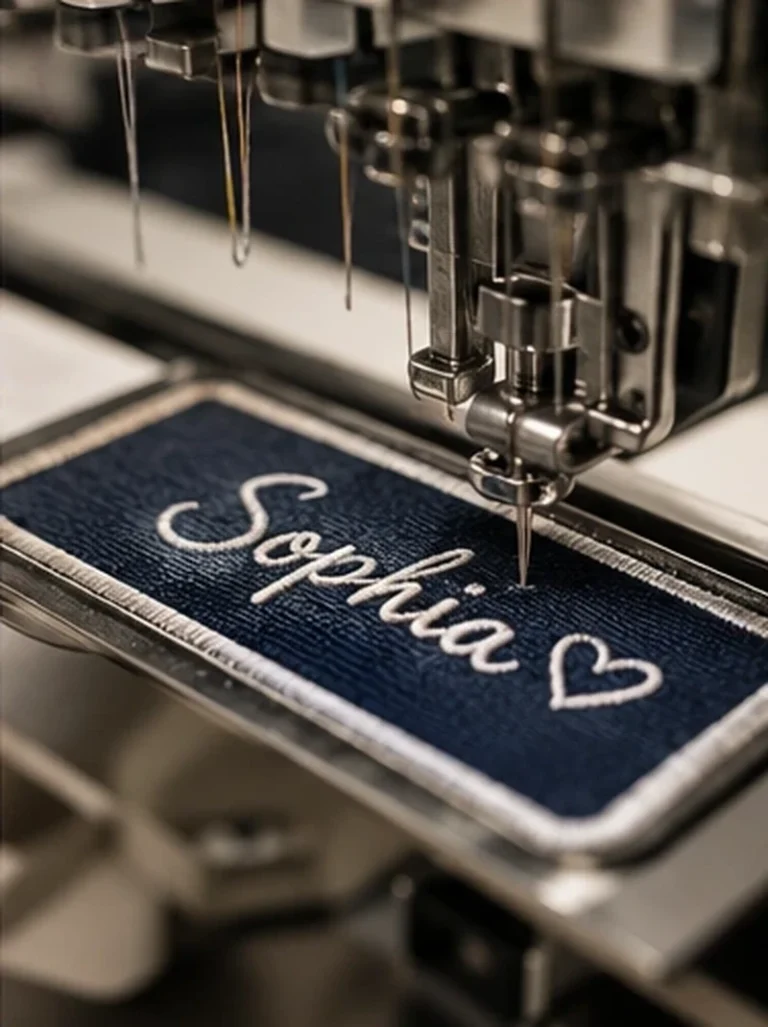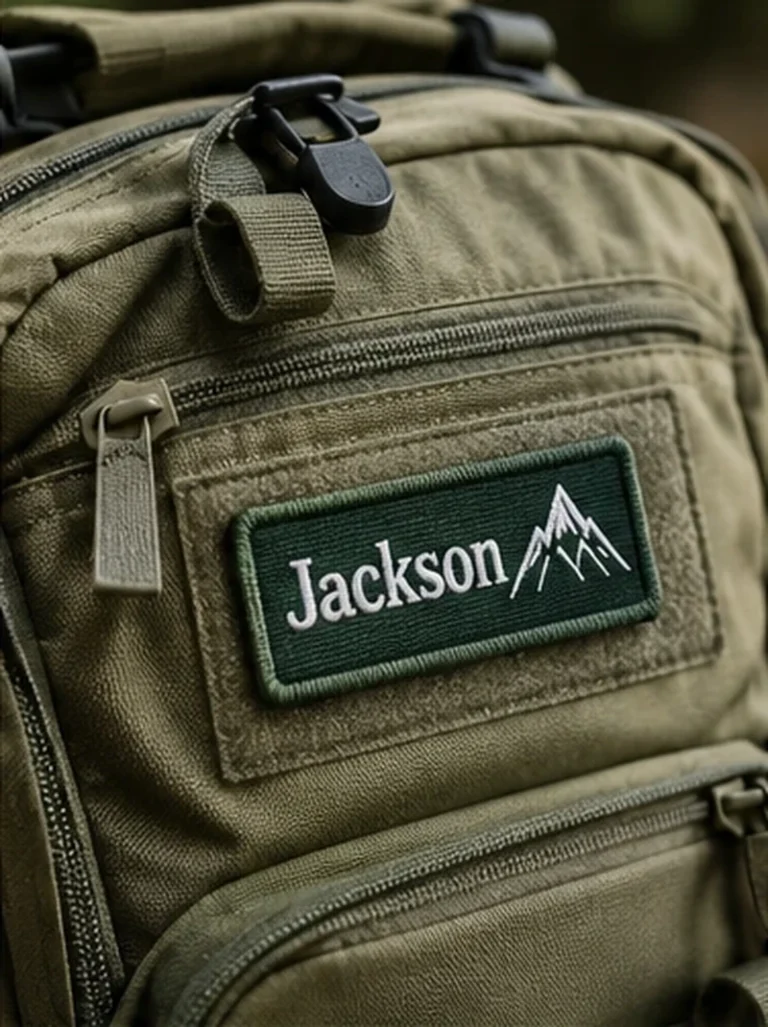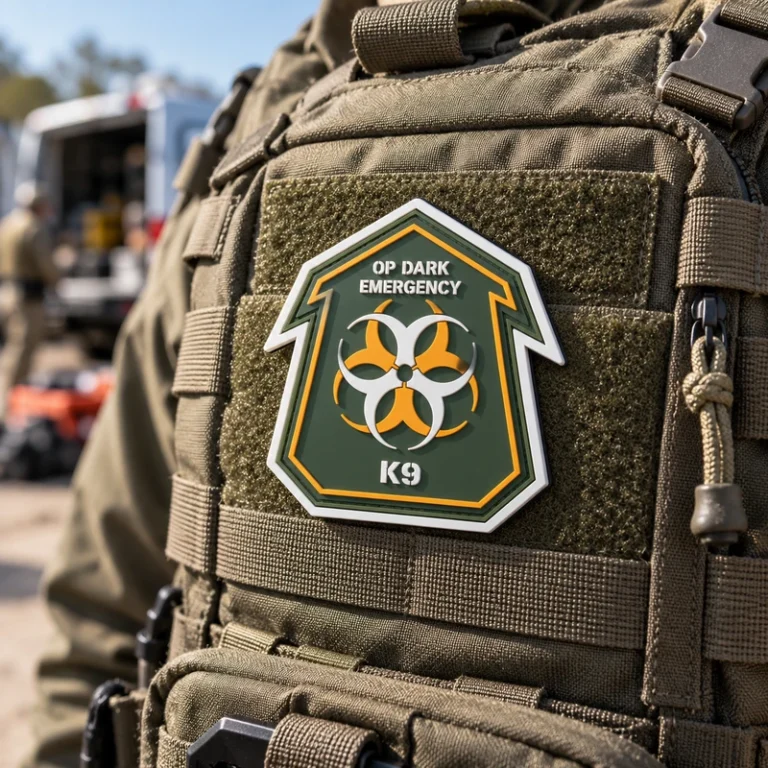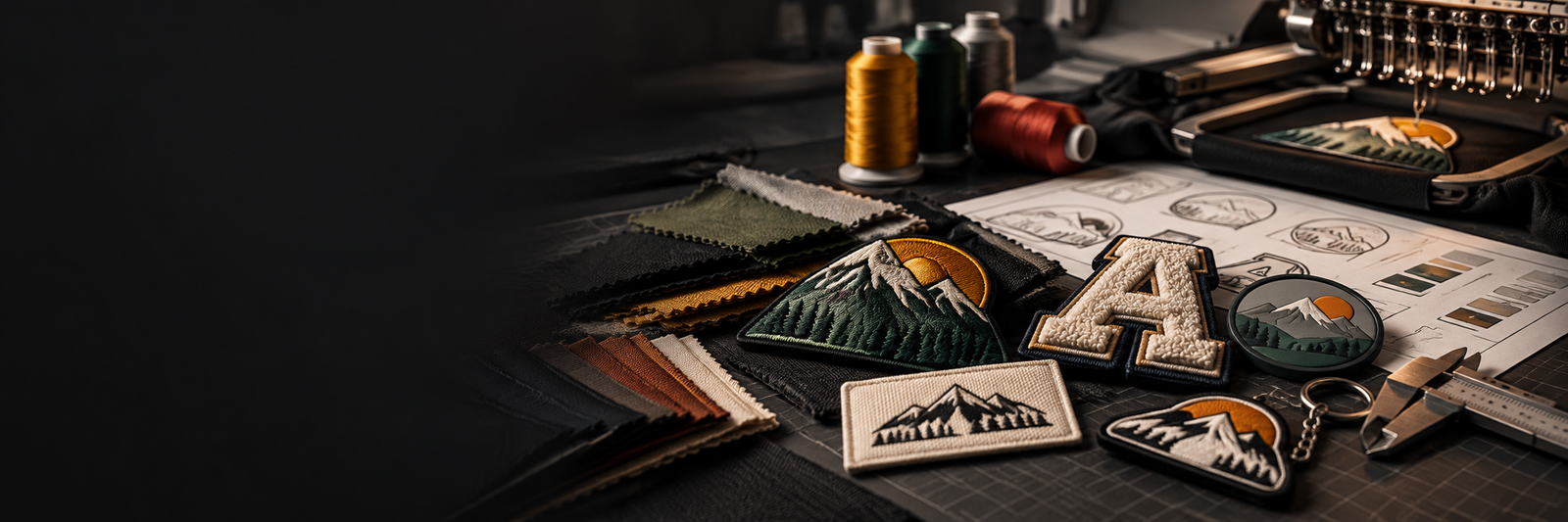
However, ordering custom restaurant patches involves more than choosing an attractive design. Buyers must consider embroidery detail, patch size, border construction, material compatibility, laundering conditions, attachment methods and repeat production.
This guide explains how to choose custom restaurant and hospitality uniform patches for cafés, bakeries, ice cream shops, bubble tea stores, restaurants, hotels and catering businesses. It also examines practical logo examples, bulk purchasing considerations and how to prepare an accurate manufacturing quotation.
Prepared by LOVECOLOUR, Guangzhou Lovecolour Garment Accessories Co., Ltd., a custom patch and garment accessory manufacturer based in Guangzhou, China. This article combines textile patch design considerations with general B2B procurement guidance. The product photographs discussed below illustrate construction and design possibilities; branded artwork is not presented as evidence of commercial endorsement or an authorized customer relationship.
1. What Are Custom Restaurant and Hospitality Uniform Patches?
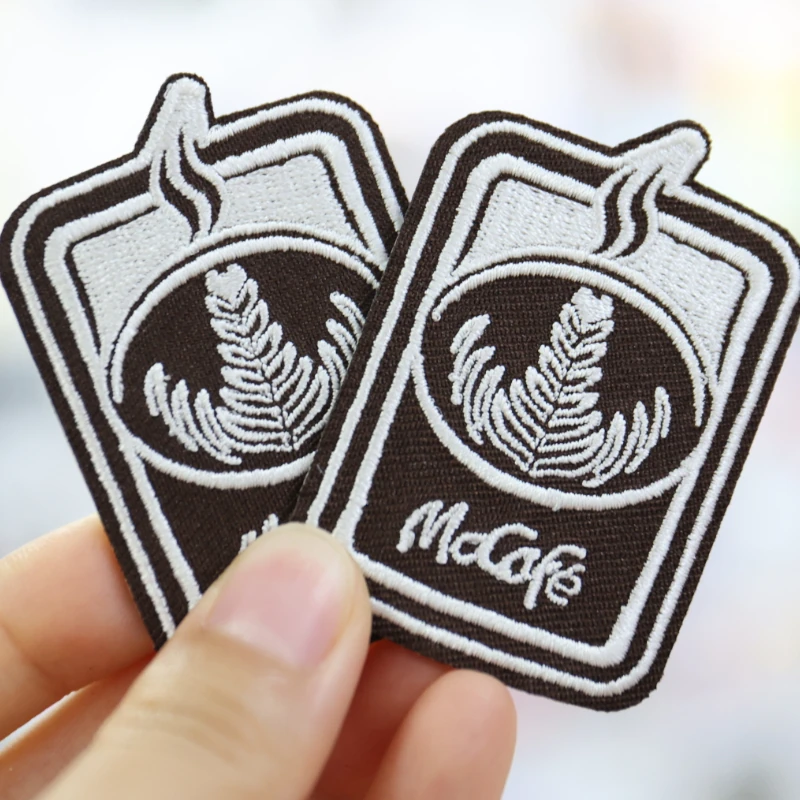
Custom restaurant and hospitality uniform patches are textile badges manufactured with a restaurant logo, brand emblem, text, decorative illustration or staff identification. They can be attached to suitable chef coats, aprons, shirts, jackets, hats and other hospitality apparel.
Unlike direct embroidery, where the design is stitched onto the garment itself, a separate patch is manufactured first and attached later. This gives uniform suppliers flexibility when managing garment sourcing, decoration and replacement programs.
Common applications include:
- Restaurant logo patches on chef coats and kitchen uniforms
- Embroidered café badges on barista aprons
- Bakery and pastry shop patches on work shirts
- Ice cream shop logo patches on staff aprons
- Bubble tea shop patches for uniforms and merchandise
- Hotel crests and department patches on selected staff uniforms
- Catering company badges on event service apparel
- Restaurant branding patches on caps, bags and promotional products
The correct patch construction depends on the required appearance and how the garment will be used. Buyers should evaluate the finished product and the garment together rather than treating every textile patch as interchangeable.
2. Why Use Separate Logo Patches Instead of Direct Embroidery?
For restaurants, hospitality apparel distributors and uniform suppliers, separate patches can offer production and inventory advantages in certain projects.
Greater Flexibility Across Garment Types
A restaurant may use the same logo on heavy aprons, chef coats, staff jackets and promotional caps. Separate logo patches allow the emblem to be manufactured as a textile component before garment decoration. Depending on the size and fabric, different patch versions may still be required.
Centralized Logo Production
A restaurant chain sourcing uniforms from several apparel suppliers may choose to manufacture approved logo patches centrally. This can help coordinate the artwork, colors and visual style across garment programs.
Separate Patch and Garment Inventories
Uniform distributors can sometimes stock undecorated garments and matching logo patches separately, allowing decoration to be scheduled according to demand. This may simplify certain inventory workflows, although attachment operations must still be planned and costed.
Brand Merchandise Opportunities
Custom embroidered restaurant patches can also be considered for merchandise such as bags, jackets, caps and collectible accessories. The same artwork may be adapted to a different size or backing for retail products.
When Direct Embroidery May Be Better
Direct embroidery may be preferable when the customer wants decoration integrated directly into the garment, does not want a separate patch edge or is working with a garment that cannot comfortably accommodate a sewn-on badge.
Buyer takeaway: Compare both the finished appearance and total decoration workflow. A separate patch is not automatically cheaper or more durable than direct embroidery in every situation.
3. Restaurant Logo Patch Design Examples: What Real Embroidery Samples Reveal
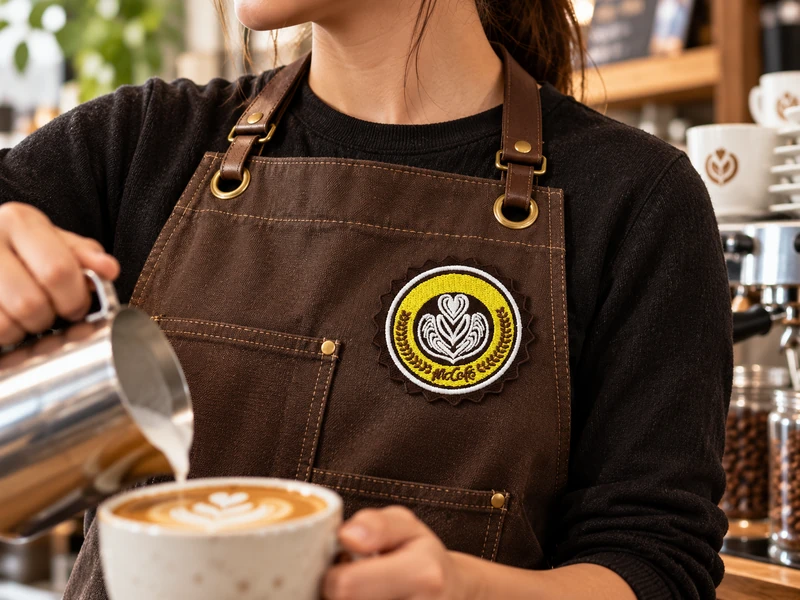
Food and beverage branding often contains illustrations, curved lettering, distinctive colors and custom logo shapes. These features create recognizable designs but also introduce technical challenges for embroidery.
The following design observations refer to physical patch samples provided for visual reference. They illustrate different logo constructions rather than claiming verified customer relationships with the brands shown.
Ice Cream Shop Patches: Custom Shapes and Multicolor Embroidery
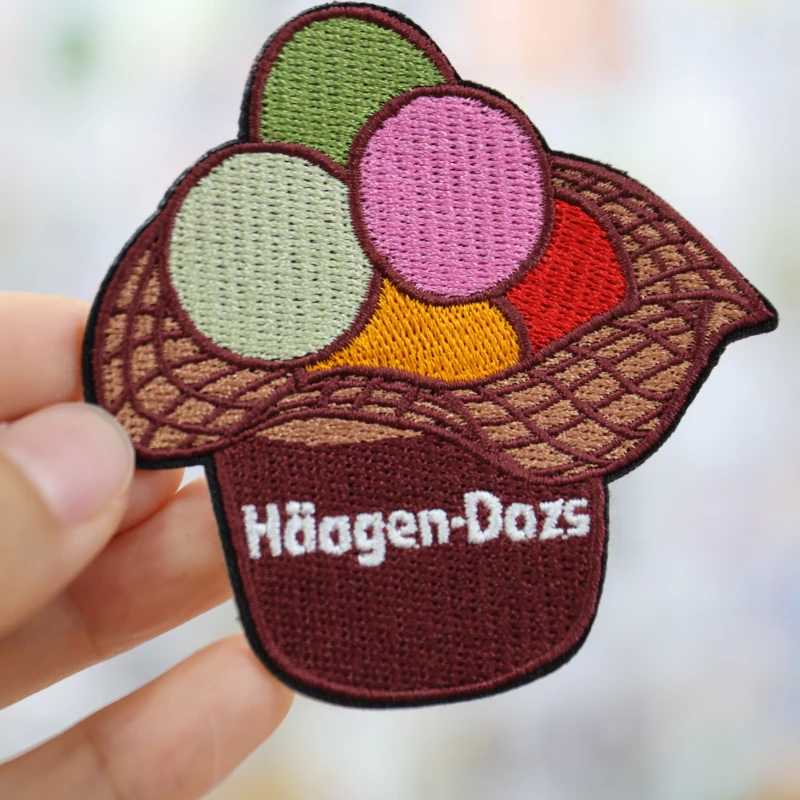
An ice cream-themed embroidered patch with several colored scoops and a decorative container demonstrates how a food illustration can be converted into a shaped textile badge.
Its appearance depends on several elements: the outline separating the ice cream scoops, changes in thread direction, decorative details and the precision of the finished contour.
For an ice cream shop or dessert brand, the design should be assessed for the following:
- Whether the shape can be cut cleanly without damaging embroidery
- Whether neighboring colors remain clearly separated
- Whether small brand lettering remains readable
- Whether the chosen size is suitable for the apron or uniform
- Whether dense embroidery creates too much stiffness for lightweight fabric
Manufacturing insight: A custom-shaped logo patch may require a different edge construction from a conventional rectangular badge. A digital contour alone does not guarantee a clean physical finish.
Coffee Shop Patches: Circular Logos and Dense Embroidery
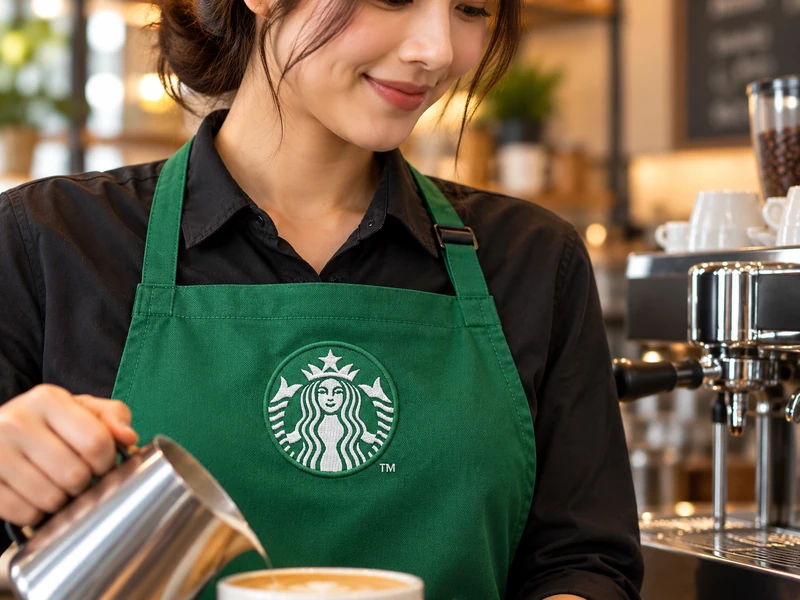
Circular café logos are popular because they create a recognizable emblem that fits many apron and shirt placements. A green-and-white circular embroidered design illustrates how a brand symbol can be formed using thread on a contrasting textile background.
Circular patches require attention to edge consistency, central artwork alignment and the relationship between the embroidered design and the outer border.
Highly detailed circular logos may include narrow lines, complex shapes and small elements. Those details should be reviewed at actual finished dimensions before bulk production.
Important: A photograph of a sample can demonstrate appearance and texture, but it cannot establish licensed production, wash performance or a formal relationship with the depicted brand.
Coffee Cup Patches: Detailed Artwork and Small Lettering
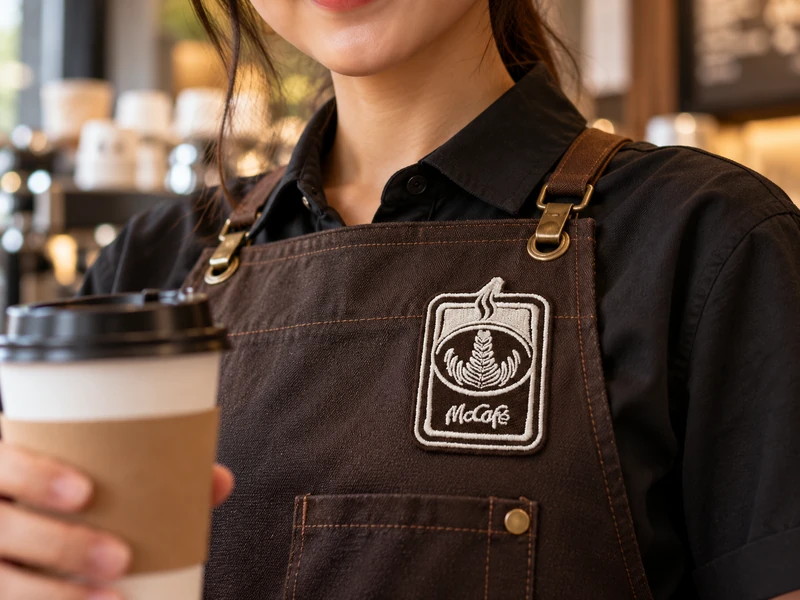
A brown-and-white coffee cup emblem demonstrates a different challenge: detailed stitched lines inside a compact shape.
Curved steam, cup outlines and decorative elements can be reproduced with embroidery when the final dimensions and stitch structure are suitable. Very small lettering may require simplification or a larger patch.
For coffee shop uniforms, buyers should review the proposed sample at its true production size rather than relying on a magnified digital preview.
Text-Based Restaurant Patches: The Importance of Lettering
Not every hospitality patch needs a complicated illustration. Bold lettering can create a strong visual effect on staff apparel.
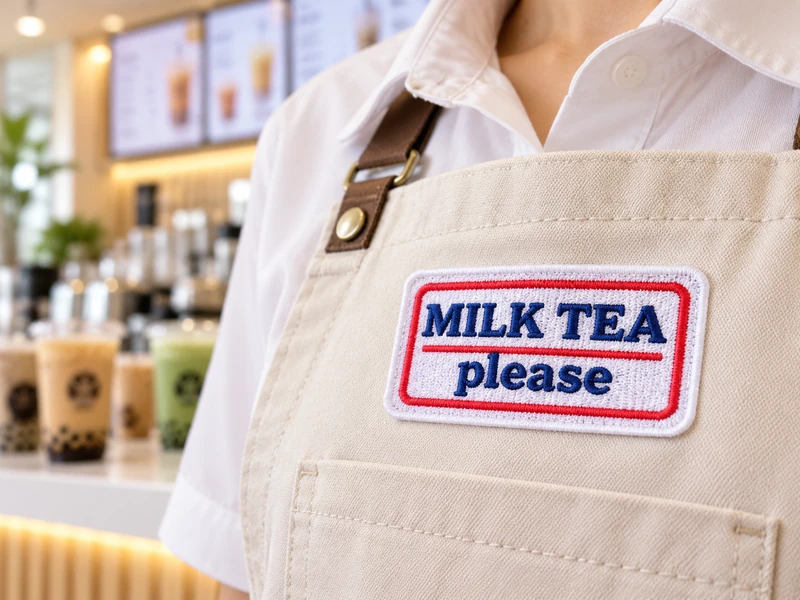
The green-and-white SMILE patch illustrates large block lettering with a contrasting outline. A separate MILK TEA please sample shows how two lines of text can be combined with a rectangular border.
These samples highlight different design considerations. Large block letters can be easier to reproduce consistently, while smaller secondary text requires careful spacing and embroidery preparation.
Where the logo contains several lines of text, the usable embroidery area must account for both line spacing and the finished border.
Bubble Tea Patches: Illustrated Beverage Logos
A bubble tea cup patch can include a straw, cup outline, beverage layers and individual tapioca pearls. This type of illustration is well suited to assessing how embroidery reproduces rounded shapes and contrasting color blocks.
For bubble tea brands, the patch should remain recognizable without excessive stitch detail. Smaller decorative elements may need to be simplified when the design is reduced for caps or narrow garment panels.
Design lesson: Good embroidery digitizing is not simply copying every pixel from the original logo. It involves interpreting the design using stitch shapes, direction, density and appropriate detail.
4. Embroidered, Woven or Printed Patches: Which Process Is Best?
Restaurant uniform suppliers should choose a production method based on artwork detail, garment requirements and desired appearance.
| Process | Main Characteristics | Good Starting Applications | Key Limitations |
|---|---|---|---|
| Embroidery | Raised stitched texture and traditional badge appearance | Chef coat logos, apron badges, bold café and restaurant designs | Very fine lines and small text may lose definition |
| Woven | Generally flatter textile surface with fine woven detail | Hotel crests, compact logos and finer lettering | Does not provide the same raised stitched appearance |
| Printed | Color artwork reproduced on an appropriate substrate | Gradients, detailed illustrations or artwork unsuitable for stitching | Durability and wash performance depend on materials and printing process |
For a bold restaurant logo with a few colors, embroidery may be the preferred option. For a hotel crest containing small text, weaving may deserve consideration. For complex artwork with photographic shading, a suitable printed construction may be more appropriate.
There is no universal process that provides the best results for every design. The artwork must be reviewed at its intended production size.
See our embroidery manufacturing guide or explore the custom patch product collection for additional textile options.
5. How to Choose Patch Sizes for Chef Coats, Aprons and Hospitality Uniforms
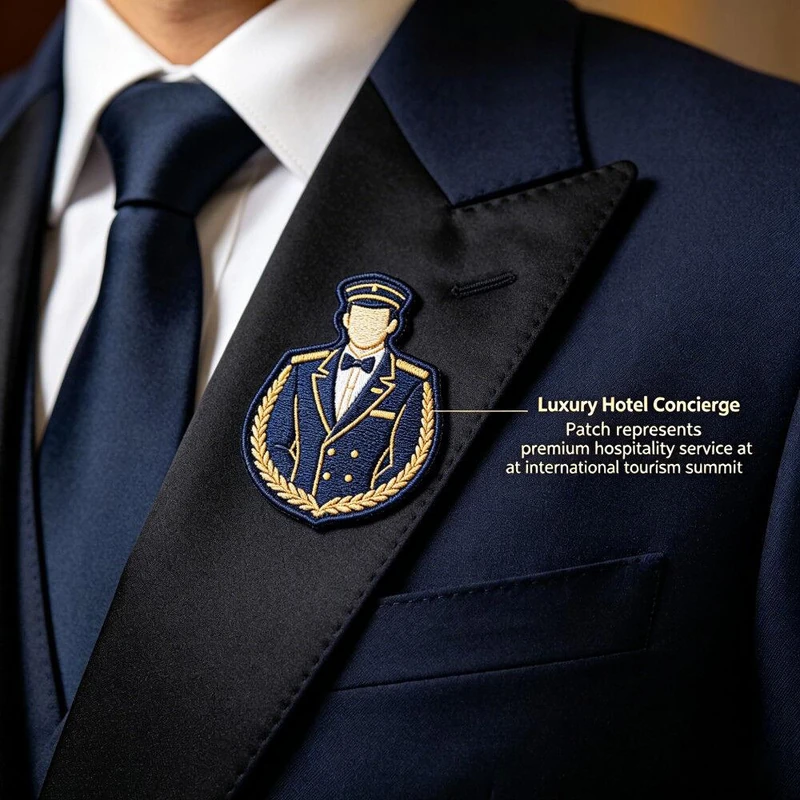
The correct patch size depends on garment placement, logo proportions, lettering detail and fabric behavior. A patch that looks proportionate on a heavy apron may be too large or stiff for a lightweight uniform shirt.
The dimensions below are illustrative design starting points, not universal uniform standards or guaranteed production recommendations.
| Example Size | Possible Application | What to Evaluate |
|---|---|---|
| 50 × 50 mm | Compact emblem or selected cap designs | Detail visibility and curved garment surfaces |
| 70 × 50 mm | Small chef coat or staff shirt patch | Text readability and fabric drape |
| 80 × 60 mm | Restaurant crest or hospitality badge | Logo proportions, border and available space |
| 90 × 60 mm | Selected apron or jacket logos | Patch thickness and placement |
| Custom Dimensions | Irregular food icons and detailed logos | Artwork complexity and garment compatibility |
Patch Placement on Chef Coats
A chest or sleeve location may be considered depending on the chef coat construction. Avoid placing the patch where it interferes with seams, closures or garment movement. Buyers should measure the available space rather than assume one size is appropriate for all chef uniforms.
Patch Placement on Barista Aprons
A bib or upper-front location is often visually suitable for café patches. However, the patch should not obstruct apron pockets or straps or create unnecessary stiffness in areas that bend frequently.
Patch Placement on Hotel Staff Apparel
Hotel housekeeping uniforms, maintenance jackets and selected service garments may have different fabric weights and styling requirements. A smaller, low-profile patch may suit some garments better than dense full embroidery.
Patch Placement on Restaurant Caps
Caps introduce curvature and limited decoration space. A relatively small, flexible construction may be necessary depending on the cap crown, seams and attachment method.
Buyer recommendation: Share a photo of the actual garment and the intended logo position, together with the available width and height. This reduces the risk of approving a patch that does not fit the clothing.
6. Which Backing Is Best for Restaurant Uniform Patches?
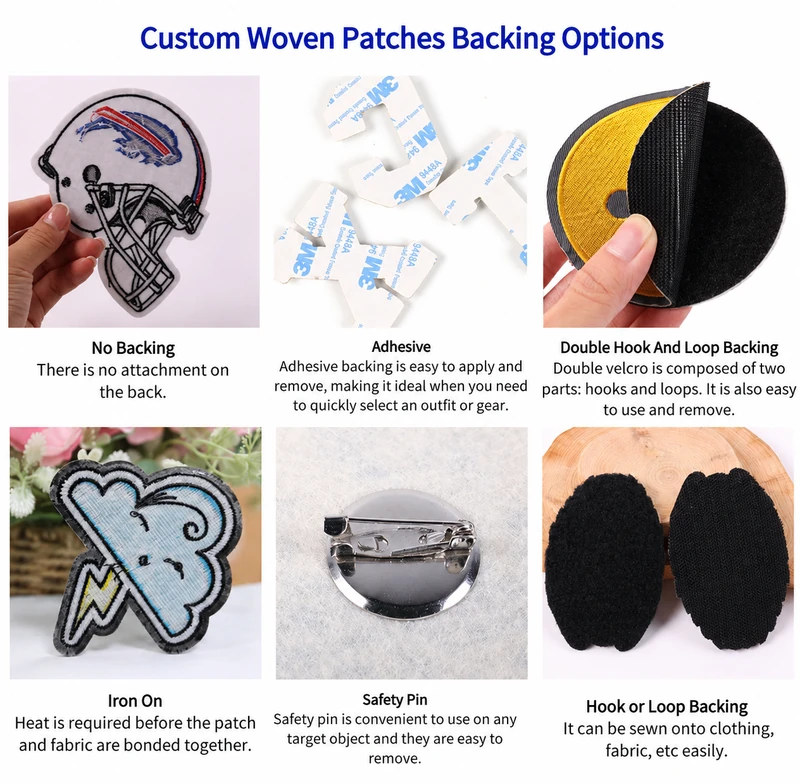
Backing selection is one of the most important decisions for restaurant, café and hotel uniforms because garments may be washed frequently or exposed to demanding working conditions.
| Backing | When to Consider It | What Must Be Checked |
|---|---|---|
| Sew-On | Permanent logos on suitable chef coats, aprons and staff jackets | Sewing quality, garment fabric and cleaning conditions |
| Iron-On / Heat-Seal | Compatible garments with appropriate heat application | Fabric coating, adhesive, temperature, pressure and wash resistance |
| Hook-and-Loop | Removable identification on compatible uniform panels | Receiving loop material, dimensions and fastening performance |
Sew-On Restaurant Logo Patches
Sewing is generally a practical starting point for permanent patch attachment where the garment allows it. It is frequently considered for canvas aprons, work shirts and chef coats.
However, attachment performance depends on garment construction, sewing thread, installation and subsequent cleaning. A sewn-on patch should not automatically be described as suitable for every commercial laundry program.
Iron-On Hospitality Patches
Heat-seal backing can simplify installation on certain fabrics, but it requires correct application conditions. Heat-sensitive, coated or water-repellent garment fabrics may not bond reliably or may be damaged by pressing.
For restaurant uniforms requiring repeated laundering, evaluate the complete patch-and-garment combination before selecting heat-seal attachment for bulk use.
Hook-and-Loop Staff Identification
Hook-and-loop fastening can be useful for removable identification where compatible garment panels are provided. It is less relevant to many permanent restaurant logo applications unless removability is specifically required.
Technical conclusion: Choose backing based on the garment and working conditions, not only on convenience or unit price.
7. Are Embroidered Restaurant Patches Suitable for Frequent Washing?
Restaurant aprons, chef coats and hospitality uniforms may undergo frequent laundering. The cleaning environment can affect thread colors, textile stability, borders, adhesives and attachment performance.
Commercial cleaning requirements vary considerably between garment programs. Some involve elevated temperatures or specialized detergents, while others use ordinary domestic washing.
Before approving bulk production, buyers should confirm:
- Garment fiber composition and surface finishes
- Expected washing temperature and frequency
- Detergent, bleaching and stain-removal requirements
- Drying method and temperature
- Whether the patch must remain permanently attached
- Color appearance and dimensional requirements after laundering
- Whether a sample laundering test is required
If a chef coat or apron is part of a protective or specialized workwear system, the garment manufacturer or responsible compliance specialist should also evaluate whether the decoration affects its intended performance.
Important: No specific wash-cycle life, chemical resistance or high-temperature suitability should be promised without relevant testing and agreed acceptance criteria.
8. Custom Restaurant Patches for Different Hospitality Businesses
Although these products share similar manufacturing methods, purchasing expectations differ by business type. Uniform suppliers should consider the operational environment, garment design and brand presentation.
Coffee Shops and Barista Uniform Suppliers
Coffee shop logo patches are commonly considered for aprons, staff shirts, caps and branded merchandise. Circular emblems, coffee cup graphics and simple typography can work well, provided small design details remain readable.
For coffee chains, maintaining consistent fabric and thread references across repeat orders can help standardize brand appearance.
Ice Cream and Dessert Shop Uniforms
Ice cream and dessert businesses frequently use colorful food illustrations and playful shapes. Custom-shaped embroidered patches may suit these designs, while complex outlines require additional attention to trimming and edge finishing.
When the same artwork is used on aprons and caps, the buyer may need more than one finished size.
Bubble Tea and Milk Tea Shop Uniforms
Bubble tea brands often feature illustrated drinks, cups, pearls, straws and multicolor typography. Embroidery can produce recognizable beverage imagery, but very small illustration details may need adjustment.
For franchises and multi-location beverage businesses, logo consistency and branch-level ordering instructions are important parts of purchasing.
Bakeries and Pastry Shops
Bakery logo patches can be used on aprons, chef coats, caps and merchandising apparel. Simple bread, wheat, pastry and lettering designs may be suitable for embroidery, depending on the finished size.
Staff uniforms should be evaluated for cleaning requirements and comfortable patch placement.
Restaurants, Catering Companies and Food Service Groups
Full-service restaurants, catering businesses and food-service operators may require the same brand identity across kitchen teams and customer-facing staff. Different garment materials may require separate patch sizes or constructions.
For businesses with several departments, a coordinated order should distinguish between logo designs, staff roles, garment applications and quantities.
Hotels, Resorts and Hospitality Apparel Suppliers
Hotels may use custom patches on selected housekeeping, maintenance, catering and operational uniforms. A detailed hotel crest might require a woven construction, while a bold department emblem may be suitable for embroidery.
For broader company uniform solutions, explore our custom corporate uniform patches.
9. Ordering Hospitality Patches for Multi-Location Restaurant Chains
A restaurant group with many stores may need consistent logo patches across different cities, garment types and purchasing cycles. This introduces requirements beyond a single design approval.
Consider an illustrative purchasing scenario involving 15 restaurant locations. The brand uses one main logo but requires separate patch sizes for chef coats, aprons and staff caps.
The order might be organized as follows:
| Design Code | Application | Key Requirement |
|---|---|---|
| REST-01 | Chef coats | Embroidered logo with permanent attachment |
| REST-02 | Canvas aprons | Larger logo version with approved backing |
| REST-03 | Staff caps | Compact logo adjusted to available placement area |
| REST-04 | Merchandise | Separate construction if required for retail use |
This example illustrates order organization and is not presented as a completed customer project.
Each design code should have its own approved size, material, thread colors, border, backing and quantity. Where patches are distributed to different branches, packing instructions should identify the correct quantities for each location.
How to Maintain Consistency Across Reorders
Retain a controlled specification that includes the final artwork, approved physical sample where applicable, embroidery thread references, dimensions and backing construction.
Reorders should refer to the previous approved specification rather than relying on an old image alone. Material availability and differences between production batches should be reviewed where exact matching is important.
10. How Restaurant Patch Manufacturers Review Artwork
Artwork preparation plays a central role in manufacturing. Logos originally created for websites, menus or packaging may contain details that do not reproduce equally well with thread.
Small Lettering
Very small text can lose definition when stitched. Buyers should evaluate the actual font, letter height and spacing at finished size. Where embroidery is unsuitable, the design may require simplification or another process.
Gradients and Fine Illustrations
Embroidery uses physical thread colors and stitch structures rather than continuous printed shading. Gradients may need to be approximated, simplified or reproduced with a different technique.
Thread Colors and Brand Matching
Pantone references can communicate the desired color, but thread appearance depends on physical materials, lighting and sheen. Critical colors should be evaluated with appropriate thread references or samples.
Custom Shapes and Borders
Food illustrations with irregular outlines may need contour cutting or special edge finishing. The manufacturer should check whether narrow projections, tight curves and embroidery near the edge can be finished cleanly.
For artwork preparation details, visit our custom patch artwork review guide.
11. Quality Control for Wholesale Restaurant Uniform Patches
For bulk hospitality orders, inspection should address both the physical appearance and the accuracy of the approved specification.
Important checks include:
- Logo shape and design accuracy
- Thread and fabric color against approved references
- Lettering readability
- Stitch coverage and visible defects
- Finished dimensions and shape
- Border appearance and loose threads
- Correct backing construction
- Quantities by design code
- Packaging and branch identification, where required
Where laundering or attachment performance is critical, the agreed testing method and acceptance criteria should be established before bulk manufacturing. Visual inspection alone cannot verify wash durability.
Learn more about our custom patch quality control approach.
12. MOQ, Pricing and Lead Time for Restaurant Logo Patches
The wholesale cost of a restaurant logo patch depends on the approved design, size, process, quantity, color requirements, border, backing and packaging.
Two patches with similar overall dimensions may have different manufacturing costs if one requires dense embroidery or a complicated contour while the other uses simpler lettering.
Factors That Affect the Quotation
- Total quantity: Larger orders can spread preparation costs across more pieces.
- Number of designs: Separate logos and size variants may require different preparation.
- Embroidery coverage: Dense stitched areas can increase production time.
- Small details: Complex artwork may require additional preparation or process changes.
- Backing: Different attachment methods involve different materials and finishing.
- Packaging: Branch-specific sorting or individual packaging adds handling requirements.
- Delivery schedule: Urgent production and shipping requirements must be reviewed separately.
Can Several Restaurant Logo Versions Be Combined in One Order?
Yes, multiple versions can be evaluated within a coordinated purchasing project. However, MOQ and pricing may differ by design, dimensions and manufacturing process. Buyers should submit separate quantities for every variation.
What About Rush Orders?
Rush order feasibility depends on the current production schedule, artwork readiness, sample requirements and quantity. Buyers should provide the required delivery date as early as possible. Factory production time and international transport time must be evaluated separately.
Procurement recommendation: Ask the supplier to identify exactly what is included in the quoted price, including artwork preparation, sampling, backing, packing and shipping.
13. Sourcing Restaurant and Hospitality Patches from China

For international uniform distributors and hospitality purchasing teams, ordering patches from a China-based manufacturer may support coordinated customization and bulk production. However, clear documentation and realistic delivery planning are necessary to reduce avoidable purchasing risks.
LOVECOLOUR is based in Guangzhou, China, and provides custom patch manufacturing for B2B projects according to the approved design and specifications.
United States Restaurant Uniform Buyers
US restaurant uniform suppliers, hospitality merchandise distributors, café chains and food-service businesses may require bulk embroidered logo patches for chef jackets, aprons and staff apparel.
For shipments to the USA, include the destination ZIP code, quantity by design, requested delivery date and any applicable garment requirements. Specify whether the quotation should include freight and which trade terms apply.
United Kingdom Hospitality and Workwear Suppliers
UK hospitality uniform distributors may require logo patches for cafés, hotels, bakeries and restaurant groups. Buyers should confirm the garment fabric, dimensions, attachment method and cleaning requirements before placing a bulk order.
Australia and New Zealand Hospitality Brands
Australian and New Zealand restaurant chains, coffee shops and workwear distributors may use embroidered patches for aprons, staff caps and operational uniforms. For coated or specialized workwear fabrics, backing compatibility should be evaluated before bulk application.
Canada and European Hospitality Procurement
Canadian and European restaurant groups, hotel suppliers and hospitality apparel buyers may require multilingual logos, accented text or several uniform variants. Accurate artwork files and confirmed lettering requirements help prevent avoidable production errors.
Regardless of destination, international buyers should confirm production lead time, packing details, shipping terms, import responsibilities and the required arrival date.
14. Common Mistakes When Ordering Hospitality Logo Patches
Mistake 1: Approving Only an Enlarged Digital Design
Artwork that looks clear on a large screen may contain lettering that is too fine for embroidery at its actual production size. Review a correctly sized proof and consider physical sampling.
Mistake 2: Choosing Backing Before Confirming Garment Fabric
An adhesive suitable for one apron material may not perform the same way on another. The finished garment and cleaning conditions must be considered.
Mistake 3: Assuming Every Logo Shape Can Use the Same Border
Complex contours, sharp corners and narrow extensions may require different edge constructions or artwork adjustments.
Mistake 4: Ordering One Patch Size for Every Garment
Chef jackets, aprons and caps have different placement constraints. A single logo may need more than one patch format.
Mistake 5: Ignoring Packaging for Multiple Locations
Bulk quantities should be accompanied by clear design codes and sorting instructions when patches are intended for several restaurant branches or departments.
Mistake 6: Making Unsupported Wash-Durability Assumptions
Repeated washing, industrial laundry and heat exposure may affect attachment or appearance. Request suitable testing rather than relying on a general durability claim.
15. Restaurant Uniform Patch Ordering Checklist
Use this checklist before approving artwork and placing a manufacturing order.
| Item | What to Confirm |
|---|---|
| Logo Artwork | Final approved design and permitted use |
| Garment Application | Chef coat, apron, shirt, cap or hotel uniform |
| Finished Size | Width and height in millimeters or inches |
| Production Process | Embroidery, weaving or printed construction |
| Colors | Thread and fabric references |
| Edge Finish | Merrowed, contour-cut or other approved construction |
| Backing | Sew-on, heat-seal or hook-and-loop |
| Cleaning Requirements | Garment care and required testing, where applicable |
| Order Quantity | Quantity by logo and design variation |
| Sampling | Artwork and physical sample approval requirements |
| Packing | Bulk or sorted by location and design code |
| Delivery | Destination, required date and shipping terms |
Providing these details early helps the manufacturer evaluate technical feasibility, prepare comparable pricing and identify important approval steps.
16. Frequently Asked Questions About Restaurant and Hospitality Patches
Are embroidered patches good for restaurant uniforms?
They can be a practical choice for suitable chef coats, aprons, shirts and jackets, especially when a textured logo badge is desired. The design, garment material, attachment and cleaning requirements must be evaluated together.
What is the best backing for chef coat patches?
Sew-on attachment is often a practical starting point for permanent branding. Heat-seal may be considered on compatible fabrics, but application and laundering performance should be tested under the intended conditions.
Can custom logo patches be used on café aprons?
Yes, provided the apron fabric and construction are suitable. Buyers should confirm placement, patch thickness, attachment and care conditions before bulk production.
Can you produce custom-shaped food logo patches?
Custom shapes can be reviewed for embroidery and suitable finishing. Irregular outlines may require adjustments to improve cutting, borders and overall appearance.
Are woven patches better for detailed hotel logos?
Woven patches can offer a flatter appearance and may be suitable for certain small details. The final process should be selected after evaluating the actual artwork and patch dimensions.
Can I use the same patch on chef coats and staff caps?
Sometimes, but different garment placements may require different dimensions, backing or construction. Cap curvature and limited decoration space should be considered.
Can restaurant logo patches withstand industrial laundry?
Suitability depends on materials, attachment, cleaning chemistry, temperatures and laundering processes. The manufacturer and buyer should agree on relevant testing rather than assuming universal wash performance.
Can restaurant chains order several logo versions together?
Yes. Coordinated projects containing multiple patch versions can be evaluated. Each version should have an approved specification, design code and quantity for accurate production.
What information is required for a wholesale restaurant patch quote?
Provide logo artwork, size, quantity, garment application, process preference, thread colors, backing, packing requirements and delivery destination. Indicate any known laundering or deadline requirements.
Can I buy custom restaurant patches from a manufacturer in China?
Yes. International B2B buyers can request OEM and wholesale manufacturing quotations from China-based patch suppliers. Confirm sample approval, specifications, production schedule and international shipping arrangements.
17. Request a Factory-Direct Quote for Custom Restaurant Uniform Patches
Need custom embroidered restaurant patches, café apron badges, bubble tea shop patches, bakery logo patches or hospitality uniform emblems?
LOVECOLOUR manufactures custom textile patches for B2B buyers, including apparel brands, uniform distributors, restaurant groups and promotional product suppliers.
Send us your logo artwork, desired size, estimated quantity, garment application, backing preference and delivery details. If the design contains small lettering or an unusual shape, include the intended finished dimensions so we can assess the production requirements.
For hotel groups and restaurant chains with several locations, please include the number of logo variations and quantity breakdown by design.
Our team can review the artwork, discuss an appropriate patch construction and prepare a project-specific quotation.
Request a Custom Restaurant Patch Quote
Related Custom Patch Manufacturing Resources
- Custom Patches – Explore embroidered, woven, PVC and other patch options for apparel and branded accessories.
- Custom Corporate Uniform Patches – Learn about coordinated logo patches for employee uniforms and workwear.
- Embroidery Manufacturing Process – Understand embroidery preparation, stitch construction and finishing.
- Artwork Review – Check the files, lettering and design details required for manufacturing.
- Quality Control – Review how patch specifications and approved samples guide production checks.
- Start a Custom Patch Project – Submit artwork, dimensions, quantity and delivery requirements for quotation.
Editorial disclosure: Branded product samples are used solely to illustrate embroidery construction and design considerations. No brand authorization, customer endorsement or commercial relationship is implied. Any digitally generated uniform application imagery should be identified as a visualization rather than documentary photography of a completed customer project. Manufacturing specifications, attachment suitability and wash performance require project-specific confirmation.