Choosing an embroidered name patch may look simple until a uniform supplier needs to fit different employee names onto the same work shirt, match an existing attachment panel or maintain consistent readability across an entire clothing program.
A patch can look excellent in an enlarged digital proof but become difficult to read when embroidered at its actual finished size. Equally, a well-made patch can fail in use if the backing is incompatible with the garment or the border leaves insufficient space for the lettering.
This guide explains how to select embroidered name patch dimensions, fonts, thread colors, base fabrics, borders and backing options for employee uniforms, industrial workwear, security clothing and wholesale apparel projects.
Manufacturing perspective: Guangzhou Lovecolour Garment Accessories Co., Ltd. (LOVECOLOUR), a custom patches and garment accessories manufacturer based in Guangzhou, China. Technical recommendations in this guide are general design and production considerations; final dimensions, lettering capability and attachment performance should be confirmed through artwork review and appropriate physical sampling.
1. What Is the Best Size for an Embroidered Name Patch?
There is no single best size for every embroidered name patch. The correct dimensions depend on the amount of text, letter style, garment placement and the appearance required by the buyer.
A single-line name tape with five or six characters does not need the same layout as a badge displaying a full first name, surname and department title.
For uniform procurement, start with the space available on the garment and the required identification text. Then evaluate the lettering at the intended finished size.
Common Embroidered Name Patch Size Examples
The following dimensions are illustrative starting points for custom design discussions. They are not universal industry standards, guaranteed manufacturing limits or recommended dimensions for every uniform.
| Example Size | Approx. Inches | Possible Application | Design Consideration |
|---|---|---|---|
| 75 × 25 mm | 2.95 × 0.98 in | Compact name tape or short identification text | Limited room for long names or decorative lettering |
| 90 × 30 mm | 3.54 × 1.18 in | Single-line employee name patch | Check long-name fit and side clearance |
| 100 × 30 mm | 3.94 × 1.18 in | Rectangular workwear or name tape format | Suitable starting proportion for a variety of names |
| 100 × 40 mm | 3.94 × 1.57 in | Larger name patch or selected two-line layouts | Allows more vertical space, subject to actual font and border |
| 120 × 35 mm | 4.72 × 1.38 in | Longer names or prominent jacket identification | Confirm compatibility with garment panels and pocket placement |
Important: These are examples, not prescribed sizes. Some uniforms use established name tape dimensions, while others allow fully customized widths and heights. Buyers should follow the garment specification whenever an existing standard applies.
How to Choose the Right Dimensions
- Measure the garment placement area. Check the available width and height above a pocket, on a jacket panel or on the intended sleeve or equipment location.
- Identify the longest required name. The longest approved text often determines whether a common patch width will work across the order.
- Choose an appropriate lettering style. Font proportions affect the horizontal space needed for a name.
- Allow room for the finished border. Embroidery should not crowd the merrowed edge or cutting line.
- Check backing compatibility. Hook-and-loop panels, heat application areas and sewing access may restrict the finished patch dimensions.
- Review a physical sample. Confirm readability, garment fit and attachment rather than approving size from a digital image alone.
For buyers developing a coordinated uniform program, the patch dimension should be recorded as part of the approved manufacturing specification.
2. How Does Name Length Affect Embroidered Patch Dimensions?
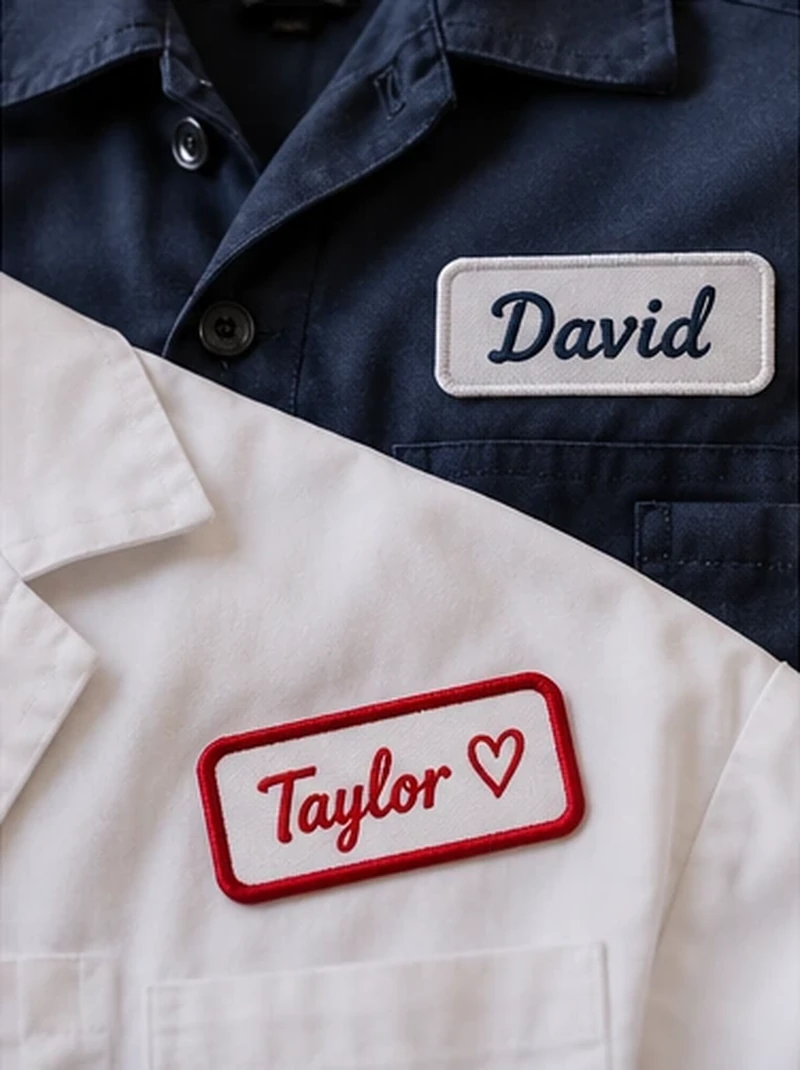
Name length is one of the most important factors in determining patch width. However, character count alone does not determine the exact space required.
For example, the letters in “WILLIAM” have a different combined width from those in “MILLER,” even when the same font and character height are used. Font style, individual letter shapes, spacing and stroke construction all affect the finished layout.
Short Names vs. Long Surnames
A short surname such as “LEE” can leave considerable empty space on a rectangular patch. A longer name such as “ALEXANDRA JOHNSON” may require a wider patch, a suitable condensed font or another approved layout adjustment.
The goal is to preserve the readability and appearance of the entire uniform identification system without forcing long names into stitching that is too small or crowded.
Should Every Name Patch Have the Same Size?
For many corporate and industrial uniform programs, a consistent patch size creates a more professional appearance. However, the master dimensions should be selected after testing representative names, especially the longest ones.
Where uniform requirements allow variable widths, adjusting patch width may preserve a more consistent letter height. Where all patches must use the same dimensions, font selection and approved text rules become especially important.
How Much Space Should Be Left Around the Text?
Lettering should not extend into the border stitching or sit so close to the edge that it appears crowded. The required clearance depends on the selected border construction, font, fabric and digitized embroidery.
Do not assume that the full outside dimensions are available for readable text. The border, internal spacing and any secondary line reduce the usable area.
Buyer recommendation: Before approving a fixed-width design, ask the manufacturer to show how the shortest and longest names will appear at actual production size.
3. What Is the Best Font for Embroidered Name Patches?
Simple, clearly shaped lettering is usually the safest starting point for workwear name patches. A decorative font may look attractive on a screen, but embroidery introduces physical limitations that do not exist in printing.
Embroidery creates letters using stitches and thread. Thin strokes, very small spaces, tight curves and closely connected characters can be difficult to reproduce clearly at small sizes.
Block and Sans-Serif Fonts
Block-style and simple sans-serif lettering often work well for industrial uniforms, maintenance workwear, warehouse staff apparel and security-style name tapes. Their straightforward letterforms can make names easier to recognize at a glance.
However, not all sans-serif fonts stitch equally well. Extremely thin or condensed versions may still create readability problems.
Serif Fonts
Serif lettering can provide a more traditional appearance for corporate apparel and selected hospitality uniforms. But the small finishing strokes that distinguish serif fonts may require a larger character size or adjustments to preserve their shape in embroidery.
Script and Decorative Fonts
Script fonts are commonly requested for personalized gifts, fashion accessories and decorative apparel. They can create a softer or more distinctive appearance than standard block lettering.
For employee identification, however, highly connected scripts may become less readable when embroidered in a narrow space. Some fonts also include thin connecting strokes or small internal openings that require careful digitizing.
Font Comparison for Uniform Name Patches
| Font Style | Typical Appearance | Suitable Use | Technical Risk |
|---|---|---|---|
| Simple Block | Clear, structured letters | Industrial workwear and uniform identification | Very small characters may still lose clarity |
| Sans-Serif | Clean and modern | Corporate uniforms, staff shirts and name tapes | Thin or condensed variants can be unsuitable |
| Serif | Traditional or formal | Selected corporate and hospitality applications | Fine finishing strokes may become unclear |
| Script | Decorative or handwritten | Personalized apparel and fashion accessories | Connected strokes can merge at small sizes |
| Highly Decorative | Distinctive branding effect | Larger fashion or promotional patches | Complex details may not reproduce at small dimensions |
Practical recommendation: For industrial uniforms and employee identification, prioritize clear, reproducible lettering over unnecessary decoration. The manufacturer should assess the actual font artwork rather than relying on the font category alone.
4. How Small Can Embroidered Letters Be Before They Become Unreadable?
There is no universal minimum letter height that guarantees readable embroidery across all fabrics, threads, machines and fonts.
Lettering performance depends on character shape, thread thickness, stitch direction, needle selection, fabric stability, digitizing and the available embroidery area.
A simple capital letter may remain recognizable at a size where a complicated lowercase character or decorative script does not.
Why Small Embroidered Text Can Lose Detail
Several physical effects can reduce lettering clarity:
- Thread thickness: The thread occupies real space and cannot reproduce infinitely thin lines.
- Stitch density: Excessively dense stitching can create a bulky surface or distort the fabric.
- Fabric movement: Stretching, puckering and insufficient stabilization can shift the stitches from the intended layout.
- Small internal openings: Spaces inside letters such as A, B, D, O, P and R may close when stitched too tightly.
- Tight letter spacing: Adjacent characters may appear connected, particularly in narrow fonts.
- Border interference: A thick finished edge can reduce the area available for lettering.
How Manufacturers Improve Small-Letter Readability
Possible solutions include selecting a simpler font, increasing the finished patch size, adjusting character spacing, modifying digitizing parameters, changing stitch construction or choosing a different textile production method.
Each option should be evaluated against the finished appearance and intended use.
At LOVECOLOUR, embroidery preparation includes reviewing the artwork and the required finished size. See our custom embroidery manufacturing process for information about stitch preparation and finishing.
Why a Physical Stitch-Out Matters
A digital proof can confirm spelling, proportions, approximate layout and color instructions. It cannot fully demonstrate the texture, edge definition or legibility of the actual embroidery.
For critical uniform identification, a physical stitch-out or sample can reveal problems before a full order is produced.
Production tip: Test representative short, medium and long names using the final font and finished size. This is more useful than approving a single short name and assuming every longer name will behave identically.
5. Embroidered vs. Woven Name Patches: Which Is Better for Small Text?
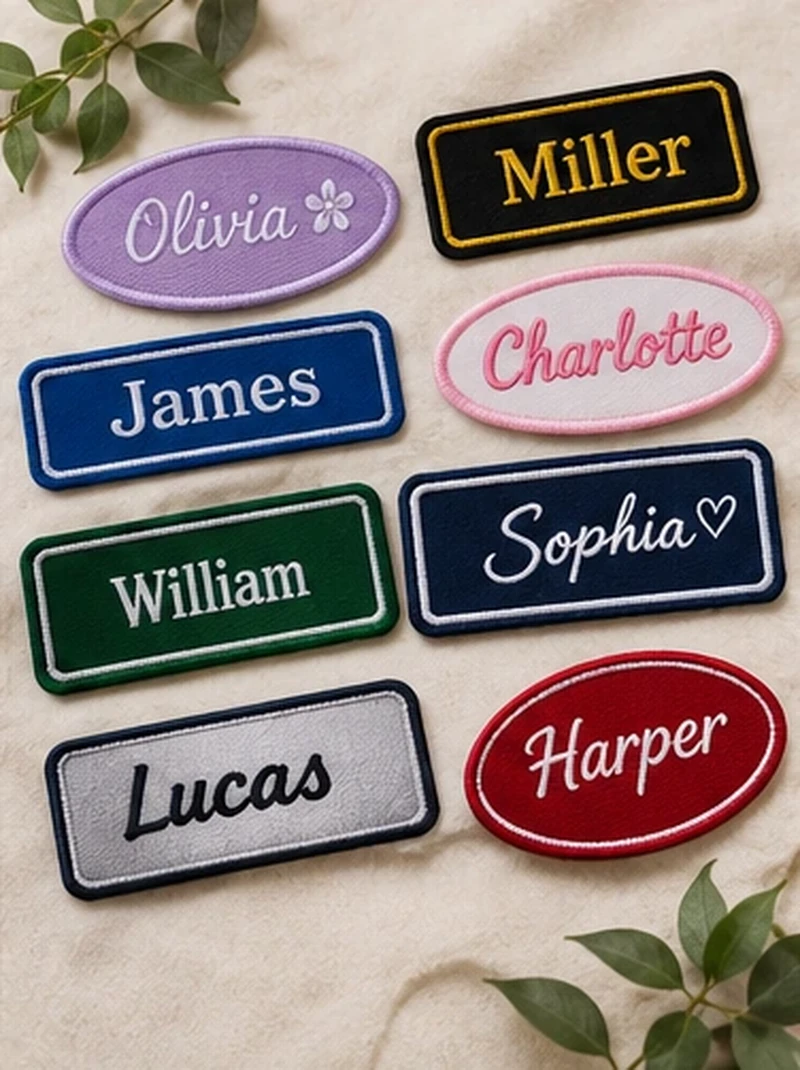
Embroidery and weaving are different textile manufacturing processes, and each can be appropriate for custom name patches.
An embroidered name patch uses stitches applied onto a base fabric. A woven patch builds the design with interlaced yarns, usually creating a flatter surface that can be suited to fine details and smaller lettering.
| Feature | Embroidered Name Patch | Woven Name Patch |
|---|---|---|
| Surface Texture | Raised and tactile stitching | Generally flatter woven construction |
| Appearance | Traditional embroidered uniform look | Fine textile detail with a lower-profile surface |
| Small Lettering | Limited by stitch structure and available space | Can be more suitable for finer text, subject to weaving capability |
| Bold Lettering | Often a strong choice | Also possible, with a different visual effect |
| Fabric Feel | Varies with base fabric and embroidery coverage | Varies with yarn structure and finishing |
| Best Choice | When raised embroidery texture and clear lettering are desired | When the design requires finer textile detail or a flatter finish |
If a customer requires very small letters in a limited area, the correct recommendation may be to revise the size, simplify the lettering or evaluate a woven alternative rather than forcing the artwork into embroidery.
Explore our custom woven patches and embroidered patch collection to compare manufacturing options.
6. Which Background Fabric and Thread Colors Are Best for Name Patches?
Color selection affects both appearance and practical readability. A name patch should coordinate with the uniform while allowing the lettering to be distinguished from the background.
High-Contrast Color Combinations
Dark fabric with light lettering and light fabric with dark lettering are common starting points for readable identification patches.
Examples include navy fabric with white embroidery, black fabric with light-gray lettering, khaki fabric with dark-brown lettering or white fabric with dark-blue text.
These combinations are examples, not guaranteed visibility solutions. Actual readability also depends on lighting, viewing distance, color characteristics, stitch texture and font size.
Low-Contrast and Subdued Uniform Colors
Some tactical-style uniforms, outdoor equipment and security workwear require subdued name tapes with reduced visual contrast.
In those situations, the customer may prioritize compatibility with an established uniform appearance rather than maximum visibility.
The embroidery layout still needs enough distinction between the stitched letters and background fabric to meet the buyer’s intended use.
Can Embroidery Threads Be Matched to Pantone Colors?
Pantone references can help communicate the intended color, but thread is a physical textile material rather than a printed ink surface.
The closest available thread should be evaluated using a thread color card or actual sample where color accuracy matters. The appearance of embroidery can also change with lighting, thread sheen and stitch direction.
For repeat uniform programs, retain the approved thread reference and production sample rather than relying only on screen colors.
7. Merrowed Border vs. Laser-Cut Edge for Embroidered Name Patches
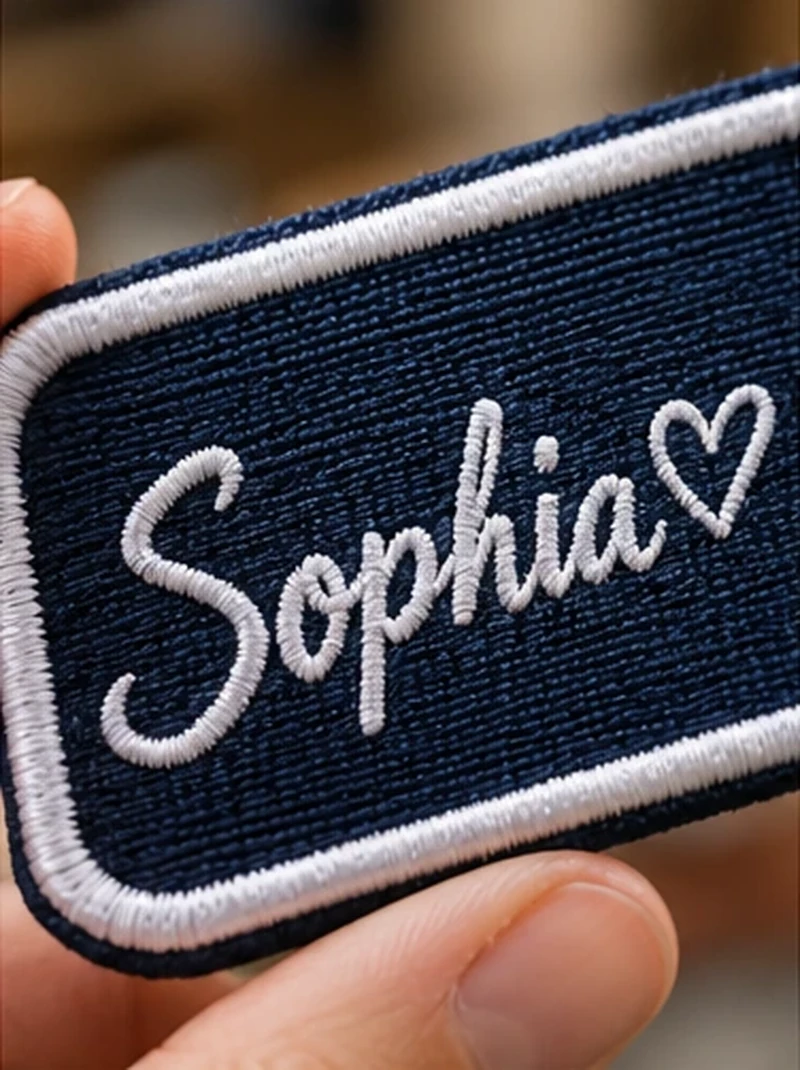
The edge finish influences the patch’s shape, appearance and available embroidery space.
Merrowed Borders
A merrowed border is a stitched overlock-style edge that wraps around the patch perimeter. It creates a recognizable traditional patch appearance and is often suitable for rectangular, oval and other shapes that can accommodate the border construction.
The border occupies space around the patch. On narrow name tapes, this should be considered when calculating the usable lettering area.
Laser-Cut and Other Cut Edges
Laser-cut or contour-cut edges can be useful for certain shapes and designs, particularly where a conventional merrowed border is not suitable.
The appropriate construction depends on the fabric, shape, edge requirements and any additional finishing used to control fraying or support the patch.
Which Edge Is Better for a Name Patch?
For a classic rectangular embroidered name patch, a merrowed border may be a suitable choice. For a specially shaped design or a layout requiring a different edge profile, a cut-edge construction may be more appropriate.
Neither edge type should be selected solely from a photograph. Buyers should check the final dimensions, embroidery-to-border clearance and compatibility with the attachment method.
8. Sew-On vs. Iron-On vs. Hook-and-Loop Name Patches
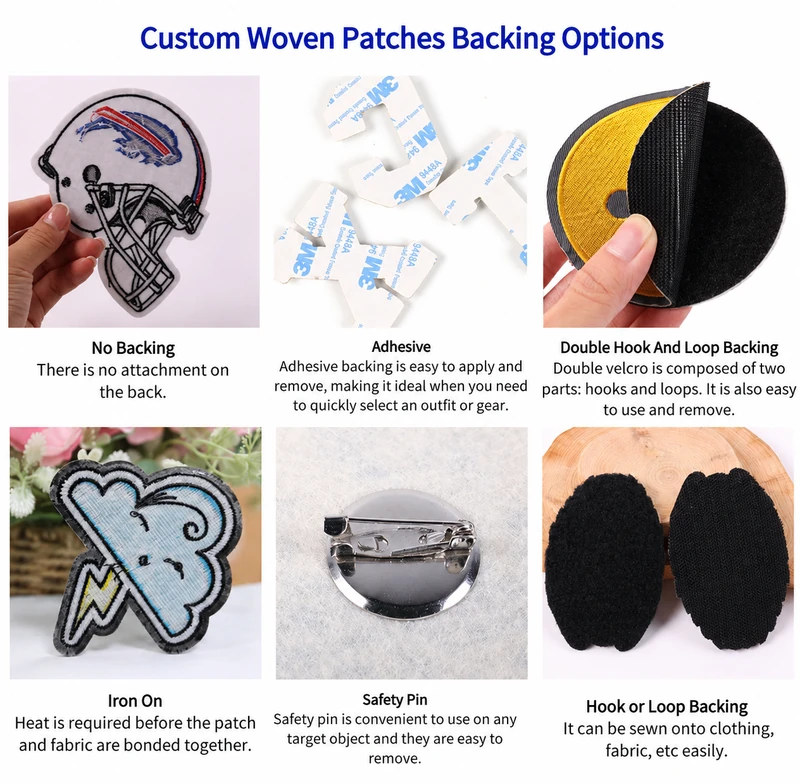
The backing is not just an optional finishing detail. It affects how the patch is attached, how it behaves during washing and whether the identification can be removed or replaced.
For wholesale uniform programs, choosing the wrong attachment method can create problems even when the patch itself is manufactured correctly.
Quick Backing Comparison
| Attachment Method | Common Applications | Main Advantage | Key Limitation |
|---|---|---|---|
| Sew-On | Work shirts, industrial uniforms, coveralls and jackets | Permanent mechanical attachment | Requires sewing access and appropriate garment construction |
| Iron-On / Heat-Seal | Compatible apparel fabrics and selected uniform programs | Heat application without initial perimeter sewing | Performance depends on fabric, adhesive, pressing and laundering |
| Hook-and-Loop | Removable uniform name tapes, tactical-style apparel and equipment | Easy removal and replacement | Requires compatible receiving surface and secure installation |
Sew-On Embroidered Name Patches
Sew-on backing is a practical choice for permanent employee identification on uniforms that are worn and laundered regularly.
The patch is secured through stitching around or through the appropriate edge area. Attachment performance depends on stitch quality, garment material, thread and laundering conditions.
For industrial workwear suppliers, maintenance uniforms and service technicians, sew-on attachment is often worth evaluating first when long-term permanent installation is required.
Iron-On Embroidered Name Patches
Iron-on patches use a heat-activated adhesive system. The patch is applied under appropriate temperature, pressure and dwell-time conditions.
Not every garment is suitable for heat application. Heat-sensitive fabrics, coated surfaces, stretch materials, water-repellent finishes and complex garment constructions may affect adhesion or be damaged by pressing.
For work uniforms exposed to frequent laundering or demanding service conditions, an iron-on adhesive should be tested with the actual garment fabric and cleaning process. Supplementary sewing may be appropriate in some applications.
Important: Do not assume that a generic domestic iron setting or one pressing temperature is correct for every backing. Use the confirmed adhesive specification and test conditions provided for the selected construction.
Hook-and-Loop Name Patches (Often Called Velcro Name Patches)
Hook-and-loop fastening is used where name patches must be removable or interchangeable. The patch normally has one fastening component on its reverse side and attaches to a compatible receiving panel.
Buyers should confirm whether the garment already has a loop panel, whether matching loop material is required and which dimensions and orientation are needed.
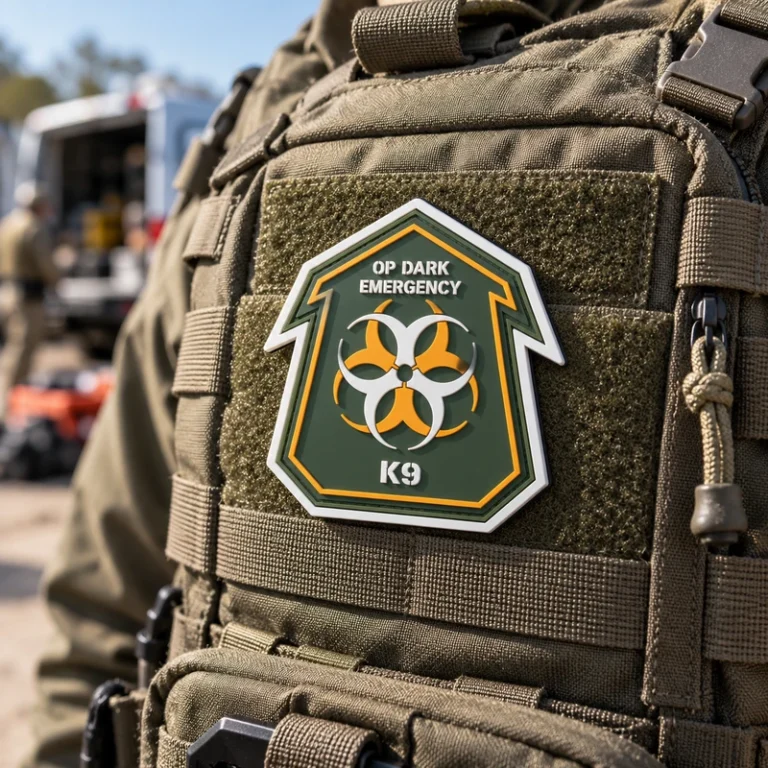
This construction is often requested for tactical-style name tapes, security clothing, field equipment and removable staff identification.
Which Backing Should a Uniform Distributor Recommend?
For permanent identification on heavily used work shirts, evaluate sew-on first. For a compatible garment requiring heat application, assess the correct iron-on system through garment testing. For identification that must be changed or removed, evaluate hook-and-loop.
The selected method should reflect actual use, not simply the easiest application method shown in a product photograph.
9. What Backing Works Best for Frequently Washed Work Uniforms?
Uniform laundering requirements vary. Some garments are washed at home, while others may be cleaned through commercial or industrial laundering processes.
Frequent washing can expose patches to mechanical movement, detergents, elevated temperatures and drying conditions. These factors affect both the embroidered textile and its attachment.
Permanent Workwear Attachment
Proper sewing is often a practical choice when a patch is intended to remain attached to a work shirt or jacket over repeated use and cleaning cycles.
However, sewing quality, fabric compatibility and garment care instructions still matter. A sewn patch should not automatically be described as suitable for every industrial laundry program without appropriate validation.
Heat-Seal Performance
The bonding performance of a heat-seal patch depends on the adhesive system, fabric composition, surface finish and pressing conditions.
If uniforms will undergo repeated laundering, buyers should arrange testing using representative garments and the cleaning conditions actually used by the organization.
Removable Identification
Hook-and-loop name patches may be removed before cleaning when permitted by the uniform program. The life of the fastening system depends on material quality, installation, use, contamination and repeated attachment cycles.
Procurement checklist: Confirm garment fiber composition, coatings, wash temperature, drying method, expected wash frequency and whether the patch must remain permanently attached.
10. Embroidered Name Patch Requirements by Industry
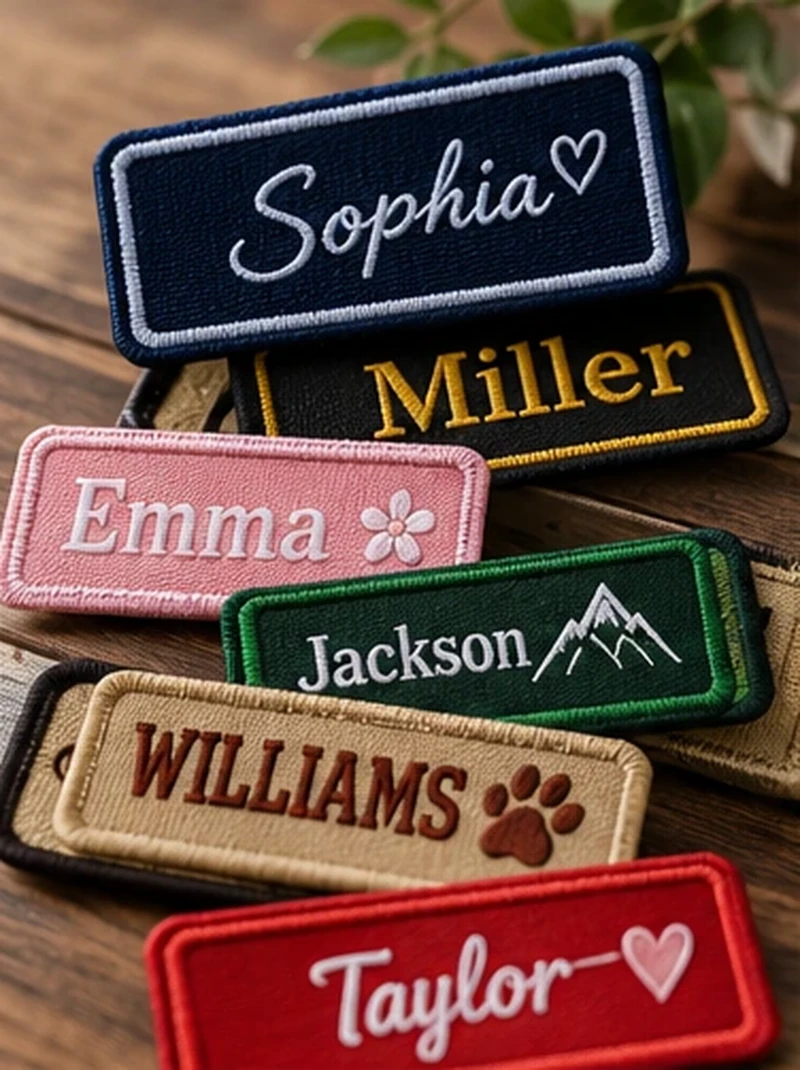
Uniform identification requirements differ across industries. The preferred patch dimensions, lettering and backing should follow the actual garment and working environment.
Industrial Workwear and Manufacturing Uniforms
Factories, maintenance contractors, production facilities and industrial uniform suppliers may require embroidered employee name patches for work shirts, jackets and coveralls.
Common purchasing considerations include permanent attachment, repeated laundering, readable lettering and consistent replacement specifications for new employees.
For this application, a simple rectangular embroidered name patch with a stable design standard is often easier to maintain across a workforce.
Security Uniforms and Tactical-Style Apparel
Security uniform distributors and tactical equipment buyers may require narrow rectangular name tapes, block lettering, subdued colors and removable hook-and-loop attachment.
The dimensions should match the intended uniform or receiving panel. Buyers should supply any required identification standard or approved design restrictions before production.
Corporate Uniforms and Professional Staff Apparel
Corporate uniform suppliers may use embroidered name patches on staff shirts, jackets and service apparel. Readability and coordinated appearance are important when individual names are combined with company branding.
For a complete uniform branding program, employee name patches can be paired with separate custom corporate uniform logo patches.
Warehouse, Logistics and Field Service Uniforms
Warehouse staff, logistics workers, equipment technicians and service personnel may wear name patches on work shirts, vests and jackets.
Buyers should consider garment placement, cleaning requirements and whether identification needs to be visible during normal working activities.
Hospitality, Cleaning and Facility Management
Hotels, cleaning contractors and facility service providers may prefer compact name patches that coordinate with staff uniforms.
Where the uniform appearance is more formal, font style and patch proportions may be adjusted to suit the garment while maintaining clear identification.
Outdoor Organizations, Camps and Team Apparel
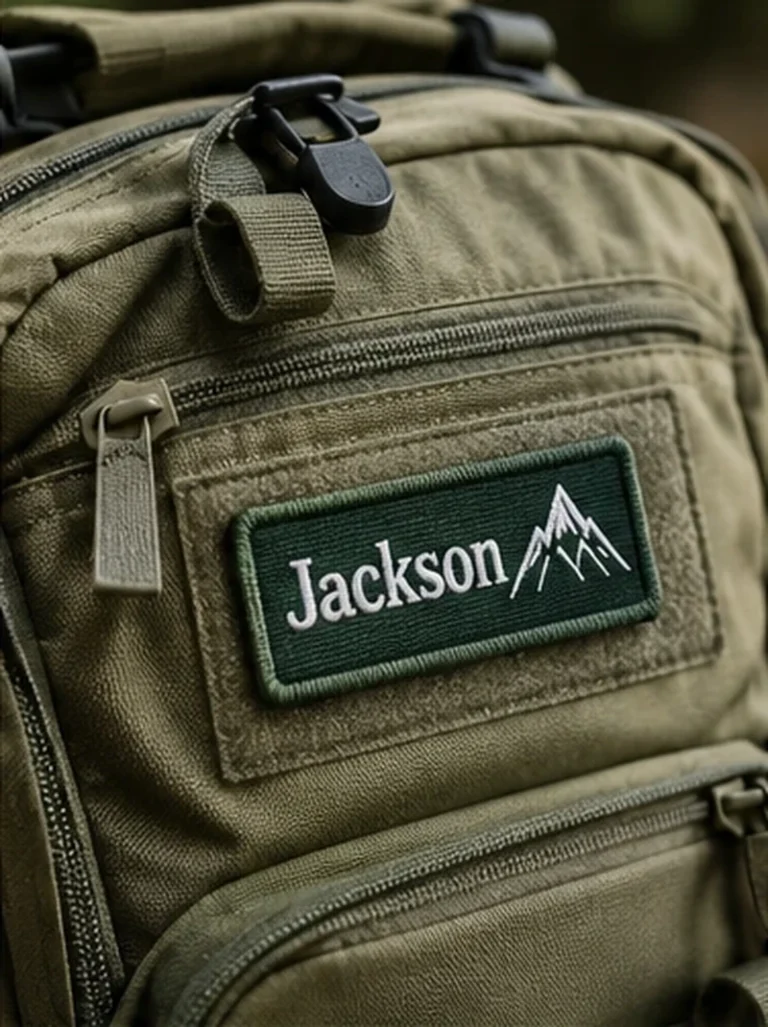
Outdoor brands, organized camps, clubs and team apparel suppliers may use personalized embroidered name patches on jackets, backpacks and uniforms.
For bags or equipment with existing attachment panels, check the dimensions and backing. For clothing, consider whether permanent sewing or removable fastening is more appropriate.
11. How to Specify Name Patches for Different International Markets
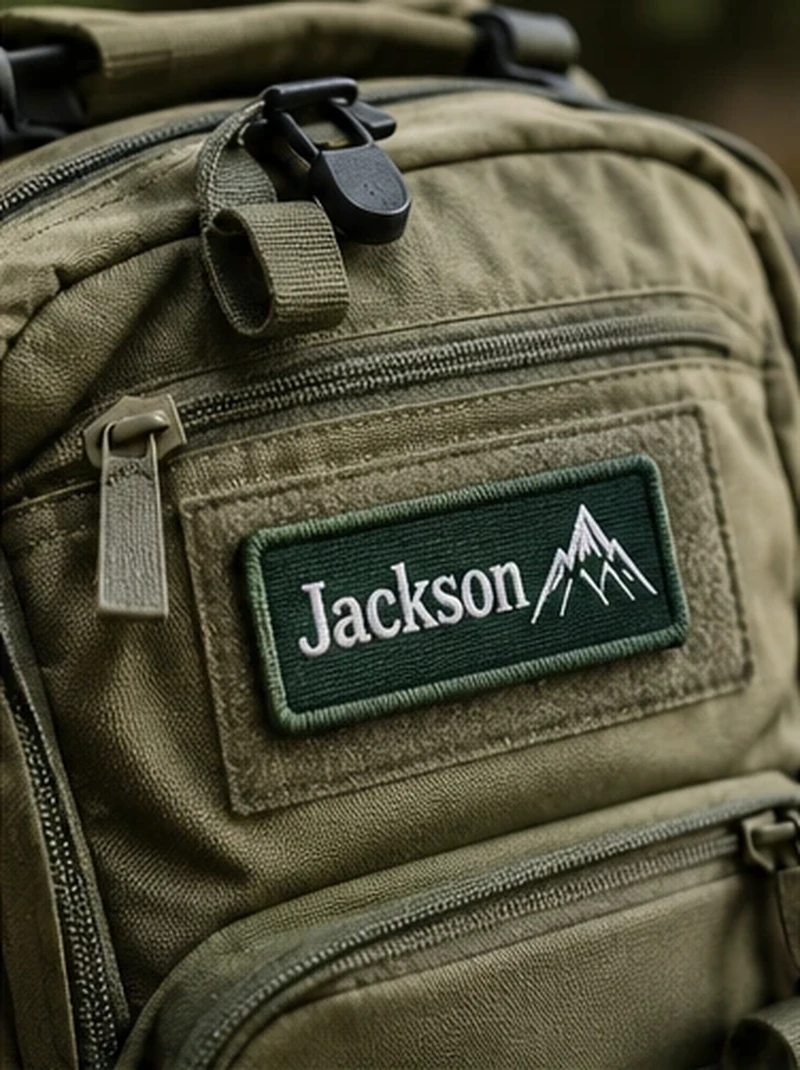
Uniform buyers in different countries may source embroidered name patches from the same manufacturer while having different garment specifications, procurement documentation and delivery requirements.
Regional location alone does not determine the correct patch size, font or backing. The customer’s actual uniform standard and intended application should guide the design.
United States: Uniform Suppliers and Workwear Distributors
US uniform distributors, industrial workwear suppliers, maintenance contractors and security apparel buyers may require embroidered name patches in inch-based dimensions.
When submitting an inquiry, specify the required width and height in inches or millimeters and identify the garment style. If the patch must match an existing work shirt or removable panel, provide physical measurements or a sample.
For workwear subjected to commercial cleaning, verify the intended laundering conditions rather than assuming a standard iron-on backing will be suitable.
United Kingdom: Workwear and Staff Uniform Programs
UK workwear distributors, facilities management suppliers and corporate apparel buyers may require name patches for polos, work jackets, shirts and industrial clothing.
Confirm dimensions, garment material, lettering style and attachment before ordering. If a customer uses an established uniform design, the approved sample should take priority over generic size recommendations.
Australia and New Zealand: Trade Workwear and Service Uniforms
Australian and New Zealand buyers may source personalized name patches for trade workwear, maintenance teams, outdoor staff and corporate uniforms.
Heat-sensitive performance fabrics and specialized workwear require careful assessment before heat application. Where garments have protective performance requirements, buyers should verify that patch placement and attachment do not compromise the garment’s intended compliance.
Canada and Europe: Multilingual Names and Workwear Procurement
Canadian and European uniform suppliers may require accented characters, multilingual text or special name formats.
These details should be included in the artwork review. Small accents and punctuation may require adjustment when the available embroidery area is limited.
For overseas orders, specify the delivery destination, required arrival date and whether physical sample approval is needed before production.
12. Common Embroidered Name Patch Design Mistakes
Many name patch problems begin with incomplete specifications rather than defective production equipment.
Mistake 1: Choosing the Patch Size Before Checking the Longest Name
A compact patch may look balanced with a short sample name but become crowded with a longer employee name. Review representative text variations before locking the dimensions.
Mistake 2: Using a Font That Is Too Thin or Decorative
Very fine lines and connected script details can be difficult to reproduce with embroidery. Evaluate lettering at finished size and simplify where necessary.
Mistake 3: Ignoring the Space Occupied by the Border
A thick merrowed border reduces the available text area. Allow sufficient clearance when deciding the final width and height.
Mistake 4: Selecting Backing Without Checking the Garment
Heat-seal backing may not bond reliably to some coated or heat-sensitive fabrics. Hook-and-loop requires a compatible receiving surface. Sew-on attachment needs suitable sewing access and garment construction.
Mistake 5: Relying Only on Screen Colors
Embroidery thread has a physical color and sheen. When matching an existing uniform, use approved thread references or samples instead of relying only on digital images.
Mistake 6: Approving the Artwork at the Wrong Viewing Scale
Large on-screen lettering can conceal problems that become obvious on a small finished patch. Confirm proportions and stitch clarity at actual size.
Mistake 7: Failing to Define Laundry and Use Conditions
Attachment performance can differ between ordinary wear, domestic washing and demanding commercial cleaning. Identify the intended care conditions before selecting backing.
Mistake 8: Not Keeping an Approved Production Specification
Without a recorded size, font, thread reference, border and backing, future replacement orders may not match the original uniform program.
13. How to Approve an Embroidered Name Patch Sample
A sample should be evaluated as a potential production reference, not only as an attractive presentation piece.
During sample approval, inspect the following details:
| Inspection Item | What to Check |
|---|---|
| Finished Dimensions | Width, height and consistency with the garment location |
| Lettering | Readability, alignment, spacing and spelling |
| Long Names | Layout performance for the longest required text |
| Embroidery Quality | Stitch coverage, distortion, loose threads and clear letter shapes |
| Colors | Fabric and embroidery thread against approved references |
| Border | Correct edge construction and sufficient text clearance |
| Backing | Correct attachment material and orientation |
| Garment Fit | Actual position, available sewing space or receiving panel compatibility |
| Use Conditions | Appropriate attachment testing and laundering requirements |
When a sample is approved, retain the corresponding artwork version and confirmed manufacturing specification for future production and repeat orders.
Learn more about inspection and approval considerations on our custom patch quality control page.
14. Technical Specification Checklist for Bulk Uniform Name Patches
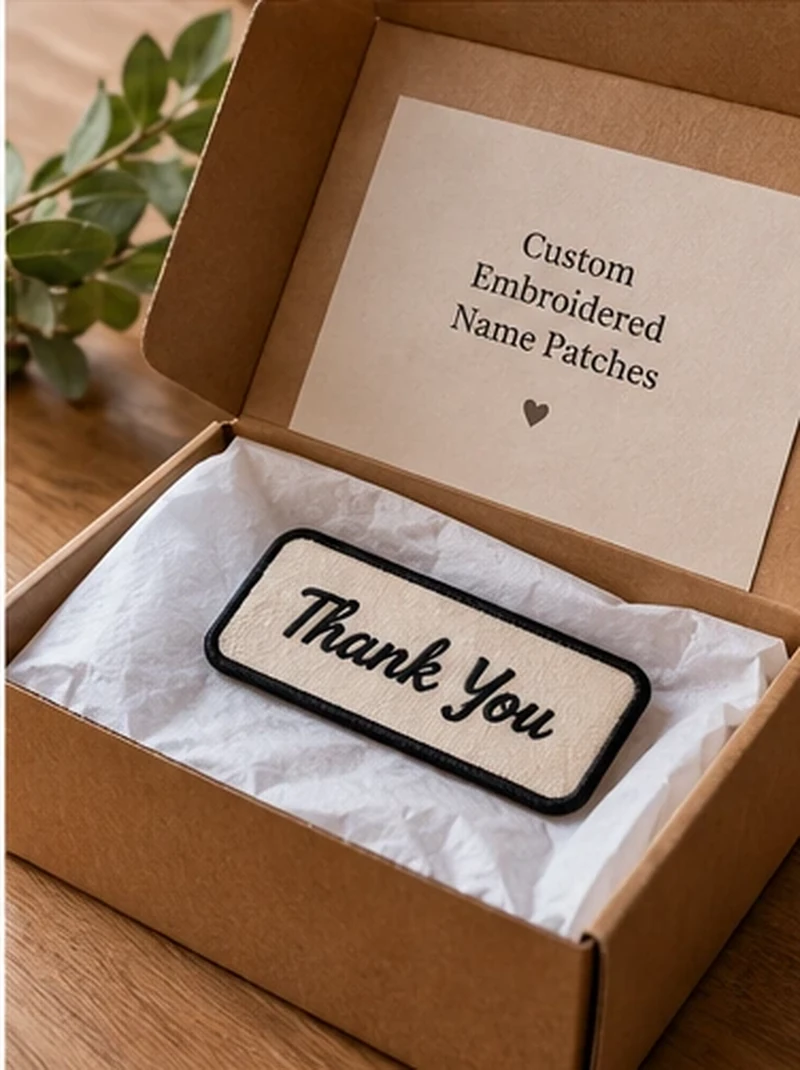
Before requesting a final quote, provide a complete specification wherever possible. This helps the manufacturer evaluate feasibility and prepare an accurate proposal.
- Product type: Embroidered name patch, name tape or two-line identification badge.
- Finished size: Width and height in millimeters or inches.
- Lettering: Name format, font preference, capitalization and longest expected name.
- Base material: Fabric type and required background color.
- Thread colors: Color references or physical matching requirements.
- Border: Merrowed edge, contour-cut edge or other approved construction.
- Backing: Sew-on, iron-on or hook-and-loop, including receiving material if needed.
- Garment application: Work shirt, jacket, coverall, vest, bag or another item.
- Care conditions: Expected washing, drying, industrial laundering or heat restrictions.
- Quantity: Total patches and any relevant text or specification variations.
- Approval: Required digital proof, physical sample and approval instructions.
- Delivery: Destination and required in-hand date.
If your project involves many employees with different names, prepare a separate list showing each name and quantity. This supports accurate production planning but should not replace the technical patch specification.
15. Frequently Asked Questions About Embroidered Name Patch Sizes and Backing
What is a common size for an embroidered name patch?
Custom uniform name patches are produced in various dimensions. Formats around 90 × 30 mm or 100 × 30 mm can be useful design starting points for some single-line layouts, but the final size should be selected based on name length, lettering style and garment requirements. These examples are not universal standards.
What size should an embroidered name tape be?
The appropriate dimensions depend on the intended uniform or equipment panel. If the patch must fit an existing hook-and-loop area, measure that panel first and confirm the approved specification before production.
What font is easiest to read on an embroidered name patch?
Simple block-style or well-spaced sans-serif lettering is often a practical choice. Readability still depends on the actual font design, letter height, thread, stitch structure and background contrast.
Can very small letters be embroidered?
Small lettering is possible within technical limits, but there is no universal minimum height that guarantees reliable results for every design. Thin strokes, tight spacing and complex characters may require a larger patch or a different process.
Are embroidered or woven name patches better for fine text?
Woven patches can be suitable for finer details and a flatter textile finish, while embroidery provides a raised stitched appearance. The better option depends on the artwork, size and desired appearance.
Are sew-on patches better than iron-on patches for work uniforms?
For permanent identification on frequently laundered uniforms, sew-on is often a practical starting point. Iron-on performance depends on the adhesive, pressing conditions and garment material and should be tested for the intended care requirements.
Can I use iron-on name patches on polyester workwear?
It depends on the specific polyester fabric, coatings, adhesive and required pressing conditions. Some garments can be damaged by heat or may not provide reliable adhesion. Test the actual fabric and backing combination before bulk application.
Do Velcro name patches require matching loop material?
Hook-and-loop patches need a compatible fastening surface. If the garment already has a suitable loop panel, an additional panel may not be required. Confirm the exact construction and dimensions before ordering.
Which border is better for rectangular embroidered name patches?
Merrowed borders are a traditional choice for many rectangular name patches. A cut-edge construction may be selected where the design or shape requires it. Border width and lettering clearance should be checked for either option.
Can you match an existing employee name patch?
An existing sample, reference photograph and technical specifications can be reviewed for reproduction. Accurate matching depends on identifying the actual size, font, material, colors, border and backing. Physical sample approval is recommended where consistency is critical.
Can long employee surnames fit on the same patch size?
Sometimes, but not always. Long names may require revised spacing, a different font, a wider patch or an approved abbreviation. The best solution should preserve readability and follow the buyer’s identification requirements.
Can name patches be used on protective or high-visibility workwear?
Possibly, but garment compliance and performance must be considered. Patch placement, sewing, adhesive application and material selection should be reviewed by the responsible garment supplier or qualified party to ensure the intended protective function is not compromised.
16. Choosing a Custom Embroidered Name Patch Manufacturer
For wholesale buyers, the right manufacturer should do more than accept an artwork file and provide a price.
A reliable production discussion should cover lettering feasibility, actual finished dimensions, material selection, border clearance, backing compatibility, sample approval and quality inspection.
Guangzhou Lovecolour Garment Accessories Co., Ltd. manufactures custom patches and garment accessories for apparel brands, uniform suppliers, promotional distributors and other B2B buyers.
We can review your project requirements and discuss suitable embroidery construction, attachment options and sampling before a bulk order is confirmed.
Explore our custom embroidered patches, browse the broader custom patches collection, or review our embroidery production process.
17. Request a Factory-Direct Quote for Embroidered Name Patches
Need custom embroidered name patches for industrial workwear, security uniforms, corporate apparel, hospitality staff, outdoor equipment or uniform wholesale distribution?
Send us your preferred patch dimensions, example names, font style, fabric color, backing method, estimated quantity and intended garment application.
If you are unsure which size or backing is suitable, include photographs or measurements of the garment and describe how it will be worn, washed and used.
Our team can review the available information and recommend a manufacturing specification for quotation and sample evaluation.
For OEM and wholesale projects, accurate artwork and application details help avoid costly specification changes before bulk production.
Request a Custom Embroidered Name Patch Quote
Related Manufacturing and Purchasing Resources
- Custom Embroidered Patches – Browse custom stitched patches for uniforms, apparel and branded merchandise.
- Custom Woven Patches – Compare woven textile construction for finer lettering and detailed designs.
- Custom Corporate Uniform Patches – Explore coordinated uniform branding and employee identification options.
- Embroidery Manufacturing Process – Understand artwork preparation, digitizing, stitching and finishing.
- Custom Patch Quality Control – Learn how approved references and production specifications guide inspection.
- Start Your Custom Patch Project – Send artwork, size, quantity, backing and delivery requirements for review.
Technical note: Dimensions and design examples in this article are illustrative. Final readability, adhesion, laundering suitability, garment compliance and manufacturing feasibility depend on the approved specifications and appropriate testing. No specific minimum letter height, wash-cycle life or attachment performance is guaranteed by this guide.