What Makes a Custom Patch Quote Change? A Cost Driver Guide for Buyers
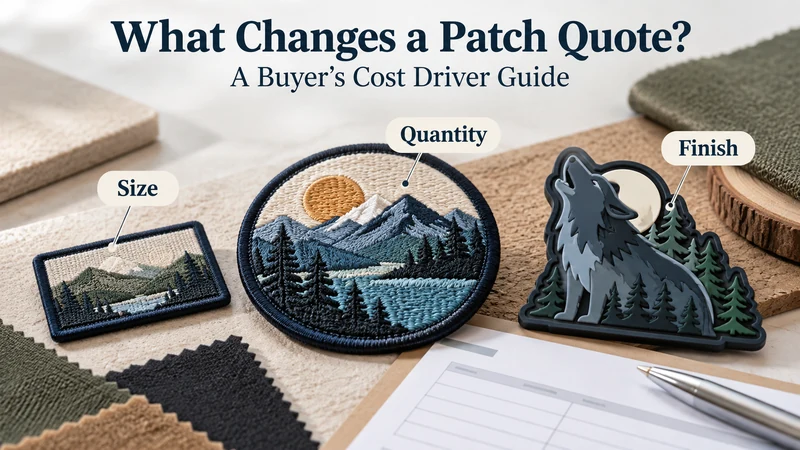
A custom patch quote changes when the product specification changes. Finished size, quantity per design, artwork complexity, patch construction, backing and packaging can all affect the amount you pay. Setup, samples and shipping may appear as separate charges or be included in a supplier’s unit price.
That is why a low “price per patch” is not enough to evaluate an offer. For a useful comparison, make sure each supplier is quoting the same finished product, the same quantity for each design and the same delivery requirements. This guide shows what to check before you approve a price or request a revised one.
How Do Size, Quantity and Design Complexity Affect the Quote?
Finished size
A larger patch generally uses more material and gives the design more surface area to produce. But quoting by one dimension alone can hide important differences. A narrow rectangle and a wide circular patch may share a longest dimension while using very different amounts of material or stitching.
Send the finished width and height, including the border or outer edge. If a supplier recommends resizing the artwork to make small text readable, ask for a revised price based on that new size.
Quantity
Unit prices often change with order quantity, but confirm quantity per design, not only the combined total. An order for several different logos may involve separate artwork preparation, production files or tooling. It should not automatically be treated as one large run of an identical patch.
Ask for price breaks at quantities you might realistically purchase. A lower unit price at a much larger quantity is only useful if your business can sell or use the extra stock.
Design complexity
“Complex” means different things for different patch types.
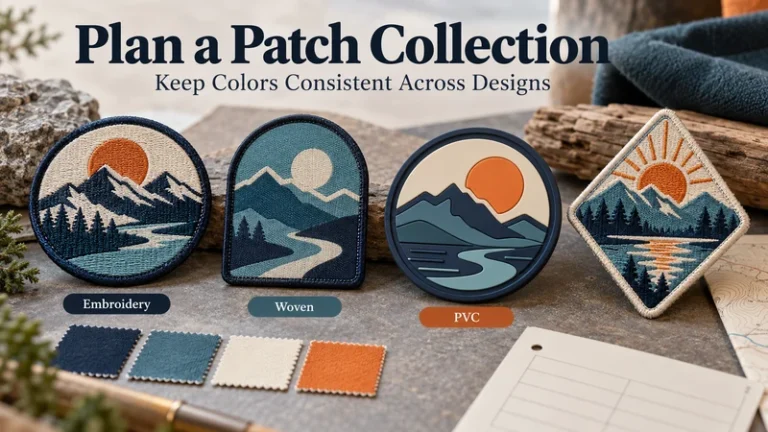
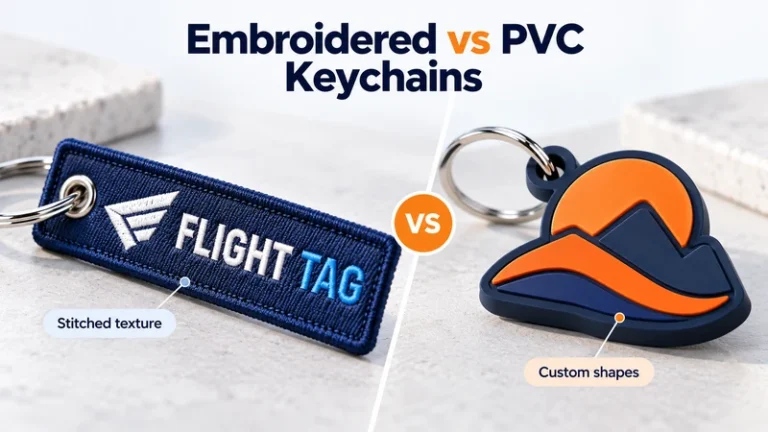
For an embroidered patch, the amount of stitched coverage, lettering, color areas and production file can affect the work involved. For a PVC patch, the molded shape, number and layout of colors, relief levels and fine details deserve attention. For a woven patch, fine detail and construction requirements should be reviewed against the artwork.
Do not assume that removing one color will always create a meaningful saving. Ask the supplier which specific change affects this quote and whether it changes the result your brand needs.
How Do Backing, Edge Finish and Packaging Change the Price?
The front artwork is only part of the specification. Two visually similar patches can have different prices because they are built for different applications.
Backing: State whether you need sew-on, iron-on, hook-and-loop, adhesive or another available option. Confirm what is included: for example, if you request hook-and-loop, ask whether the mating piece is included and how it will be packed. Choose backing for the intended garment or product, then compare prices for that same backing.
Edge finish: A merrowed border, laser-cut edge or stitched finish can change both the appearance and production method. Give the supplier the actual outline rather than describing every design simply as “round” or “custom shape.”
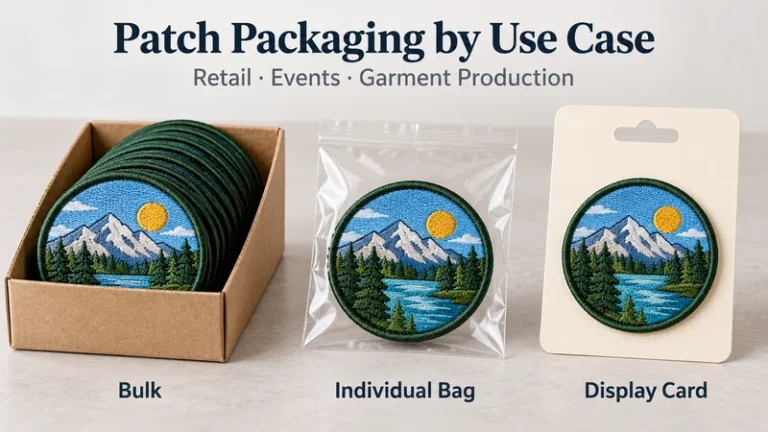
Packaging: Loose bulk packing, individual bags, printed backing cards, SKU labels and barcodes are different jobs. If retail presentation is required, include it in the first RFQ. Adding it after approving the patch quote will change the project total.
A clear quotation should show whether these specifications are included, optional or excluded. If the line simply says “standard backing and packing,” ask what “standard” means for that supplier.
Why Can Several Designs in One Order Need Separate Quotes?
A buyer might request one purchase order containing five logos, each in a small quantity. The total number of patches sounds attractive, but the manufacturer may need to prepare and approve five separate designs.
The same issue applies to variations. Changing only the packaging label may be handled differently from changing the patch artwork, size, backing or PVC shape. A new molded design may need its own tooling. An embroidered design may need a separate production file. The exact charges and minimums depend on the supplier and the changes requested.
Give each version a simple SKU:
| SKU | What changes? | Quantity to quote |
|---|---|---|
| A | Original logo, sew-on backing | [Enter quantity] |
| B | Same logo, hook-and-loop backing | [Enter quantity] |
| C | Different logo, same size and backing as A | [Enter quantity] |
Then ask:
Which variations can share preparation or tooling? Which require a separate MOQ, setup charge or unit price?
That produces a more useful answer than asking whether “all designs can be combined” without listing what differs between them.
How Can You Compare Quotes Using the Same Specification?
Send every supplier one specification sheet and request an itemized response. The sheet should include artwork, finished dimensions, patch type, edge, backing, colors, quantity by design, sample requirements, packing and delivery destination.
Use this comparison table when the quotations arrive:
| Item to compare | Supplier A | Supplier B | What to confirm |
|---|---|---|---|
| Patch type and material | [Enter] | [Enter] | Are they quoting the same construction? |
| Finished size and edge | [Enter] | [Enter] | Is the border included in the dimensions? |
| Quantity per design | [Enter] | [Enter] | Are variations priced separately? |
| Backing | [Enter] | [Enter] | Are all required components included? |
| Unit price | [Enter] | [Enter] | At what quantity does it apply? |
| Artwork or setup charge | [Enter] | [Enter] | One-time, per design or included? |
| PVC tooling, if applicable | [Enter] | [Enter] | Separate charge or included in unit price? |
| Sample and revision terms | [Enter] | [Enter] | What is supplied for approval? |
| Individual packaging and labels | [Enter] | [Enter] | Included or additional? |
| Shipping and applicable charges | [Enter] | [Enter] | What delivery point is covered? |
| Total for this specification | [Enter] | [Enter] | Is this the full amount being compared? |
A practical comparison starts with:
Quoted total = unit price × quantity + separately charged setup/tooling + samples + packaging + shipping and other stated charges.
Do not add a charge twice if it is already included in the unit price. Ask each supplier to identify inclusions clearly.
The lowest total is not automatically the best fit, either. A quote for an unapproved backing or a different edge is a quote for a different product. Resolve specification differences before comparing the final numbers.
What Should You Ask When a Quote Changes After Sampling?
A revised quote can be reasonable if the approved product has changed. The key is to make the change visible.
Ask the supplier to show:
- The previous specification and price.
- The new specification and price.
- The exact reason for the difference.
- Whether the change affects tooling, sample approval or the production schedule.
For example, enlarging a patch to make a tagline readable changes the finished dimensions. Changing from a plain PVC design to raised relief can change the molded construction. Adding individual barcode cards changes packaging work.
Keep the current proof version beside the current quote version. If the two do not refer to the same design, pause the approval until they match. That small administrative check is much easier than sorting out a price difference after bulk production begins.
FAQ
Why did two suppliers quote different prices for the same artwork?
They may have assumed different sizes, materials, backings, production methods, packaging or shipping terms. They may also handle setup charges differently. Ask both to quote the same written specification and itemize the total.
Does a larger order always mean a lower total cost?
No. It may reduce the unit price while increasing the total spend. Compare the quantity you need with the quantity required for each price break.
Is a PVC mold fee always charged separately?
No. Some suppliers list tooling as a separate charge; others include it in the product price. Ask what is included, whether the tooling applies to a future reorder and what design changes would require new tooling.
Does every extra embroidery color raise the price?
Not necessarily. Pricing methods vary. Coverage, stitch work, setup and the overall design may matter alongside color count. Ask the supplier which part of your artwork changes its quote.
Should sample costs be included when comparing quotes?
Yes. Confirm whether a digital proof, physical sample, sample shipping and any revisions are included or separately charged. Also confirm what must be approved before bulk production.
Can I compare an embroidered quote with a PVC quote?
You can compare them as two product options, but they are not identical specifications. Evaluate appearance, application and any setup or tooling requirements along with the quoted total.
What information should I send for the most accurate quote?
Send the artwork, finished size, patch type, quantity by design, colors, edge, backing, packaging, delivery destination and required timing. Mark any detail that cannot be changed without your approval.
Ask for a Quote You Can Actually Compare
A useful patch quote tells you what will be made, what quantity the price covers, what is included and what requires a separate charge. When those details are clear, price discussions become more productive—and approving the sample becomes simpler.
If you are comparing options, send your artwork and specifications and request itemized quotations for the constructions you are considering. You can also browse the Knowledge guides for help choosing patch materials, edges and artwork approaches before finalizing the RFQ.