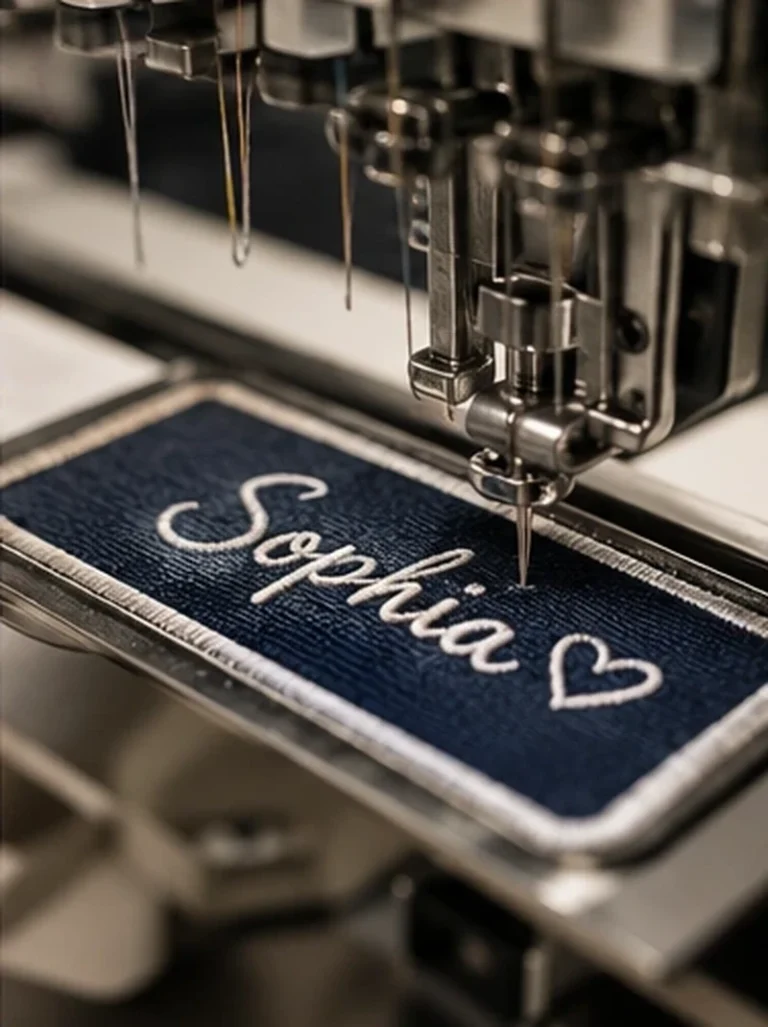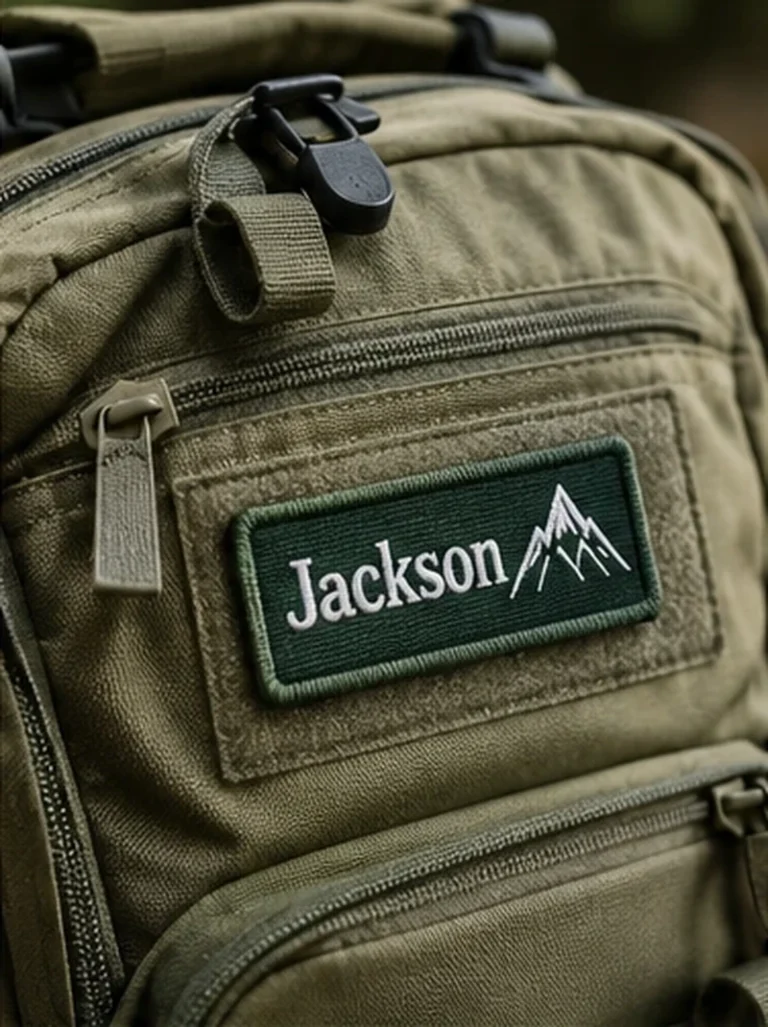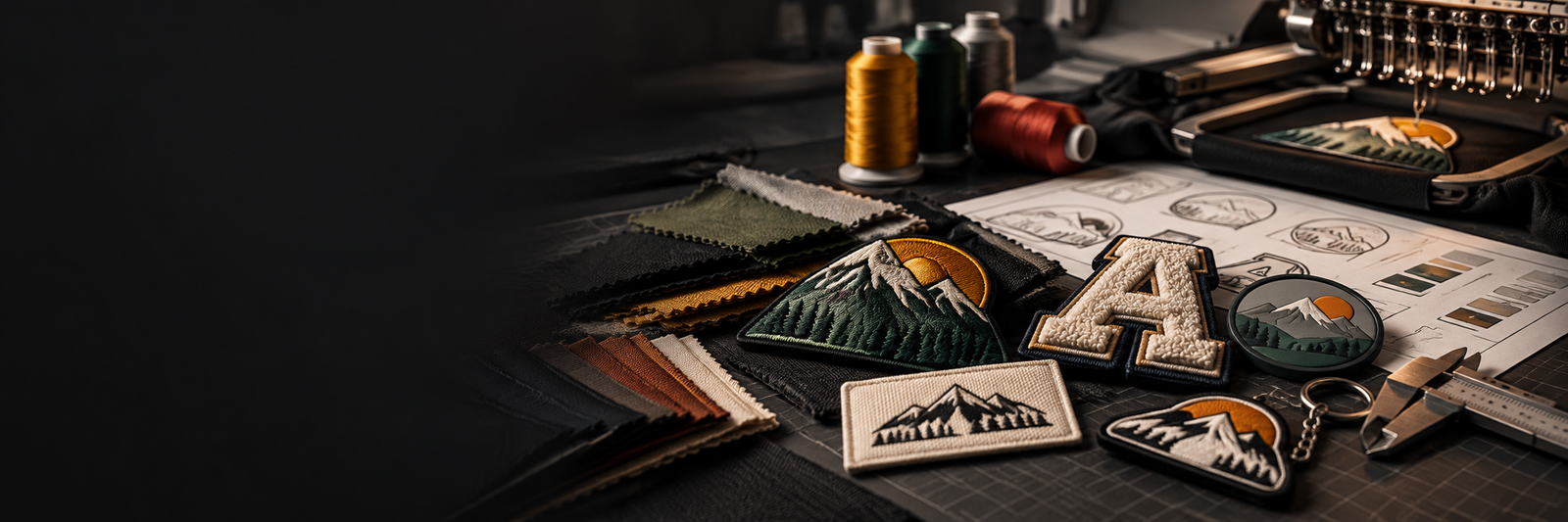
Embroidery provides visible stitching and a raised textile finish. Printing is often better for gradients, detailed illustrations and complex color artwork. Woven branding can be a useful alternative when a design contains fine lines or small lettering but still needs a textile appearance.
For bulk buyers, however, logo appearance is only part of the decision. The branding process also affects setup costs, production planning, sample approval and potentially the thickness or flexibility of the finished holder.
This guide compares the three methods specifically for custom fabric ID badge holders with clear PVC windows, stitched edges and optional lanyard attachments—not just for general apparel decoration.
Quick Answer: Which Branding Method Is Best?
Choose embroidery when the priority is a raised, stitched logo, bold lettering or a distinctive textile finish.
Choose printing when the design includes gradients, photographs, small graphic details or complex multicolor artwork.
Consider woven branding when fine textile detail is important and a separately manufactured woven label or panel can be integrated into the holder.
| Buying Priority | Recommended Starting Point |
|---|---|
| Bold logo with textured stitching | Embroidery |
| Full-color image or gradient | Suitable digital printing |
| Small text in a textile logo panel | Woven branding or fine embroidery |
| Large embroidered color blocks | Embroidery, after stiffness and stitch-density review |
| Frequent artwork changes | Compare printing and embroidery setup costs |
| Premium-looking textile merchandise | Embroidery or woven branding |
| Lowest total project cost | Compare actual quotations; no universal winner |
These recommendations are starting points. The actual fabric, branding method and construction should be approved together before bulk manufacturing.
1. What Is the Difference Between Embroidered, Printed and Woven ID Badge Holders?
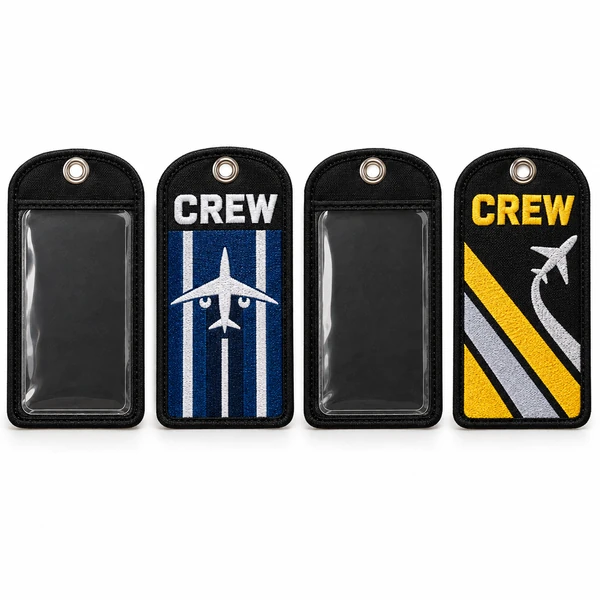
Embroidered Fabric ID Badge Holders
An embroidered badge holder uses machine stitching to create a design on a fabric surface. Logos, text, flags and decorative graphics are formed with embroidery threads.
The stitches remain visible and create a characteristic textured appearance.
A typical construction may combine:
- A polyester or nylon fabric body
- Embroidered branding on the back panel
- A transparent PVC window on the front
- Reinforced stitched or overlocked edges
- A metal eyelet for attaching a lanyard
Embroidery is particularly suitable for designs with bold lettering and recognizable shapes.
For example, an aviation crew accessory may use large embroidered CREW lettering, a simplified aircraft silhouette and contrasting thread colors.
Printed Fabric ID Badge Holders
Printed badge holders use a suitable printing process to apply the artwork to a fabric surface or a separately prepared decorative panel.
Depending on the materials and design requirements, possible processes include screen printing, heat transfer printing and other compatible digital printing methods.
Not every printing method works on every fabric. Surface texture, coatings, temperature tolerance and adhesion must be considered during process selection.
Printing is especially useful for:
- Multicolor graphics
- Color gradients
- Illustrated artwork
- Fine text that cannot be reproduced clearly with standard embroidery
- Designs requiring a relatively flat decorative surface
Woven Fabric ID Badge Holders
Woven branding creates a design by interlacing yarns during the weaving process rather than stitching a design onto an existing fabric surface.
For ID badge holders, a woven label or decorative panel may be prepared separately and then integrated into the holder during assembly.
This can produce a flatter textile appearance with precise yarn-based details.
However, a woven logo panel is not necessarily interchangeable with an embroidered panel without modifying the construction. Size, edge finishing, backing and sewing methods may differ.
2. Embroidery vs. Printing vs. Woven Branding: Detailed Comparison
| Factor | Embroidery | Printing | Woven |
|---|---|---|---|
| Visual Texture | Raised stitches | Usually flatter | Fine woven texture |
| Bold Lettering | Excellent candidate | Suitable | Suitable |
| Very Small Text | Requires careful digitizing | Often advantageous | Can reproduce fine details |
| Gradients | Limited approximation | Often suitable | Limited by weave and colors |
| Photographic Artwork | Not normally preferred | Often preferred | Not normally preferred |
| Large Design Areas | May increase thickness and stiffness | Depends on print process | Requires suitable panel construction |
| Setup | Embroidery digitizing | Process-dependent preparation | Weaving pattern preparation |
| Price Drivers | Stitches, setup, machine time | Method, coverage, colors, quantity | Yarn design, setup, quantity |
| Typical Look | Textured and dimensional | Graphic and detailed | Refined woven textile |
No single method is automatically the most durable, cheapest or highest quality.
Those outcomes depend on the selected materials, production conditions, testing requirements and the finished product’s intended use.
3. Which Method Produces the Clearest Logo and Smallest Lettering?
Logo detail is one of the biggest reasons buyers choose one decoration method over another.
Bold and Simple Logos: Embroidery Works Well
Embroidery is a strong candidate for:
- Large team names
- Short crew labels
- Company initials
- Simple symbols
- Distinctive outlines
- Solid color blocks
For instance, CREW embroidered in a bold typeface can remain visually prominent on a small fabric panel.
However, reducing a complicated design to fit the same space may produce crowded stitches or unclear details.
Small Text: Thread Weight and Digitizing Matter
Embroidery readability depends on more than letter height alone.
Important variables include:
- Thread thickness
- Needle size
- Font construction
- Stitch direction
- Spacing between characters
- Fabric stability
- Embroidery digitizing quality
For technical context, embroidery thread manufacturer Madeira explains how finer 60-weight thread can support small lettering and fine details under appropriate production conditions.
Its guidance discusses the possibility of approximately 3 mm block lettering with suitable fine thread and machine settings. This is a thread-specific technical reference, not a guaranteed minimum embroidery size for every badge holder.
For bulk production, a physical stitch-out on the intended fabric is still necessary.
Complex Logos and Gradients: Printing Has an Advantage
Consider a promotional logo containing:
- Several tiny lines
- Gradient shading
- Complex illustrations
- Photographic elements
- Numerous small color transitions
Printing may reproduce these features more naturally than standard embroidery.
Depending on the design and fabric, a suitable digital transfer or another printing process can preserve detail without requiring each graphic element to be recreated as stitches.
Fine Textile Logos: Consider Woven Branding
Woven labels can be useful when the buyer wants a textile finish but standard embroidery produces overly thick lettering or insufficient detail.
Still, weaving has its own technical limitations. Small lettering must be evaluated according to yarn size, weaving density, color changes and the final label dimensions.
Procurement recommendation: For a difficult logo, ask the manufacturer to evaluate the same artwork in more than one method rather than assuming that embroidery must be used.
4. How Does Each Branding Method Affect Badge Holder Thickness and Flexibility?
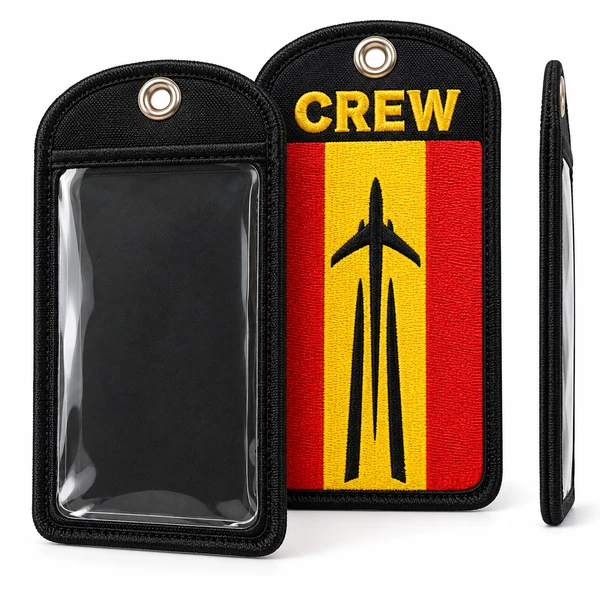
This question is particularly important for compact badge holders.
A fabric ID holder may already contain multiple layers:
- Front fabric
- Transparent PVC film
- Back fabric
- Optional backing or reinforcement
- Outer edge stitching
- Attachment hardware
Additional decoration changes the way those layers behave.
Embroidery and Stitch Density
Large areas of dense embroidery can make the decorated section thicker and less flexible.
If the fabric is too light or the embroidery density is poorly controlled, the panel may pucker or distort.
For designs with large embroidered backgrounds, the manufacturer should evaluate whether:
- The fabric needs stabilization
- Embroidery density can be optimized
- A different stitch arrangement is appropriate
- The finished panel remains sufficiently flat
- The decorative panel interferes with assembly
Printing and Surface Feel
Printing generally avoids the same raised-thread effect, but some prints and heat-applied films can create their own surface thickness or stiffness.
For example, an extensive heat-transfer film may feel different from dye sublimation on compatible polyester fabric.
Therefore, buyers should compare actual printed samples rather than treating all printing methods as equivalent.
Woven Panels and Assembly
A separately woven decorative panel introduces a component that must be cut, positioned and attached to the finished holder.
Its thickness, backing and edge finishing can influence both appearance and sewing complexity.
The most appropriate construction should be assessed alongside the card pocket, not after the holder has already been fully designed.
5. Which Method Is More Durable for Everyday Use?
There is no universal durability ranking that applies to all embroidered, printed and woven badge holders.
A well-executed print on a compatible material may perform better than poorly produced embroidery, while properly designed embroidery may offer excellent appearance retention under normal use.
Durability depends on the whole product, not only the logo.
For Embroidery, Check:
- Thread quality and suitability
- Stitch consistency
- Loose threads or skipped stitches
- Embroidery stability
- Abrasion exposure
For Printing, Check:
- Adhesion to the selected fabric
- Cracking or peeling where applicable
- Resistance to expected rubbing
- Color appearance after handling
- Print compatibility with the finishing process
For Woven Branding, Check:
- Yarn construction
- Legibility of fine details
- Edge fraying
- Attachment stitching
- Appearance after expected handling
For all three methods, also examine the clear PVC window, stitched edges and metal eyelet. A durable logo cannot compensate for a poorly constructed card pocket or weak hardware installation.
Best practice: Agree on realistic usage conditions and inspection criteria before requesting a sample.
6. How Do Embroidery, Printing and Woven Branding Affect Bulk Order Costs?
Buyers often ask which method is cheapest. The answer depends on the artwork and total production requirements.
Instead of comparing decoration prices in isolation, evaluate the complete finished badge holder.
Embroidery Cost Factors
- Digitizing and programming
- Stitch count
- Embroidery area
- Thread changes
- Machine running time
- Production quantity
- Number of artwork variations
Two logos with identical external dimensions may have different embroidery costs because their stitch counts and production times differ.
Printing Cost Factors
- Printing process
- Artwork preparation
- Number of colors where relevant
- Print coverage
- Transfer or screen setup where applicable
- Material compatibility
- Order quantity
For example, traditional screen printing and digital heat-transfer printing have different setup and production economics. Neither should be assumed to have identical minimum quantities or per-color charges.
Woven Branding Cost Factors
- Woven design preparation
- Yarn and color requirements
- Label or panel dimensions
- Weaving production quantity
- Cutting and finishing
- Additional sewing and assembly
A separately woven label may offer a suitable appearance, but the completed badge holder may require additional assembly steps.
Example: Why Total Cost Matters
Consider a project requiring 200 finished fabric ID holders.
All options use the same holder body, clear PVC window, metal eyelet and packaging. Only the branding method changes.
| Cost Component | Embroidery | Printing | Woven |
|---|---|---|---|
| Artwork Preparation | Digitizing | Print preparation | Weaving setup |
| Decoration Production | Stitching time | Printing process | Woven panel production |
| Holder Assembly | Required | Required | Required |
| Additional Panel Attachment | Depends on design | Depends on design | May be required |
| Prototype Approval | Required | Required | Required |
This is a comparison of cost components, not a price quotation.
Ask the supplier to provide an all-in manufacturing quotation for the same quantity and functional specifications, with setup fees shown separately.
7. Three Practical Buying Scenarios
Different purchasing situations may lead to different branding decisions.
Scenario A: Aviation Crew Badge Holders with Bold Embroidered Graphics
Requirement: A black fabric ID holder with a clear front window, bold CREW lettering, an aircraft-themed design and a metal eyelet.
Recommended starting point: Embroidery.
Why: The design includes bold text and solid graphics that can create a recognizable stitched appearance. The decoration itself is part of the visual identity.
Watch for: Dense color blocks, small lettering, fabric puckering and eyelet placement.
Important: Any official airline logos or protected branding should be used only with appropriate authorization.
Scenario B: Corporate Event Holders with Detailed Multicolor Artwork
Requirement: A branded fabric holder incorporating a complex company logo, gradients, multiple sponsor graphics and changing event artwork.
Recommended starting point: Suitable printing, after fabric compatibility review.
Why: A printing process may reproduce detailed artwork more clearly and avoid unnecessary embroidery simplification.
Watch for: Adhesion, print coverage, color matching, handling resistance and the ability to incorporate the printed panel into the holder.
Scenario C: Club or School Holders with Fine Textile Logos
Requirement: A compact fabric holder with a school emblem, fine borders and small lettering, while preserving a woven textile appearance.
Recommended starting point: Compare woven branding with fine-detail embroidery.
Why: A woven design may be better suited to some small textile details, whereas embroidery can retain a more raised appearance.
Watch for: Minimum text size, color limitations, woven panel edge finishing and assembly cost.
8. Can You Combine Different Logos and Designs in One Bulk Order?
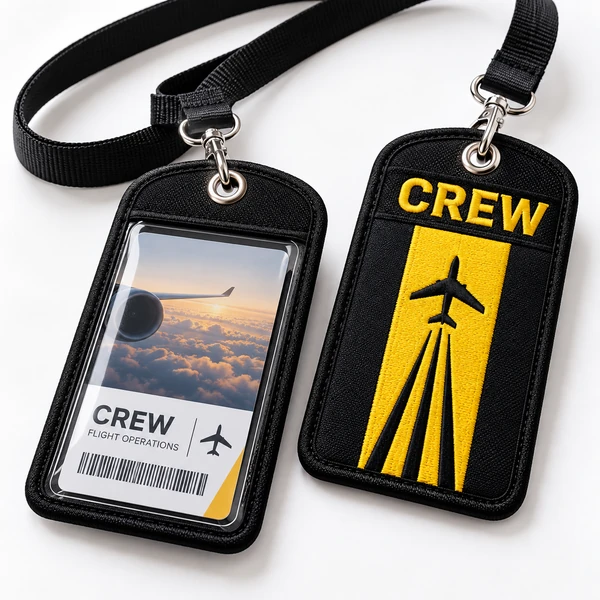
Many B2B projects require multiple artwork versions sharing the same ID holder construction.
For example, a company may order:
- 100 holders marked STAFF
- 100 holders marked OPERATIONS
- 100 holders marked MAINTENANCE
The holders may share the same fabric, size, transparent PVC window, eyelet and packaging.
That can simplify parts of production planning, but branding setup may remain design-specific.
With Embroidery
Different lettering or logos may require separate embroidery files and setup. Stitch counts can also vary between designs.
With Printing
The cost impact of artwork changes depends on the printing process. Some digital workflows can accommodate different artwork versions differently from processes requiring separate screens or production preparation.
With Woven Branding
Each distinct woven pattern may require its own design preparation. Multiple artwork versions may affect minimum runs and production efficiency.
Procurement recommendation: Request both per-design prices and combined-order prices. Do not assume that the total quantity alone determines the unit cost.
9. Small Orders vs. Large Orders: Does the Best Method Change?
The best method can change as quantity increases, but there is no universal quantity at which one process becomes cheaper than another.
Small Trial Orders
For a trial order, fixed setup costs may represent a relatively large share of the total cost.
Buyers should ask:
- What is the minimum feasible quantity?
- Are there separate artwork setup charges?
- Can multiple designs share the same holder construction?
- How many physical samples are included?
- What changes can be made after prototype review?
Medium-Quantity Orders
For medium-sized projects, evaluate the total cost of materials, decoration, assembly, quality control and packaging.
If artwork is standardized, the manufacturer may be able to plan a more consistent production run.
Large Bulk Orders
For larger orders, consistency becomes especially important.
Buyers should confirm:
- Approved artwork version
- Thread or print color references
- Material specification
- Construction tolerances
- Inspection criteria
- Packaging method
- Shipment requirements
A marginally lower decoration cost is not worthwhile if the resulting design fails to meet the required appearance or function.
10. Why Card Window Construction Matters Regardless of Branding Method
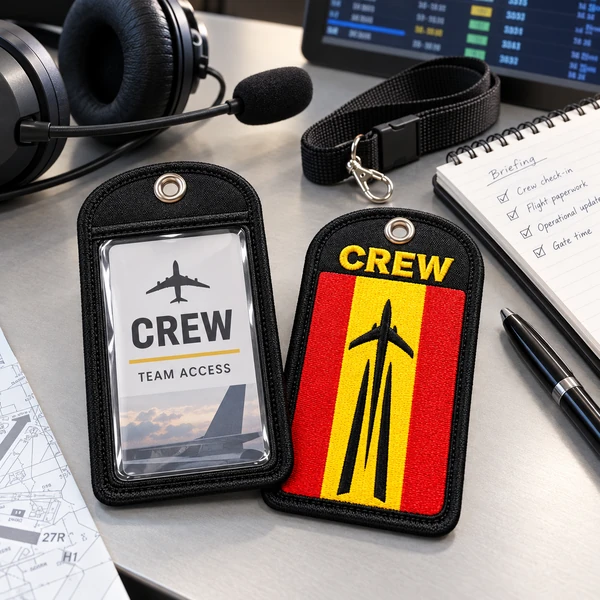
An ID badge holder must function as a card holder—not simply as a branded fabric patch.
A typical custom fabric holder includes a transparent PVC window positioned on the front of the product.
Before approving the construction, confirm:
- The actual dimensions of the ID card
- The usable internal pocket size
- The card insertion direction
- The window’s visible display area
- The finished holder’s thickness
- The attachment and wearing orientation
For a standard CR80 ID card, the nominal dimensions are 85.60 × 53.98 mm.
However, exterior holder dimensions should never be used alone to determine whether a card will fit.
The seam allowance, edge stitching and material layers all affect the internal space.
If the project requires printed credentials as well as holders, our related product range includes custom printed PVC ID cards.
11. Quality Control: What Should Buyers Check Before Mass Production?
Sampling should confirm the complete finished product, including the decoration method, fabric construction and functional components.
Embroidery Sample Checklist
- Lettering clarity
- Logo proportions
- Thread color consistency
- Stitch density
- Visible puckering
- Loose or skipped stitches
Printed Sample Checklist
- Graphic sharpness
- Color consistency
- Printing alignment
- Surface finish
- Adhesion where applicable
- Cracking or peeling under expected handling
Woven Sample Checklist
- Legibility of small text
- Pattern alignment
- Yarn color consistency
- Cutting and edge finishing
- Panel attachment quality
Common Holder Construction Checklist
- Usable card pocket dimensions
- Clear PVC window condition
- Card insertion and removal
- Edge stitching quality
- Eyelet installation
- Compatibility with the selected lanyard clip
- Overall appearance against the approved sample
Where measurable durability or workplace performance is required, the test method and acceptance criteria should be agreed upon before production.
12. Working with an ID Badge Holder Manufacturer in China
International promotional product buyers often compare suppliers in China when sourcing customized fabric badge holders for bulk orders.
But selecting a supplier solely by unit price can overlook important manufacturing differences.
A useful supplier evaluation should include:
- Ability to review embroidery, woven and printing artwork
- Understanding of textile construction and sewing
- Experience with custom logo accessories
- Clear explanation of setup charges
- Prototype development and revision procedures
- Material and hardware options
- Quality inspection arrangements
- Transparent production and shipping schedules
Guangzhou Custom Fabric Badge Holder Manufacturing
Guangzhou Lovecolour Garment Accessories Co., Ltd. specializes in custom embroidered patches, woven accessories, garment labels and branded textile products.
For custom fabric ID holder inquiries, buyers can submit their artwork, preferred dimensions, quantity, material requirements and intended application for technical review.
Different branding methods can then be evaluated according to production feasibility and the project’s commercial requirements.
For buyers in the United States, United Kingdom, Spain, Germany, France, Australia, the Middle East and other markets, quotations and shipping arrangements can be reviewed according to the confirmed specifications and delivery destination.
Initial EXW quotations can be supplemented with suitable freight options when the final order details are available.
13. Frequently Asked Questions
Is embroidery better than printing for ID badge holders?
Not universally. Embroidery is often preferred for raised textile branding and bold designs. Printing can be better for gradients and complex details. The correct method depends on the artwork and construction.
Which method is cheaper for bulk orders?
There is no universal answer. Embroidery costs depend partly on stitch count and digitizing. Printing depends on the selected process and artwork. Woven branding has its own preparation and assembly costs. Compare complete quotations using identical specifications.
Can embroidered badge holders include very small lettering?
Small lettering is possible under suitable conditions, but readability depends on thread weight, font, fabric and digitizing. A physical embroidery sample should be approved before bulk production.
Can I combine embroidery and printing on one badge holder?
A hybrid design may be feasible, depending on the panel materials, placement and production sequence. However, it can introduce additional manufacturing operations and should be evaluated individually.
Are woven designs suitable for custom ID badge holders?
Yes, woven panels or labels may be integrated into selected fabric holder constructions. The panel attachment method and final appearance should be checked during sampling.
Can different logos share one bulk production order?
Potentially, yes. Shared fabric and holder construction may simplify production planning, but individual branding versions may still involve separate artwork setup and pricing.
Which method is most durable?
Durability depends on the materials, decoration quality, construction and intended use. No branding method should be declared universally superior without comparable testing.
Can I order custom badge holders with matching lanyards?
Yes. A coordinated project may include matching lanyards, clips, ID cards and packaging. For related options, explore our custom lanyard collection.
14. Final Recommendation: Choose the Method That Fits Your Design and Buying Requirements
For most B2B buyers, the best branding decision begins with the intended use and the artwork—not the unit price alone.
Choose embroidery for bold, recognizable stitched designs and a dimensional textile appearance.
Choose printing for detailed full-color designs and artwork that would be difficult to reproduce with stitching.
Consider woven branding when a compact textile panel requires finer detail and the construction can accommodate a woven component.
Before placing a production order, request samples based on the actual materials, card dimensions, branding design and attachment requirements.
For a complete functional comparison, consider the clear PVC window, reinforced stitching and metal hardware alongside the logo decoration.
Request Custom Fabric ID Badge Holders from Lovecolour
Planning a custom embroidered, printed or woven fabric ID badge holder project?
Guangzhou Lovecolour Garment Accessories Co., Ltd. supports custom embroidered and woven accessories, branded textile development and OEM/ODM projects for international B2B buyers.
Whether your project involves aviation crew merchandise, corporate staff accessories, event identification products or promotional gifts, our team can review your design and evaluate suitable branding and construction options.
Visit Lovecolour Custom Patches & Accessories to explore our custom manufacturing range.
To request a quotation, please provide:
- Your logo or design artwork
- Preferred branding method, if known
- Badge holder dimensions and card size
- Fabric and color requirements
- Quantity for each design
- Metal attachment and lanyard requirements
- Packaging preferences
- Delivery destination and required timeline
Send us your project details for artwork review, manufacturing recommendations and a custom quotation.