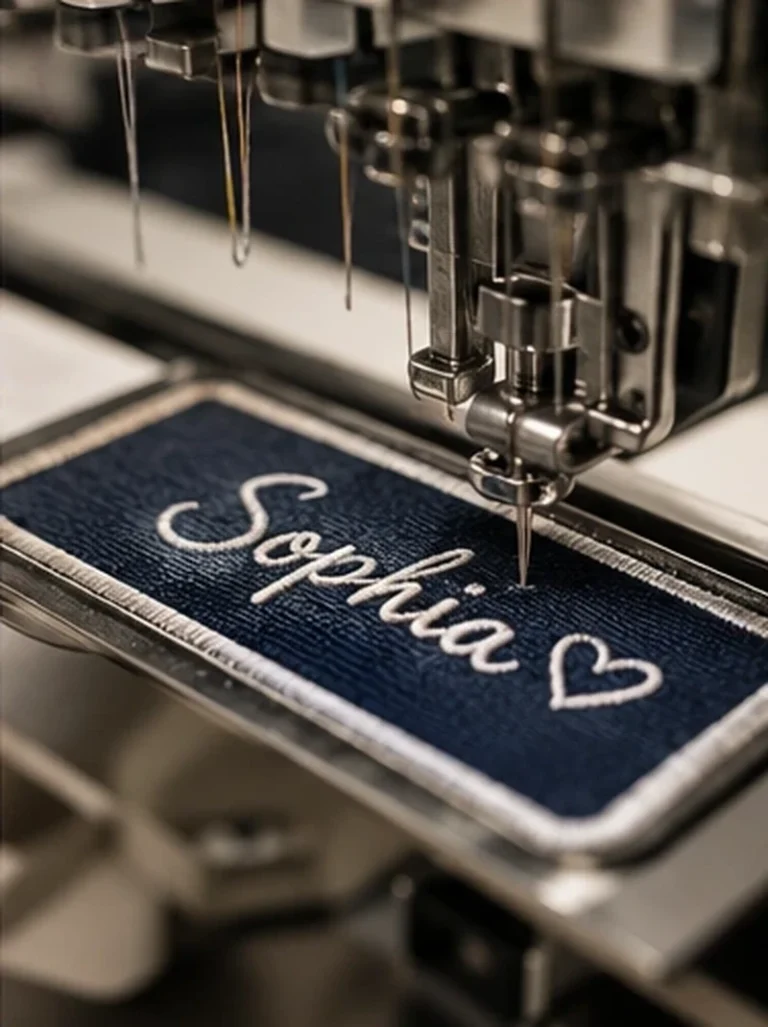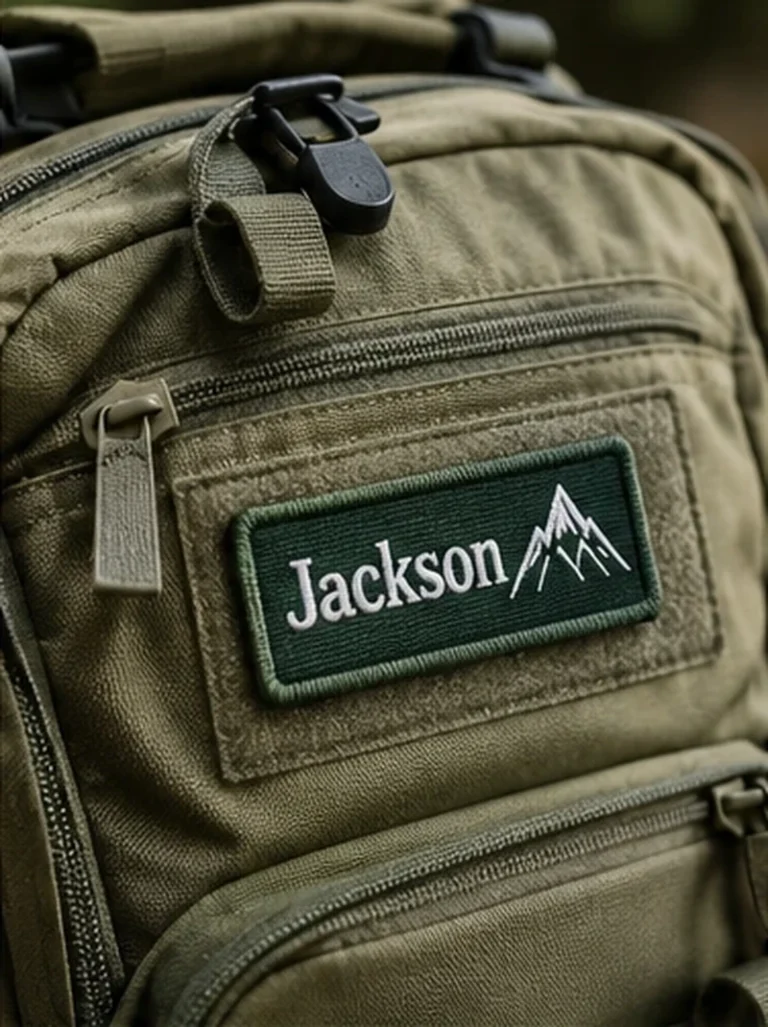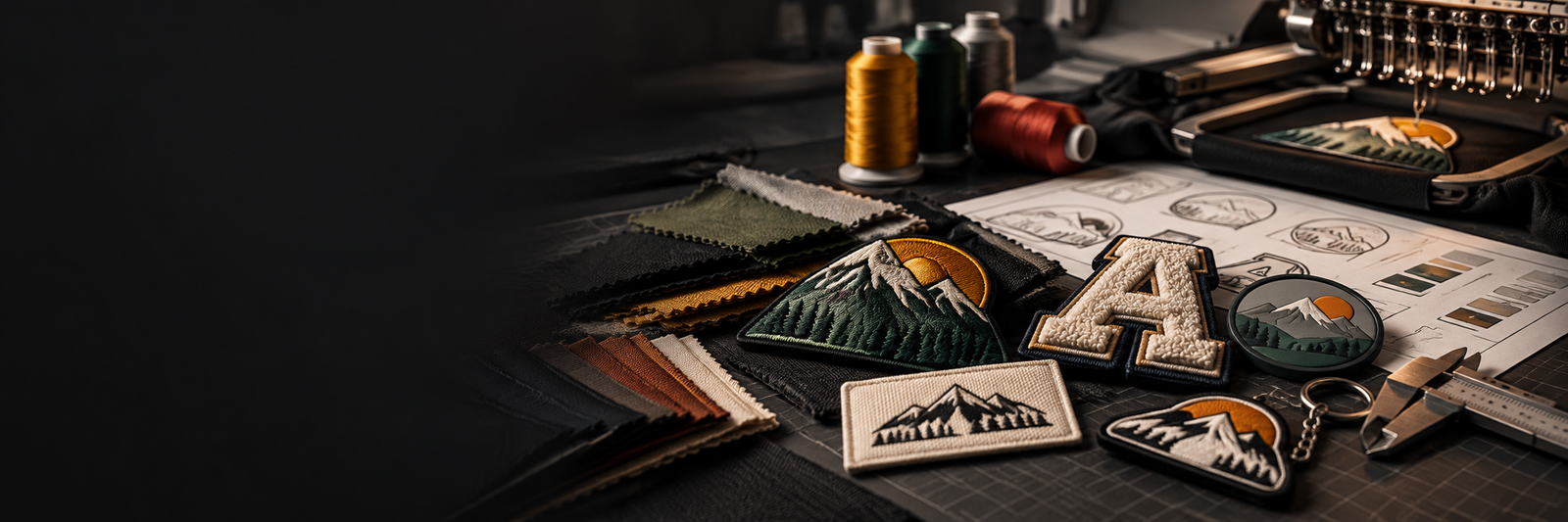
Choosing the Right Patch Starts with the Garment, Not the Logo
Should you choose embroidered, woven or PVC patches for industrial workwear? The answer depends on more than appearance. Logo detail, uniform fabric, laundering requirements, attachment method and order quantity all influence which construction is appropriate.
For factory uniforms, construction jackets, maintenance workwear and branded industrial clothing, buyers need patches that reproduce the approved design accurately and can be evaluated against the garment’s intended use. A visually attractive sample is not enough if the text becomes unreadable at production size or the chosen attachment method is incompatible with the uniform.
This guide explains how to compare embroidered, woven and PVC workwear patches, select suitable backings, avoid common artwork problems and prepare an accurate OEM manufacturing inquiry.
It is written for workwear brands, uniform distributors, purchasing managers, garment manufacturers and corporate buyers sourcing custom patches in bulk.
Quick answer: Choose embroidery when you want a traditional raised-thread logo with reasonably bold artwork. Choose woven patches when compact text and fine details are more important than a raised stitch effect. Consider PVC rubber patches for selected non-PPE outerwear or equipment applications where moulded 2D/3D branding is desired. For specialized protective garments or industrial laundering, confirm compatibility and required testing before approving any option.
Already have an approved logo? Explore our custom industrial workwear patches manufacturing options or submit your project for an OEM quotation.
Embroidered vs. Woven vs. PVC Workwear Patches: The Main Differences
All three methods can reproduce custom branding, but they create fundamentally different finished products. Embroidery adds stitches onto a base fabric, weaving builds the design into the textile structure, and moulded PVC forms the design using rubber-like material and defined layers.
| Buying Criteria | Embroidered Patch | Woven Patch | PVC Rubber Patch |
|---|---|---|---|
| Visual style | Raised stitched texture | Flat, detailed textile finish | Moulded, layered 2D/3D effect |
| Fine lettering | Limited by stitch size and density | Often better for compact text | Depends on mould geometry |
| Surface feel | Textured stitching | Relatively smooth and thin | Flexible moulded material |
| Bold logos | Very suitable visually | Suitable for a flatter look | Suitable for defined raised shapes |
| Complex outlines | Laser-cut options may help | Contour-cut options may help | Custom mould shape |
| Lightweight work shirts | Check thickness and stiffness | Often worth evaluating | Check weight and flexibility |
| Heavy work jackets | Common application | Possible application | Review material compatibility |
| Industrial laundering | Test full assembly | Test full assembly | Test full assembly |
| Flame-resistant PPE | Special approval required | Special approval required | Not presumed suitable |
| Price drivers | Size, stitch coverage, complexity, quantity | Weave detail, dimensions, quantity | Mould, colours, layers, size, quantity |
Important: This comparison describes typical construction characteristics, not certified performance ratings. Patch durability depends on the selected materials, construction, attachment and real operating conditions.
When Are Embroidered Patches the Best Choice for Workwear?
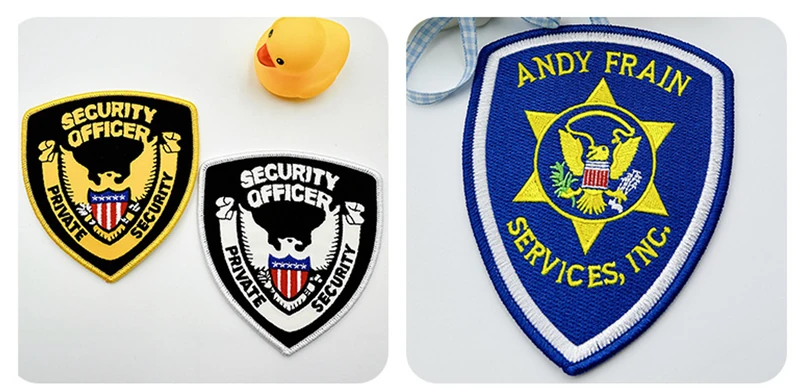
Custom embroidered workwear patches are a strong starting point for conventional company logos, service department emblems and industrial uniform badges. Coloured embroidery threads are stitched onto a fabric foundation, creating a raised texture that is immediately recognizable as a uniform patch.
Best-Fit Applications
- Company logos on suitable construction work jackets and uniform shirts
- Manufacturing department badges with bold lettering
- Maintenance technician and mechanical service team identification
- Workwear brand crests requiring a traditional stitched appearance
- Corporate uniforms where logo embroidery texture is part of the brand identity
What Makes an Embroidered Logo Reproduce Well?
Embroidery works best when the logo includes clearly separated shapes, reasonable letter heights and enough room for the intended stitch direction. Large colour fills, narrow gaps and intricate outlines require careful digitizing because the final stitching cannot reproduce every detail of a vector graphic exactly.
The size of the smallest letter is often more important than the overall patch diameter. A large patch may still contain unreadable text if too many words are compressed into a narrow curved border.
Merrowed Borders vs. Laser-Cut Edges
A merrowed border provides a wrapped thread edge and works especially well around suitable round, oval and relatively simple patch outlines. A laser-cut edge may be preferable for certain irregular logo shapes or more detailed contours. The choice affects both appearance and finishing feasibility.
Manufacturer’s decision rule: If the patch contains a bold corporate mark and larger department name, begin by evaluating embroidery. If small legal text, phone numbers or tightly spaced wording cannot be reproduced clearly at the intended size, compare a woven sample rather than forcing the embroidery design.
For more production details, review LOVECOLOUR’s embroidery process and stitch construction guide.
When Should You Choose Woven Patches Instead of Embroidery?
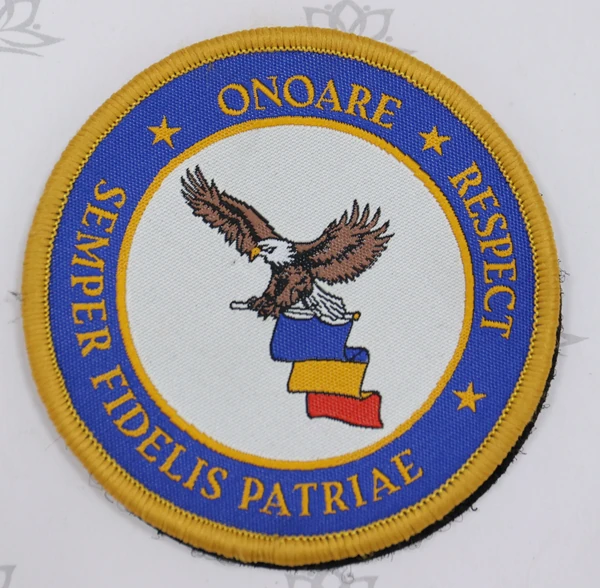
Woven patches create their artwork by interlacing coloured yarns. Compared with conventional embroidery, this method produces a flatter textile surface and can often reproduce smaller details more precisely when the weave specification is suitable.
For industrial uniforms, woven patches deserve serious consideration whenever the approved artwork includes small department codes, multi-line lettering, technical symbols or compact brand marks.
Typical Reasons to Select Woven Construction
- The patch must carry small but readable company or department lettering
- The design includes several narrow lines or fine geometric features
- The uniform supplier prefers a comparatively low-profile textile badge
- The patch is intended for selected lighter work shirts
- The visual priority is fine definition rather than raised embroidery texture
Does Woven Always Mean Better Detail?
No. Woven detail is limited by yarn characteristics, weave density, colour separation and finished dimensions. Extremely small text may still merge or become difficult to read. The correct minimum lettering size should be evaluated using the buyer’s actual artwork at the intended finished scale.
A particularly useful approval method is to inspect the sample at normal viewing distance, not only through a magnified product photograph. If employees or customers cannot read the important text when the patch is attached to a real garment, enlarging the logo or simplifying the artwork may be necessary.
What About Woven Patch Borders?
Woven patches can be finished as badge-style products with appropriate merrowed borders or contour-cut edges. The final edge should match the design shape and planned attachment method.
Read more about woven patch construction, fine-detail feasibility and finishing.
Are PVC Rubber Patches Suitable for Industrial Workwear?
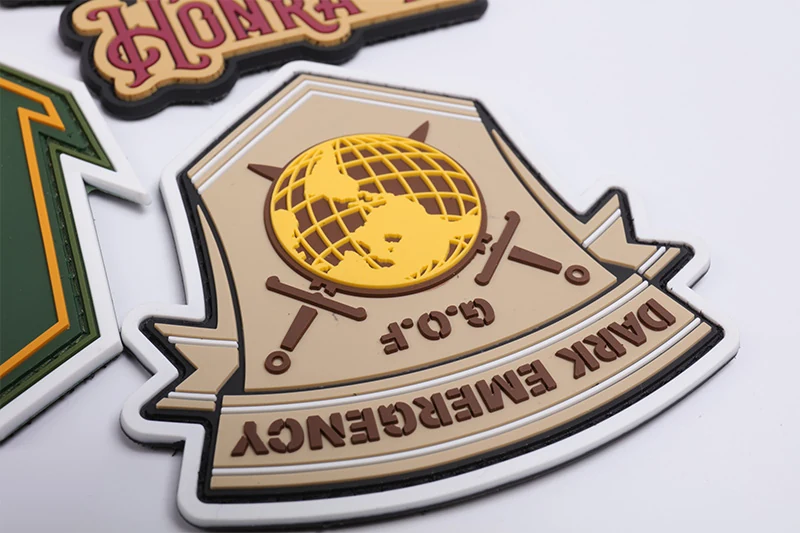
PVC rubber patches use a moulded construction rather than stitched or woven yarns. They can reproduce defined colour areas, custom outlines and layered 2D or 3D branding effects. Their surface appearance is distinctly different from traditional textile uniform patches.
Where PVC May Be Worth Considering
- Selected non-protective work jackets and branded outerwear
- Equipment bags, tool bags and selected backpacks
- Industrial merchandise and promotional accessories
- Outdoor-inspired workwear branding where a moulded finish is desired
- Custom shapes with defined raised graphic elements
What Buyers Need to Check
A PVC patch may look waterproof at the surface, but that does not mean the complete garment assembly is waterproof or appropriate for every industrial environment. Attachment, edge construction, exposure temperature, garment compatibility and cleaning conditions must all be considered.
PVC is not a default solution for flame-resistant clothing, high-heat exposure, arc-rated garments or industrial laundering. Such requirements must be reviewed separately and supported by appropriate evidence.
Does PVC Require a Mould?
Custom moulded PVC designs generally involve tooling based on the shape and layer structure. Tooling requirements and costs depend on the design and production method. Buyers should compare the total cost of the selected construction rather than assuming one patch material is always cheaper at every order quantity.
Explore custom PVC rubber patch manufacturing and 2D/3D design options.
Which Workwear Patch Should You Choose for Your Industry?
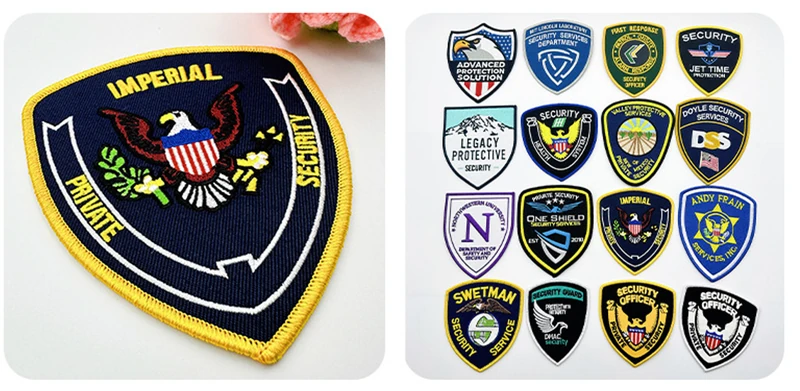
The following recommendations are practical starting points for procurement discussions. They are not universal performance approvals or substitutes for garment testing.
Construction Uniforms
Start with: Embroidered patches for suitable jackets and company uniforms. Review garment weight, sew-on attachment and expected cleaning requirements. Specialized high-visibility or protective clothing needs separate approval.
Factory Staff Uniforms
Start with: Embroidered patches for straightforward logos or woven patches for smaller department details. Evaluate wash conditions if uniforms are professionally laundered.
Maintenance Technicians
Start with: Embroidered company crests or woven identifiers depending on logo details. Review whether the patch is permanent or needs replacement when a role changes.
Warehouse & Logistics
Start with: Textile patches for standard branded work shirts and jackets. Prioritize consistent sizes, colour references and documented reordering specifications across locations.
Automotive Workshop Uniforms
Start with: Embroidered or woven badges, followed by a review of laundering and possible exposure to oils or cleaning products. Do not assume chemical resistance from appearance alone.
Workwear Bags & Equipment
Start with: Embroidered or PVC patches depending on the required brand effect. Confirm attachment compatibility with bag fabric, coatings and any hook-and-loop panel.
For tailored material selection and OEM ordering, visit our Custom Industrial Workwear Patches product page.
How Does Workwear Fabric Affect Patch Selection?
A patch should not be specified independently of the garment. Two uniforms may require different patch constructions even when the logo artwork is identical.
Cotton and Cotton-Rich Workwear
Textile patches are often worth evaluating for suitable cotton or cotton-rich uniform shirts and jackets. However, fabric weight, shrinkage, finishing and laundering conditions can affect the stitched area. The patch and garment should be evaluated as an assembly where dimensional stability matters.
Polyester/Cotton Workwear
Polyester/cotton blends are common in workwear programs, but their exact fabric construction and finishing vary. Embroidered and woven patches can be considered, with backing selection based on the garment specifications and intended laundering conditions.
Heavy Canvas, Twill and Work Jackets
Heavier garments may accommodate certain raised embroidered patches well, but seams, fabric stiffness, lining and placement can affect the final result. Sewing methods should be checked for the actual garment construction.
Coated or Weather-Resistant Garments
Heat-seal applications and sewing may affect coated fabrics or weather-resistant constructions. If a garment includes a membrane or specialized finish, confirm the permitted attachment method with the garment manufacturer before choosing a patch.
Safety-critical exception: Flame-resistant, arc-rated, chemical-protective and certified high-visibility garments require a specialized approval process. Standard decorative patch materials and ordinary attachment methods must not automatically be treated as compliant.
Sew-On vs. Hook-and-Loop vs. Heat-Seal Backing: What Should Workwear Buyers Specify?
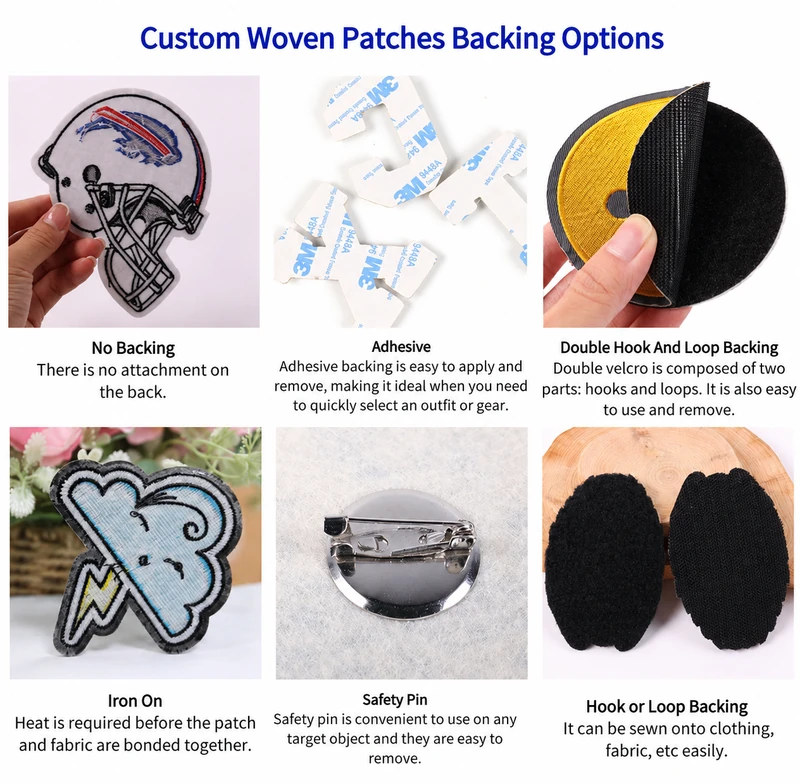
Patch material and backing should be treated as two separate purchasing decisions. A well-made embroidered or woven patch may still be unsuitable if the attachment method does not match the garment and its use.
| Backing | Typical Purpose | Key Questions |
|---|---|---|
| Sew-on | Permanent branding on suitable garments | Is the garment fabric sewable? What stitching and placement are approved? |
| Hook-and-loop | Removable or interchangeable identification | Does the uniform have a compatible loop panel? How will it be maintained? |
| Heat-seal | Selected applications using heat-activated adhesive | Can the fabric tolerate application temperature and pressure? What laundering validation is required? |
For permanent workwear branding: A suitable sew-on construction is often a sensible starting point. For changeable department names or contractor identification, hook-and-loop may be more convenient. Heat-seal should be considered only after fabric and adhesive compatibility have been assessed.
When ordering patches for a garment factory, clarify whether the patch manufacturer supplies loose patches or is also responsible for finished garment attachment. These are different manufacturing scopes and should be quoted separately where applicable.
How to Choose the Right Logo Size and Detail for Workwear Patches
One of the most common sourcing mistakes is approving artwork only at a large screen size. Industrial uniform patches are worn at their finished dimensions, and the readability of important text must be judged at that scale.
Begin with the Intended Placement
Identify whether the patch will be placed on a shirt chest, jacket sleeve, outerwear panel, work cap or equipment bag. Measure the available placement area on an actual garment and allow for nearby seams, pockets, fasteners and garment movement.
Identify the Smallest Important Detail
Instead of asking only for the patch width, identify the smallest essential lettering, narrowest gap and most intricate symbol in the artwork. If a company name becomes unreadable when reduced, the buyer should consider simplifying the wording, increasing the finished size or changing production methods.
Avoid Universal Minimum Text-Size Claims
There is no reliable single minimum letter height that applies to every embroidery, woven and PVC design. Letter style, line width, surrounding stitches, yarn characteristics and the final design all matter. A physical sample is a better basis for approval than an unsupported generic number.
Use Pantone References Correctly
Pantone colour references are useful targets, but embroidery thread, woven yarn and moulded PVC do not necessarily look identical under the same lighting. For brand-sensitive projects, approve actual material samples rather than relying on digital artwork alone.
Our artwork review guide explains how to prepare a suitable file and which technical details should be evaluated before production.
How Do Material Choice, MOQ and Order Quantity Affect Patch Cost?
Industrial workwear patch pricing is not determined by material alone. The total quotation depends on design complexity, construction, size, backing, individual order quantity, sampling requirements, packaging and delivery.
Embroidered Patch Cost Factors
For embroidery, stitch coverage, design detail, finished dimensions, thread colours and edge construction influence production requirements. A dense design may cost more than a simpler design of similar dimensions.
Woven Patch Cost Factors
For woven patches, yarn and weave specifications, finished size, colour complexity, finishing and quantity influence the quote. A fine-detail design is not automatically cheaper simply because the patch is relatively flat.
PVC Patch Cost Factors
For PVC, mould development, layer count, colour areas, shape complexity and quantity may affect the total project cost. Tooling should be identified separately where applicable so the buyer understands repeat-order economics.
Does Combining Different Designs Reduce MOQ?
Not necessarily. A request for 500 total pieces across five different designs is not equivalent to 500 pieces of one design. Artwork preparation, setup and production quantities may need to be assessed for each SKU. Buyers should specify quantity per design when requesting a wholesale quotation.
How Should Delivery Time Be Evaluated?
Separate artwork review, sampling, bulk production and international transit. A short production period does not automatically mean the goods can arrive by the customer’s required date. For fixed launch or uniform rollout deadlines, communicate the required in-hand date before quotation.
Buyers in the United States, United Kingdom, Canada, Australia and European markets should also identify destination requirements, preferred shipping method and any applicable import documentation early in the purchasing process.
Seven Mistakes to Avoid When Ordering Workwear Patches in Bulk
Choosing Material Based Only on Appearance
A patch that looks impressive in a photo may not match the intended garment or laundry process. Confirm the application before approving the construction.
Making Lettering Too Small
Fine text may lose definition when stitched, woven or moulded at the finished dimensions. Review the smallest important text before sampling.
Ignoring Garment Fabric and Care Instructions
A backing suitable for one garment may not be appropriate for a coated jacket, lighter shirt or specialized workwear fabric.
Assuming Every Patch Is Industrial-Wash Durable
Home washing, industrial laundering and chemical cleaning are different conditions. Do not accept an unsupported universal wash-cycle claim.
Comparing Unit Prices Without Matching Specifications
Two prices are not directly comparable if patch size, process, backing, quantity, packaging or tooling is different.
Mixing Multiple Designs Without SKU Control
Separate artwork versions, department names and quantities should have distinct references to avoid sampling and packing errors.
Approving Protective Clothing Modifications Without Review
Any patch applied to PPE or certified safety garments must follow the garment manufacturer’s requirements and applicable safety approval process.
Buying Industrial Workwear Patches from a China Manufacturer: USA, UK, Canada, Australia and Europe
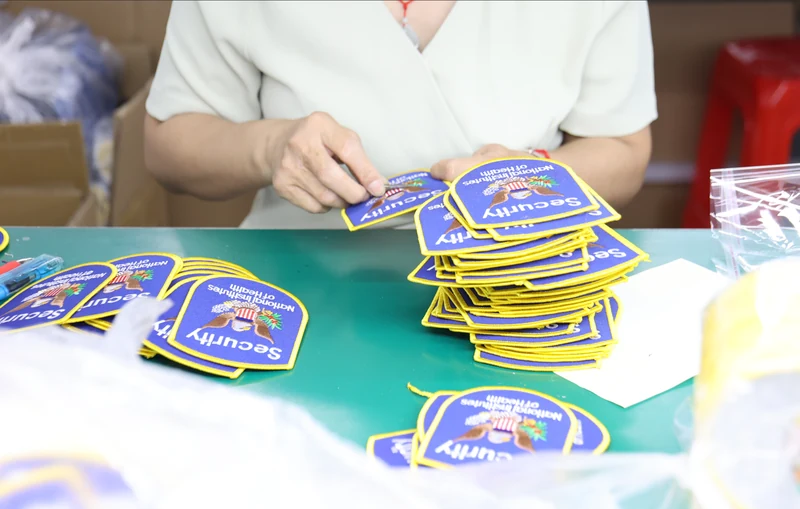
For international workwear buyers, the basic material-selection process remains the same: artwork feasibility, garment compatibility, sample approval and clearly documented specifications. Regional differences are more likely to involve delivery planning, buyer documentation and applicable garment requirements than the fundamental appearance of embroidery or woven patches.
United States Buyers
US workwear brands, industrial uniform distributors and contract garment suppliers should confirm the final application, required delivery date, garment care requirements and any relevant protective clothing specifications. Do not assume a standard patch is suitable for specialized safety uniforms without approval.
United Kingdom and European Buyers
UK and European procurement teams should identify any garment-specific standards, restricted-material requirements, testing documents and destination-related import requirements before bulk production. Requirements vary by product and application; the country name alone does not determine compliance.
Canada and Australia Buyers
Uniform suppliers in Canada and Australia should evaluate seasonal workwear, cleaning procedures, intended use and delivery schedules. For specialized safety apparel, buyers should supply the applicable garment requirements rather than treating decorative patch specifications as sufficient.
Why Source Directly from Guangzhou, China?
Guangzhou Lovecolour Garment Accessories Co., Ltd. is a China-based custom patch manufacturer supporting international OEM and ODM projects. Buyers can submit artwork, material preferences, quantities and delivery details for review. The actual production scope, sampling cost and schedule are confirmed according to project specifications.
For an international RFQ, include the destination country and required in-hand date in addition to the patch artwork and quantity. This helps distinguish production planning from shipping planning.
Manufacturer’s Checklist: What to Send Before Ordering Custom Workwear Patches
An accurate factory quotation starts with a complete specification. Use this checklist to reduce revisions, avoid assumptions and make quotations from different suppliers more comparable.
| Information Required | What the Buyer Should Provide | Why It Matters |
|---|---|---|
| Logo artwork | Original vector or highest-quality available file | Allows assessment of lettering, outlines and production feasibility |
| Finished dimensions | Width, height and shape | Determines detail reproduction and material use |
| Garment type | Shirt, jacket, vest or other item, including fabric details | Supports construction and backing decisions |
| Preferred process | Embroidery, woven, PVC or factory recommendation | Clarifies price comparison and sampling scope |
| Backing | Sew-on, hook-and-loop or heat-seal preference | Defines the intended attachment method |
| Colours | Pantone references or approved physical sample | Establishes the colour target |
| Quantity | Units per individual design | Supports MOQ and setup evaluation |
| Special use | Industrial laundering, heat exposure or PPE requirements | Identifies risks and potential testing requirements |
| Packaging | Bulk pack, design sorting or individual labels | Defines packing and handling needs |
| Destination | Country and delivery location | Supports shipping planning |
| Deadline | Required arrival date | Allows sampling, production and transit planning |
For more detail about preparing the first inquiry, use our artwork submission checklist and Start a Project form.
What Should Buyers Inspect Before Approving Bulk Production?
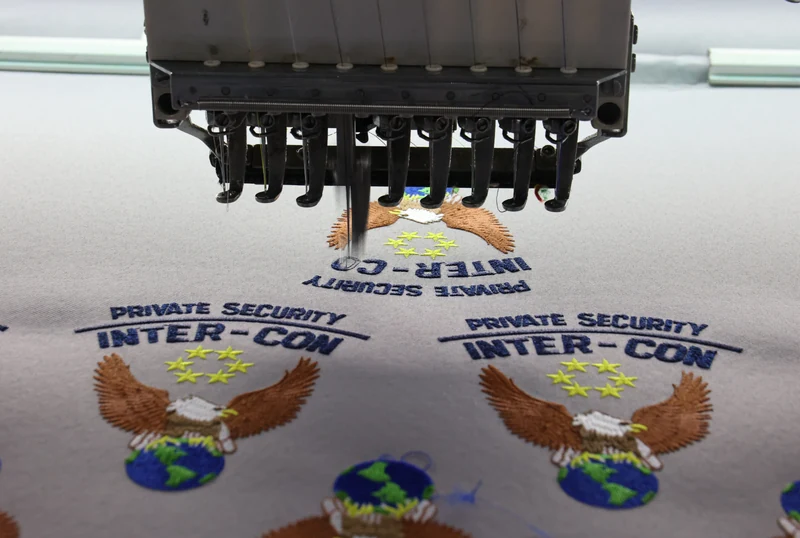
Once a sample is ready, compare it against the actual purchasing specification rather than judging appearance from photographs alone. A sample should answer both design and production questions.
- Lettering: Are the company name and important identifiers readable at the final size?
- Logo proportions: Are key shapes and spacing acceptably reproduced?
- Colour: Does the selected material meet the approved physical reference?
- Dimensions: Does the finished size match the agreed specification?
- Edge: Is the border shape and finish appropriate for the design?
- Backing: Is the specified attachment construction present and correctly oriented?
- Garment placement: Does the patch fit the planned shirt, sleeve or jacket area?
- Special performance: Have required testing and garment approvals been completed where applicable?
- Repeat orders: Is the approved artwork version and sample reference recorded?
For repeat uniform programs, retain the approved physical sample and production details. These references are especially helpful when different branches or departments order replacement patches at different times.
See our custom patch quality control process for additional manufacturing information.
Industrial Washing Standards: What Does ISO 15797 Actually Tell Buyers?
Industrial laundering is an important consideration for some workwear programs, but it should not be reduced to a vague claim such as “industrial-wash proof.”
ISO 15797:2017 describes industrial washing and finishing procedures used to evaluate workwear. The procedures can help assess garment characteristics under defined laundering conditions. The standard is not a blanket certification for every embroidered, woven or PVC patch.
The actual test procedure, garment assembly and relevant acceptance criteria should be agreed before testing. Where laundering performance is critical, it may also be necessary to evaluate the patch attached to the intended garment rather than testing a loose patch in isolation.
Procurement takeaway: Ask what was tested, under which conditions, on what garment construction and with what documented result. A supplier’s generic material description is not a substitute for test evidence.
Scope of this guide: This article provides material-selection and procurement guidance. It does not claim that every LOVECOLOUR patch has undergone ISO 15797 testing or holds specialized protective clothing certification.
Industrial Workwear Patch Material Selection FAQ
1. Are embroidered patches better than woven patches for work uniforms?
Neither is universally better. Embroidery provides raised thread texture and works well for many bold logos, while weaving can be advantageous for compact text and fine details. Compare both at the intended finished size.
2. Which patch material is best for construction jackets?
Embroidered patches are often a useful starting point for conventional non-PPE work jackets, but garment fabric, laundering and attachment requirements determine final suitability. Certified protective clothing requires separate review.
3. Can woven patches reproduce very small letters?
Woven construction often supports finer lettering than conventional embroidery, but it still has technical limits. The smallest important letters should be checked using the actual design and a physical sample.
4. Are PVC rubber patches suitable for industrial uniforms?
PVC may be suitable for selected non-protective jackets, bags and accessories. It should not be assumed appropriate for high-temperature industrial laundering, flame-resistant garments or every chemical environment.
5. What backing should I choose for permanent workwear logos?
Suitable sew-on construction is often worth evaluating first for permanent branding. The final attachment must match the garment fabric, construction and care conditions.
6. Can I combine embroidered and woven patch designs in one wholesale order?
Yes, different constructions can be reviewed within the same project, but artwork, specifications, MOQ, setup costs and quantities should be assessed separately for each design.
7. Can a factory match our brand Pantone colours?
Pantone references can guide material and thread selection. Actual appearance varies across embroidery, woven yarn and PVC; approve physical samples when colour consistency is critical.
8. How do I order workwear patches from China for the USA, UK or Europe?
Submit the artwork, dimensions, preferred process, quantity per design, backing, garment application, destination and required arrival date. Any testing, compliance and import-documentation requirements should be identified before production.
9. What is the difference between a sample and a production approval?
A sample shows the proposed construction. Production approval should additionally identify the final artwork version, dimensions, colours, material, backing and other specifications against which bulk goods will be evaluated.
10. Do industrial workwear patches need special durability testing?
Not every ordinary uniform project requires specialized testing, but demanding laundering, protective clothing or other performance-sensitive applications may. Testing requirements should be set by the garment specification and intended use.
How LOVECOLOUR Approaches Custom Workwear Patch Selection
Guangzhou Lovecolour Garment Accessories Co., Ltd. is a China-based manufacturer specializing in custom patches, labels, keychains and garment accessories for B2B customers. Our available product processes include embroidery, weaving and moulded PVC.
For patch development, our manufacturing approach begins with artwork review, intended application, finished dimensions, material choice and attachment specifications. A physical sample can then be used to assess design reproduction before a bulk order is finalized.
This guide is intended to help workwear buyers make informed choices before requesting quotations. Material recommendations are general decision criteria, not claims that an individual patch design has passed a specific performance test.
Explore our custom patch product range, artwork review process and quality control information.
Ready to Choose the Right Patches for Your Industrial Workwear Program?
Whether you are developing embroidered company badges for factory uniforms, woven department patches for maintenance shirts or moulded branding for suitable outerwear and equipment, LOVECOLOUR can review your artwork and manufacturing requirements.
Send your logo, size, quantity per design, garment type, preferred backing and delivery destination. If you are unsure which process to choose, ask for a material recommendation before confirming the sample specification.
- Custom embroidered, woven and PVC patches
- Artwork and technical feasibility review
- OEM wholesale and multiple-design purchasing
- Custom sizing, colours, borders and backing options
- Sampling and project-specific quotation
Explore Industrial Workwear Patches
Send Artwork & Request a Quote
Guangzhou Lovecolour Garment Accessories Co., Ltd. | Custom Patch Manufacturer in China | International OEM & ODM Supply