For premium tennis clubs, golf clubs and private-label sportswear brands, a patch is more than a decorative accessory. It represents the club’s identity, appears across different garments and may need to remain consistent through multiple seasonal collections.
Ordering custom club crests therefore requires decisions about artwork reproduction, materials, garment compatibility, sampling, pricing and production control.
This guide explains those decisions from a custom patch manufacturing perspective, including when embroidery is not the most suitable process.
Prepared for apparel buyers, creative directors, club merchandise managers and sourcing teams by LOVECOLOUR, a custom patch manufacturer in Guangzhou, China.
1. Embroidered, Chenille or Woven: Which Club Patch Is Best?
There is no single best material for every premium club crest. The artwork, garment and desired appearance should determine the manufacturing process.
A traditional golf crest might benefit from refined embroidery. A large heritage tennis club initial may look better in chenille. A small multi-line emblem with a founding year and fine lettering may be more legible in woven construction.
| Criteria | Embroidered | Chenille | Woven |
|---|---|---|---|
| Appearance | Classic raised stitches | Soft, prominent yarn pile | Flat, fine woven surface |
| Fine lettering | Depends on size and stitch structure | Limited within pile areas | Often suitable for smaller details |
| Texture | Defined thread relief | Pronounced, tactile finish | Low-profile finish |
| Common application | Polos, jackets, caps | Varsity jackets, sweatshirts | Compact crests and apparel labels |
| Main limitation | Very small details can merge | Fine text can disappear in the pile | Less dimensional texture |
When to Choose Embroidered Club Crests
Embroidery is a good option when a buyer wants visible stitching, defined outlines and a traditional textile appearance. It works particularly well for appropriately sized shield crests, club initials, embroidered emblems and heritage-inspired sportswear.
However, embroidery does not reproduce every digital detail. Stitch thickness, small text, narrow spaces and design density can limit how accurately a tiny crest is manufactured.
When to Choose Chenille Club Patches
Chenille creates a soft raised surface with yarn held in a structured design. It is well suited to large initials, bold symbols, statement crests and varsity-inspired collections.
A chenille design can incorporate flat embroidered outlines or selected additional details. But using chenille for every element of a compact crest can make small lettering difficult to read.
For process details, see our chenille patch manufacturing guide.
When to Choose Woven Club Patches
Woven patches can preserve fine lines and closely spaced lettering in a flatter structure. They are worth evaluating when a club logo contains a long name, a founding year, multiple lines of text or fine illustration.
Woven patches are not necessarily appropriate for artwork that depends on a pronounced embroidered surface. Buyers should compare both the visual detail and intended fabric application.
Explore our woven patch manufacturing process to understand how weave density affects detail reproduction.
What About 3D Puff or Mixed-Technique Patches?
Selected bold lettering can be emphasized using dimensional embroidery. This should not be assumed suitable for thin strokes, tiny lettering or every shape.
Some premium crest designs benefit from combining processes, such as flat embroidery for fine outlines alongside chenille for larger lettering. Whether a particular combination is practical should be determined during artwork review.
Buyer’s decision rule: Select the process that reproduces the most important details at the actual finished size, not simply the process that looks most impressive in an enlarged photograph.
2. How Small Can the Lettering Be on a Club Crest?
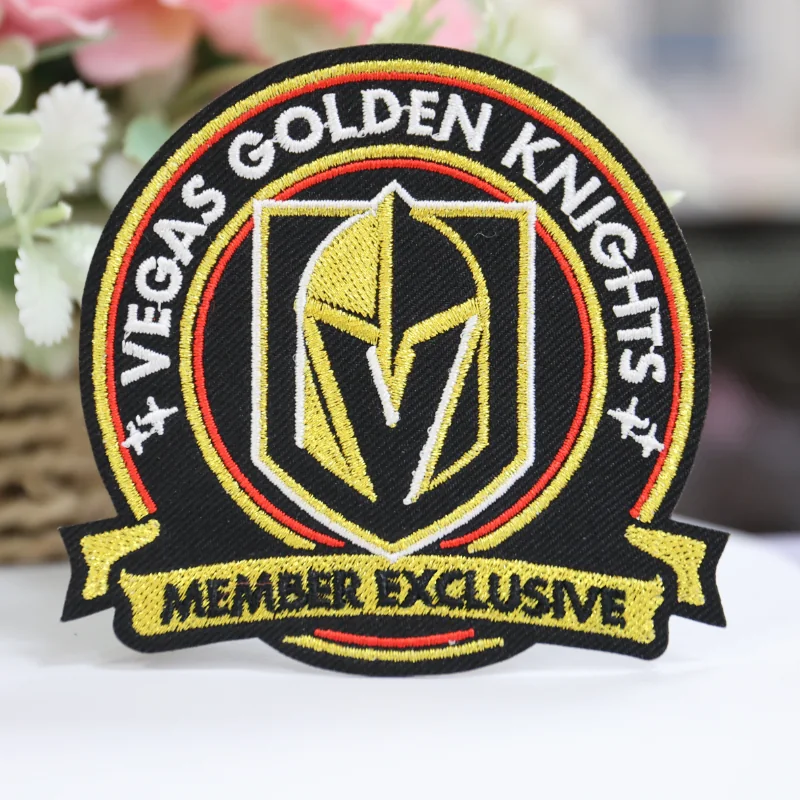
This is one of the most important manufacturing questions for premium tennis and golf club patches.
Club logos frequently include full organization names, founding years, mottoes, small borders and overlapping symbols. These details may be legible on a large digital illustration but become difficult to reproduce on a small garment patch.
Why Small Embroidered Text Can Fail
Small embroidered lettering can lose definition when the physical stitch width becomes too large relative to the intended letter. Closed counters, narrow gaps, intersecting stitches and fabric movement can further reduce readability.
Adding more stitches does not always solve the issue. Excess density can increase bulk, distortion and unwanted puckering.
Five Details to Check Before Production
- Finished letter height: Measure the smallest line of text on the patch at real size.
- Line weight: Check whether narrow strokes can be reproduced in the selected process.
- Letter spacing: Confirm that nearby characters will not merge.
- Background contrast: Review thread and fabric colors together.
- Surrounding details: Borders and nearby graphics can restrict the space available for lettering.
Should Small Club Names Be Embroidered or Woven?
When fine lettering is the defining requirement, woven production may provide better clarity. But there is no universal minimum lettering size that applies to every thread, machine, artwork and weave.
A suitable manufacturer should review the smallest character and most complex area at the intended finished dimensions rather than promise readability based on a generic minimum.
Practical design adjustment: If the club name becomes unreadable, consider increasing the patch size, simplifying secondary text, opening up letter spacing or separating decorative and functional logo elements.
Request a production-size proof before approving a densely detailed crest. For high-risk artwork, a physical sample offers more reliable evidence than a screen image.
See how we handle sample approval and specification review.
3. How to Choose the Right Club Patch Size
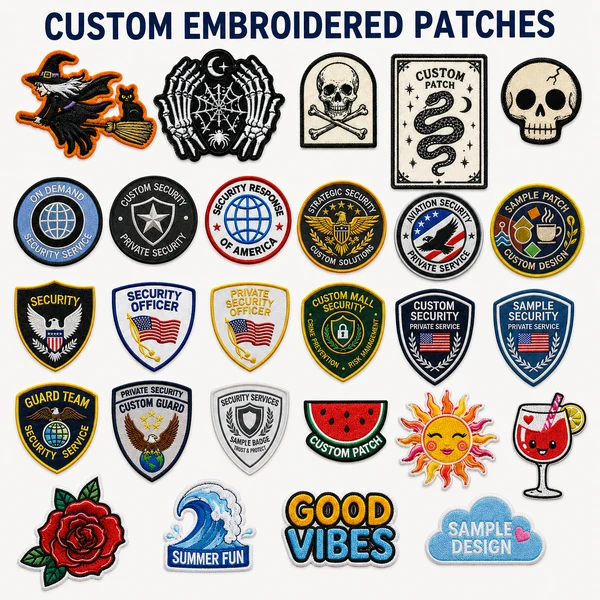
The appropriate dimensions depend on the garment, placement, logo proportions and amount of required detail.
A small chest crest and a large jacket emblem cannot simply use identical digitizing scaled up or down. Enlarging or reducing a design changes the relationship between lettering, stitch structure, border width and overall appearance.
| Application | Initial Planning Range | Main Consideration |
|---|---|---|
| Polo shirt chest crest | Approximately 4–8 cm | Garment weight, fine details and drape |
| Cap front or side crest | Approximately 3–7 cm | Available panel area and curvature |
| Club jacket chest emblem | Approximately 6–10 cm | Visibility, proportions and attachment |
| Jacket back statement crest | Approximately 15–25 cm or larger | Artwork structure, weight and panel dimensions |
These ranges are illustrative design starting points, not standard production recommendations or guaranteed minimum and maximum sizes. The final dimensions should be checked against the actual garment and artwork.
Why the Finished Size Matters More Than the Digital File
A logo enlarged to fill a monitor may appear perfectly detailed even when those features cannot be reproduced on a small physical patch.
For an accurate review, provide the intended dimensions in millimeters or centimeters and identify the smallest important lettering or symbol.
It can also help to print a paper outline of the proposed patch at 100% scale and place it on the actual garment. This does not replace sampling, but it provides an early visual check of proportion and placement.
4. Sew-On, Iron-On or Hook-and-Loop: Which Backing Should You Choose?
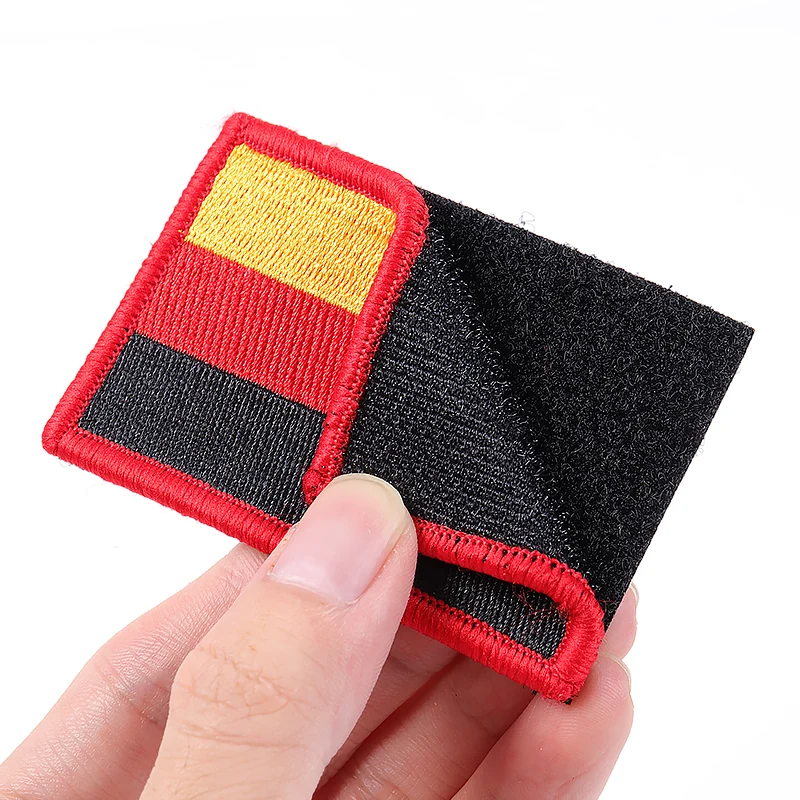
Backing selection is especially important for premium sportswear because different garments respond differently to heat, pressure, washing, stretch and repeated use.
Sew-On Backing
Sew-on patches are a practical choice for many structured jackets, uniforms, caps and bags. Proper attachment depends on garment construction and stitch placement.
For long-term apparel programs, sewing can also make the attachment operation more controllable when the factory is working with different garment fabrics.
Iron-On or Heat-Seal Backing
Heat-seal backing can simplify application when the garment, adhesive and pressing equipment are compatible.
However, performance polos, coated fabrics, stretch blends and heat-sensitive textiles may require additional testing. Temperature, pressure, dwell time and cooling conditions affect results.
Heat-seal is not automatically more durable than sewing, and a patch should not be advertised as suitable for every material without verification.
Hook-and-Loop Backing
Hook-and-loop allows patches to be removed and exchanged where a compatible receiving surface is provided. It can be useful for selected club staff jackets, bags and interchangeable accessories.
Its thickness and surface characteristics may be less suitable for some lightweight fashion garments.
Adhesive Backing
Pressure-sensitive adhesive may be useful for certain temporary or special applications. Permanent apparel use should not be assumed without appropriate material and durability testing.
Recommended approach: Send your manufacturer a garment swatch or a sample garment when backing compatibility is uncertain. Approval should consider the entire garment-and-patch assembly, not just the loose patch.
5. Design Details That Make a Premium Club Crest Look Better
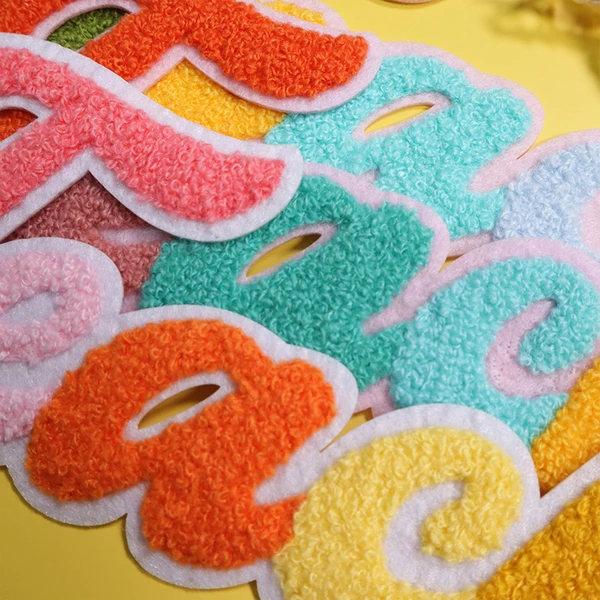
Premium quality is not achieved simply by increasing embroidery density or using more complicated production techniques.
Use a Clear Visual Hierarchy
The main initials, crest symbol or club name should remain recognizable at the intended viewing distance. Secondary details should support the design rather than compete with the primary emblem.
Choose Materials for the Desired Surface
Felt can support a heritage-inspired chenille appearance, while a suitable textile base may be preferable for a conventional embroidered emblem. Each choice affects surface texture, thickness and garment compatibility.
Review Thread and Fabric Colors Together
Pantone references are useful for color communication, but thread and fabric cannot always reproduce an ink color identically. Different materials also change the perceived color under different lighting.
For color-critical club merchandise, approve the relevant physical material references or production samples.
Choose the Correct Edge Finish
Merrowed borders provide a traditional thread-wrapped appearance and are often suitable for regular shapes. Laser-cut contours can follow more complex outlines but require attention to edge stability and nearby details.
Consider the Entire Collection
A premium club collection may include embroidered polo crests, woven clothing labels and large chenille jacket emblems. These do not have to use identical materials, but they should follow an agreed design system for colors, visual proportions and approved branding.
Manufacturing insight: Simplifying a small crest can improve perceived quality. A clean, readable emblem is often more effective than a visually crowded patch containing details that cannot be reproduced consistently.
6. Custom Club Patch MOQ and Wholesale Pricing: What Buyers Should Know
Custom embroidered patch pricing is not determined by size or quantity alone. A realistic quotation must reflect the approved construction and production requirements.
LOVECOLOUR handles custom manufacturing through project-specific quotations rather than a fixed online price list.
For a broader explanation, read our custom patch pricing and MOQ guide.
What Affects the Unit Price?
- Dimensions: Larger patches generally require more production material and processing.
- Manufacturing process: Embroidery, chenille and woven constructions have different setup and production characteristics.
- Artwork complexity: Dense coverage, intricate details and selected special treatments can increase processing requirements.
- Quantity per design: Setup costs are distributed differently across small and large runs.
- Backing and borders: Different finishing operations affect cost.
- Sampling: Custom sample development may incur charges.
- Packaging: Individual bags, branded backing cards and SKU labels can add cost.
- Timing: Rush production and expedited shipping can affect the final quotation.
Can Buyers Request Prices for 25, 50, 100, 300 and 500 Pieces?
Yes. These are useful quotation comparison points, but they do not mean every construction is available at every quantity.
Many custom patch products have a standard starting quantity around 100 pieces per design. Orders below the applicable MOQ may be considered individually, with feasibility and unit costs confirmed before acceptance.
| Quantity per Unique Design | Buyer Consideration |
|---|---|
| 25 pcs | Confirm whether below-MOQ production is feasible and how setup costs apply. |
| 50 pcs | Useful for trial demand, subject to process-specific acceptance. |
| 100 pcs | Common comparison point for an initial custom production run. |
| 300 pcs | Evaluate the effect of larger quantities on unit pricing. |
| 500 pcs | Compare bulk efficiency, packaging and shipment arrangements. |
Does Mixing Multiple Designs Reduce the MOQ?
Not necessarily. A buyer ordering five crest designs at 100 pieces each is not always priced the same way as one design at 500 pieces.
Each unique artwork may require separate digitizing, production preparation, color management and inspection. Buyers should ask the manufacturer to specify quantity and pricing by individual design.
Cost-control recommendation: Before compromising on stitch quality or material suitability, compare a simpler artwork version, an alternative construction, different packaging or a larger quantity for the same approved design.
7. How to Approve a Club Patch Sample Before Bulk Production
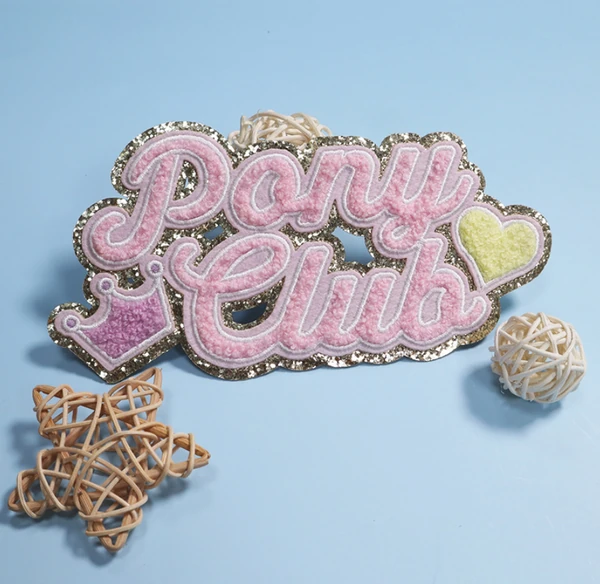
For a premium apparel brand, sample approval should be a technical decision rather than a quick visual confirmation.
A digital mockup can establish the intended design but cannot fully demonstrate thread texture, physical thickness, fine lettering, fabric interaction or the feel of a finished edge.
The 12-Point Club Patch Sample Inspection Checklist
- Dimensions: Measure the finished width and height against the approved specification.
- Shape: Check symmetry, outlines and any shaped cutouts.
- Logo accuracy: Compare the crest with the approved design.
- Small lettering: Inspect legibility at normal viewing distance.
- Thread colors: Compare with the agreed physical references when available.
- Stitch coverage: Look for unwanted gaps or inconsistent coverage.
- Surface texture: Check whether raised elements and chenille pile match the intended appearance.
- Fabric condition: Inspect puckering, distortion and unwanted stiffness.
- Border finish: Check edge consistency and unwanted loose threads.
- Backing: Verify the specified backing type and construction.
- Application: Test garment attachment where material compatibility is critical.
- Specification record: Confirm the approved artwork version and any agreed revisions.
Where a design includes very small text, the sample should be examined at the actual finished size rather than only through enlarged photographs.
If a heat-seal patch is intended for retail sportswear, the buyer and manufacturer should agree on suitable application testing using the intended fabric. Washing and durability claims should be based on relevant testing rather than assumed from the backing material alone.
See our sample approval workflow and factory manufacturing overview.
What Should Happen After Approval?
The approved artwork revision, material choices, colors, dimensions, border, backing and packaging requirements should be recorded as the reference for the production order.
A sample is most useful when it becomes a measurable production standard rather than a one-time visual reference.
8. Managing Multiple Club Patch Designs and Seasonal Collections
Sportswear collections often require several patch types, club names, logo colors and garment placements.
A practical example might involve a small embroidered crest for a polo shirt, a larger chenille emblem for a jacket and a woven label for interior brand identification.
The manufacturer should be able to identify which items share an artwork reference and which require separate production specifications.
Recommended Specification Records
| Field | Why It Matters |
|---|---|
| Unique SKU or design reference | Prevents different club designs from being confused |
| Approved artwork version | Controls logo changes and outdated files |
| Final dimensions | Controls fit and logo proportions |
| Construction and backing | Defines production and attachment requirements |
| Color references | Supports consistency across production runs |
| Quantity per SKU | Supports accurate pricing and packing |
| Approved sample reference | Provides the physical inspection standard |
| Packaging instructions | Reduces incorrect assortment and labeling |
For repeat orders, ask which specifications will be retained and which materials or settings may need reapproval. Maintaining the same artwork file is important, but it does not alone guarantee that separate production lots will be physically identical.
9. Production Lead Time and Shipping for US Club Merchandise Buyers
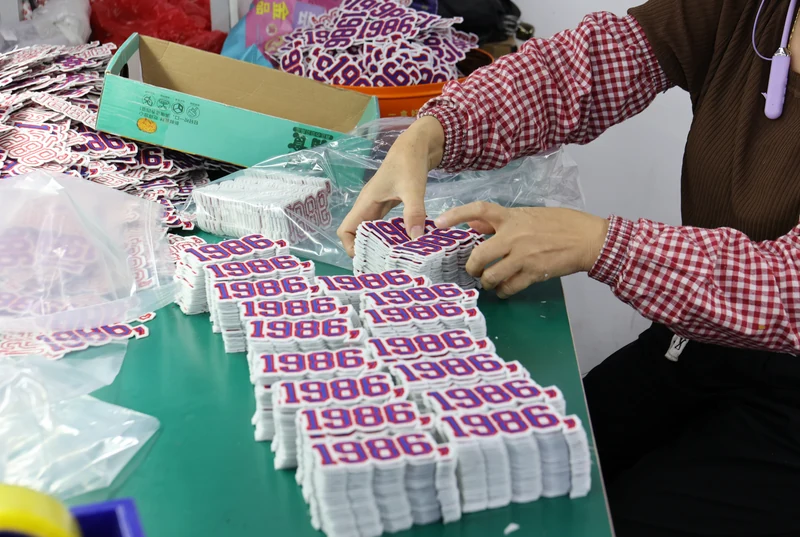
Lead time should be considered in two parts: the manufacturing schedule and the international delivery schedule.
Artwork clarification, sample preparation, sample shipping, approval, material availability, bulk production, inspection and freight can all affect when the goods arrive.
Why Does Sample Approval Affect the Schedule?
A design containing fine lettering, custom colors or mixed manufacturing methods may need additional adjustments after the initial proof or sample.
It is more reliable to plan the production schedule after the required specifications have been agreed than to assume that an early inquiry date is the start of bulk manufacturing.
What Is a Typical Bulk Production Time?
Many custom patch orders are planned around a production period of approximately 7–12 days after the relevant approvals, but the exact timeframe depends on the process, quantity, materials and current factory schedule.
This is a planning reference, not a guaranteed lead time for every project. Special constructions and complex orders may require a different schedule.
Shipping Patches to New York and Other US Destinations
Express courier, air freight and sea freight may be considered according to the shipment weight, urgency and agreed delivery terms.
A supplier’s production completion date is not the same as the buyer’s required in-hand date. Buyers should ask for estimated dispatch timing, transit arrangements, customs responsibilities and any known delivery constraints.
Applicable duties, taxes and customs charges should be addressed through the agreed shipping terms. These should not be assumed to be included in an ex-factory product quotation.
Planning tip: For a collection launch, allow time for sample corrections, garment application tests, freight and unexpected schedule changes. Confirm the latest acceptable delivery date when requesting a quotation.
10. The Custom Tennis & Golf Club Patch RFQ Checklist
A complete request for quotation helps buyers receive more accurate specifications and comparable pricing, while reducing unnecessary clarification emails.
Before contacting a custom patch manufacturer, prepare the following information:
- Artwork: AI, EPS, SVG, PDF or a suitable high-resolution reference.
- Product: Embroidered, chenille, woven or an undecided construction.
- Size: Required width and height in millimeters or centimeters.
- Placement: Polo chest, jacket front, jacket back, cap or bag.
- Fabric: Garment composition or sample when available.
- Color: Artwork colors and Pantone references where required.
- Border: Merrowed, laser-cut or another suitable finish.
- Backing: Sew-on, heat-seal, hook-and-loop or undecided.
- Quantity: Number of pieces for each individual design.
- Sampling: Whether a physical pre-production sample is required.
- Packaging: Bulk, individual packing or retail-ready presentation.
- Delivery: Destination, required in-hand date and any shipping preferences.
Example RFQ for a Premium Club Crest Collection
We are developing a premium tennis and golf apparel collection and would like a quotation for custom club crests.
Please review our attached artwork and advise whether embroidery, chenille or woven construction is most suitable for the fine lettering and intended garment applications.
We would appreciate price comparisons for 25, 50, 100, 300 and 500 pieces per design where feasible, including applicable sample charges, setup or digitizing charges, backing options, production lead times and shipping to the United States.
Please also advise what information you require to prepare physical samples before bulk production.
For artwork review, pricing and manufacturing inquiries, contact the LOVECOLOUR factory team.
11. Choosing a Reliable Custom Club Patch Manufacturer
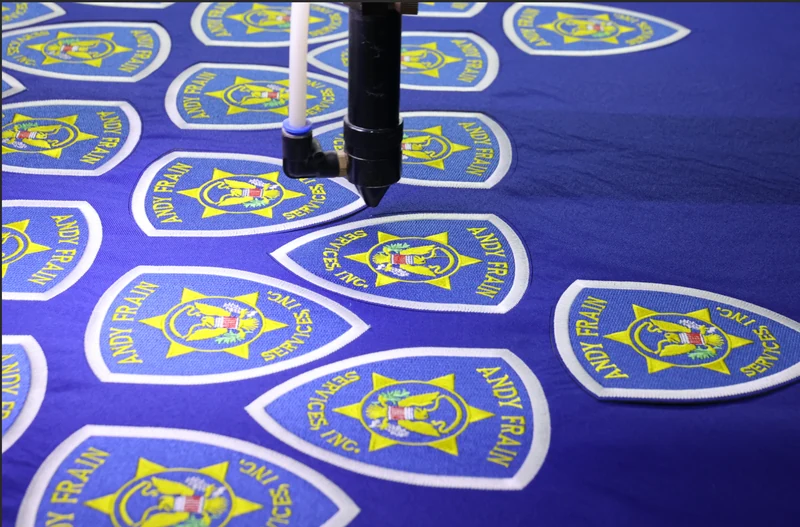
A strong manufacturing partner should do more than promise that every design is possible.
Before selecting a supplier, ask whether the manufacturer can explain the limitations of the requested process and show relevant production evidence.
Six Questions Worth Asking
- Can you show close-up photographs of real patches made with similar lettering and detail?
- Will you review the artwork at the actual finished dimensions?
- Can you explain why embroidery, chenille or woven production is being recommended?
- What will be checked during sample approval and bulk inspection?
- Which manufacturing and finishing operations are performed directly, and are any steps outsourced?
- How are approved versions, repeat orders and multiple design quantities controlled?
Guangzhou Lovecolour Garment Accessories Co., Ltd. manufactures custom patches and garment accessories for international buyers. Our team reviews artwork, sampling requirements, production specifications and finishing choices as part of the project process.
Buyers who want to understand the production environment can review our factory and manufacturing information. Factory visits can also be discussed by advance appointment.
Manufacturing processes and any externally sourced operations should be clarified for the exact project rather than assumed from a general company description.
Frequently Asked Questions
Are embroidered patches or woven patches better for golf club logos?
Embroidery is often preferred for traditional stitched texture and sufficiently large crest details. Woven production can be a better choice for compact logos with fine lettering. The artwork and finished size should determine the recommendation.
Can chenille patches be used for tennis club apparel?
Yes. Chenille can work well for bold initials, heritage-style jackets, sweatshirts and other suitable apparel. It is less appropriate when the main design requirement is very small lettering within the yarn pile.
Can you combine chenille and embroidery in one patch?
Selected designs can combine chenille with flat embroidery to achieve different textures and clearer outlines. Feasibility depends on the dimensions, material structure and placement of fine details.
What is the minimum order for custom club patches?
Minimums vary by process and specification. Many custom patch products start around 100 pieces per design, while smaller quantities can be reviewed on a case-by-case basis.
Can a manufacturer quote several quantities for one design?
Yes. Buyers can request tiered quotations for quantities such as 25, 50, 100, 300 and 500 pieces. Availability at each tier depends on the construction and applicable minimum.
Can different club crest designs be combined into one order?
Yes, but each artwork may require separate production preparation, specification approval and pricing. Total combined quantity does not necessarily determine the unit price of each design.
Are iron-on patches suitable for golf performance polos?
Only when the adhesive, fabric and application conditions are compatible. Performance fabrics may be heat-sensitive or stretchable, so testing on the intended material is recommended.
How long does custom club patch production take?
Many custom patch runs are planned around 7–12 days after relevant approvals, but individual production schedules must be confirmed. Sampling, special construction and freight require separate consideration.
Do I need to provide vector artwork?
Vector artwork is preferred because it helps define shapes, letterforms and dimensions. A suitable high-resolution image can also be reviewed. The manufacturer should advise whether changes are needed before production.
How do I confirm the patch quality before placing a bulk order?
For detail-sensitive projects, request a physical sample and review lettering, dimensions, colors, texture, edge finish, backing and garment compatibility. Record the approved version as the production reference.
Final Recommendation: Let the Artwork and Garment Decide
A premium tennis or golf club crest should be evaluated as a finished garment component, not only as a digital logo.
Embroidery, chenille and woven production can each deliver excellent results when matched to the right artwork. Problems arise when tiny lettering is forced into a raised structure, a heavy patch is applied to an unsuitable fabric or bulk manufacturing begins without a sufficiently clear specification.
The most effective buying process is to confirm the artwork and garment, compare feasible manufacturing methods, approve the necessary samples and document the specification before bulk production.
For sports programs requiring conventional team insignia, also explore our custom sports team patches.
Discuss Your Premium Club Patch Project with LOVECOLOUR
LOVECOLOUR manufactures custom embroidered patches, chenille patches, woven patches and garment accessories for apparel brands, clubs and wholesale buyers.
Send your club artwork, desired dimensions, quantities and garment application. Our team can review the design, recommend a suitable process and prepare a project-specific quotation.
Guangzhou Lovecolour Garment Accessories Co., Ltd.
Guangzhou, China
Email: info@lovecolour.com.cn
Request a Custom Club Patch Quotation →