Custom embroidered PU leather products combine a leather-like base with visible thread detail. They can become apparel patches, brand labels, keychains or decorative bag charms. The right result depends on more than the artwork: size, embroidery coverage, front and back layout, edges and attachment all matter.
This guide explains what buyers should confirm before requesting a quotation or approving a sample.
Quick answer: choose the product format first, review the artwork at its finished size, decide how much PU texture should remain visible, and confirm the attachment. For keychains, specify single-sided or double-sided embroidery and provide separate front and back files when the designs differ.
What Are Embroidered PU Leather Patches and Keychains?
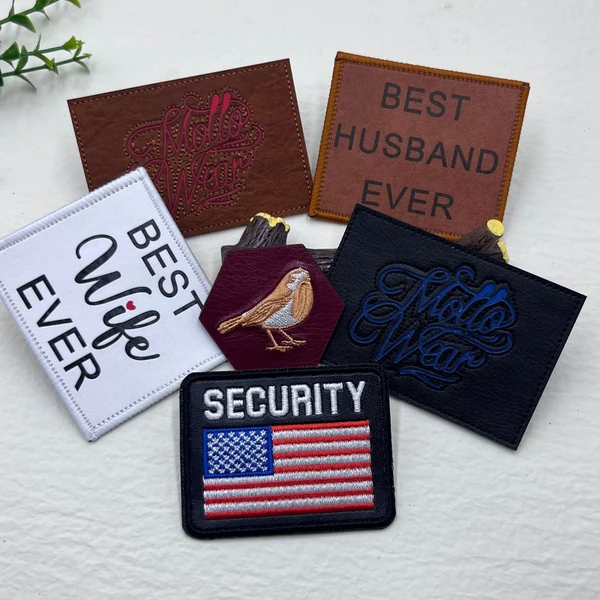
These products use PU leather, also called faux leather, as the base for embroidered lettering, logos or illustrations. Depending on the construction, the finished piece can be attached to clothing or bags, or assembled as a keychain or hanging charm.
PU leather is not genuine leather. Describe the material accurately when preparing purchase specifications and retail product information. A leather-like appearance does not establish the material composition.
Also distinguish embroidery made directly on a PU base from a separate embroidered appliqué attached to leather. Ask the supplier which construction is being quoted and confirm it on the sample.
Explore Lovecolour’s
custom embroidered PU leather patches and keychains
for available product formats and single- or double-sided design options.
Should Your Design Become a Patch, Label or Bag Charm?
Start with how the product will be used. An attached label needs suitable placement and sewing space. A hanging accessory needs a finished reverse, an attachment point and a balanced hanging direction.
| Format | Suitable Projects | Main Design Priority |
|---|---|---|
| Patch or brand label | Clothing, denim, hats and attached bag branding | Readable artwork, placement and attachment space |
| Keychain | Car keys, branded merchandise and souvenirs | Compact size, front/back finish and hardware |
| Bag charm | Handbags, backpacks, totes and character collections | Recognizable silhouette and hanging orientation |
For example, an animal design can become both a sewn bag label and a separate charm. The label needs room for attachment; the charm needs a suitable tab and hardware. Treat them as coordinated products with separate construction requirements.
For additional accessory formats, compare our
custom embroidered bag tags and bag charms.
Which Artwork Works Best for Embroidery on PU Leather?
Bold lettering, clear outlines and distinct color areas provide a useful starting point. Detailed artwork is possible, but its suitability must be assessed at the actual production size.
Logos and English Lettering
Check letter spacing, narrow strokes and small enclosed areas. A wordmark that is readable in a large digital file can become crowded on a small label. Provide the exact spelling and font reference, and avoid reducing the design simply to fit more text.
Animals and Character Illustrations
Prioritize the features that make the character recognizable, such as its outline, eyes and main color areas. Tiny facial details may need simplification. Review those changes before sampling rather than leaving them to interpretation.
Gradients and Fine Graphic Details
Embroidery represents artwork through stitches rather than printed pixels. Photographic shading, very thin lines and small lettering need individual review. Ask which details can be retained and which should be adjusted.
There is no single minimum text size that suits every font, material and stitch layout. Confirm readability through artwork review and sampling.
Learn more about our
custom embroidery process
when preparing your logo or illustration.
Partial vs Full Embroidery Coverage
Embroidery coverage changes both the appearance and the production requirements. Decide whether the PU texture should be a visible part of the design.
| Design Approach | Visual Effect | What to Review |
|---|---|---|
| Partial embroidery | Visible PU texture with selected stitched details | Base color, contrast and the balance of exposed areas |
| Extensive or full coverage | Greater emphasis on thread color and embroidered illustration | Stitch layout, surface appearance and finished shape |
Higher density does not automatically mean better embroidery. Density should suit the artwork and base material. Check for clear detail, an even appearance and an acceptable finished shape instead of specifying density alone.
Single-Sided vs Double-Sided Embroidered Keychains
Keychains and bag charms can rotate, so the reverse deserves attention even when only the front is embroidered.
Single-Sided Embroidery
Use one embroidered face when a single logo or character is the focus. Confirm the reverse material, appearance and assembly finish. Single-sided does not mean the back can be left unspecified.
The Same Design on Both Sides
Matching artwork offers consistent visibility from either direction. Text should read correctly on each face. For asymmetric illustrations, confirm how the design follows the physical outline when viewed from the reverse.
Different Designs on the Two Sides
A character on the front and a brand name on the back can separate visual appeal from brand identification. Other combinations include a destination illustration with a souvenir message, or a logo with a campaign slogan.
Both artworks must fit the same finished product. Check the shared outer shape, edge margins and attachment position, and label the files clearly as “front” and “back.”
Lovecolour offers
single- and double-sided embroidered PU leather keychains
with matching or different designs. The two constructions should be quoted separately.
Size, Edges and Hardware: Small Decisions with Visible Results
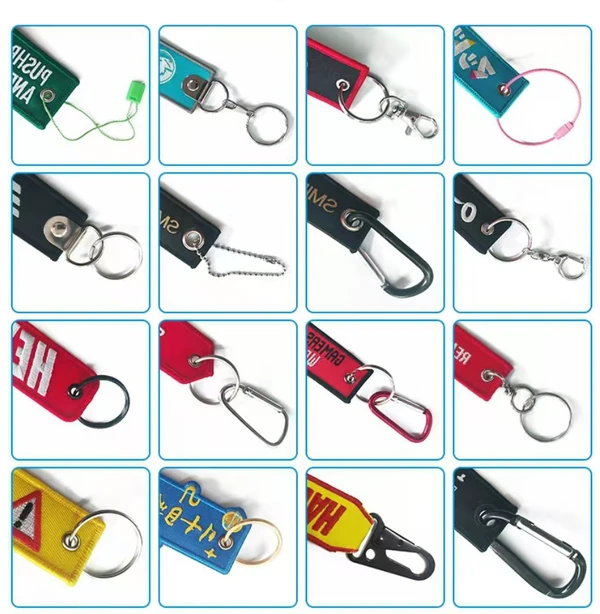
Specify finished width and height rather than relying on a reference photo. For a keychain, state whether the measurement includes the PU tab and metal hardware.
- Edges: keep important artwork clear of the cutting line and perimeter stitching.
- Attachment tab: review its position so the charm hangs in the intended direction.
- Hardware: confirm the ring or clasp style, size and finish.
- PU and thread colors: approve them separately; the same color reference can look different across materials.
- Garment placement: provide the available sewing area and intended fabric.
For a coordinated bag collection, you can also explore
custom bag shoulder straps
on our sister website, Lanyard Factory Direct. Coordinate colors and hardware appearance while confirming each component’s functional requirements separately.
What Affects the Price of a Custom Order?
A useful quotation needs more than a picture and total quantity. Price depends on the finished dimensions, embroidery complexity and coverage, PU material, single- or double-sided construction, hardware, quantity per design and packaging.
When comparing suppliers, use the same specification. A single-sided keychain and a double-sided version with different artwork are not equivalent quotes. Neither are products with different clasp styles or packaging.
Ask the quotation to separate sample costs, bulk product pricing and shipping. Confirm MOQ per design and any proposed color variations before assuming they can share one order minimum.
What to Check Before Approving a Sample
Review the sample against the agreed artwork and specification. Approval should cover the complete product, not only the embroidered logo.
- Correct spelling and readable lettering.
- Recognizable character details and clear outlines.
- Approved PU texture, base color and thread colors.
- Finished width, height and shape.
- Edge finish and perimeter stitching.
- Correct front/back designs and orientation.
- Hardware style, attachment and hanging direction.
- Agreed packaging and quantity labeling.
For apparel labels, assess attachment and care compatibility on the intended garment. Do not assume that every PU patch is suitable for ironing, machine washing or tumble drying.
See our
sampling and approval process
for the next stage of development. Record any changes and approve the revised specification before bulk production.
How to Prepare a Complete Quotation Request
If you are sourcing from an embroidered PU leather patch manufacturer in China, a clear brief helps the supplier assess your design and quote the intended construction.
- Product format: patch, label, keychain or bag charm.
- Artwork with exact lettering and color references.
- Finished dimensions and quantity per design.
- Preferred PU color and embroidery coverage.
- Single-sided or double-sided construction.
- Separate front and back files when applicable.
- Attachment, hardware and packaging requirements.
- Delivery country, postal code and required date.
Lovecolour is based in Guangzhou, China, and manufactures custom patches and branded accessories with OEM and ODM support. Explore our
embroidered PU leather product options
or
send your artwork for a tailored quotation.
Frequently Asked Questions
Is embroidered PU leather the same as embroidered genuine leather?
No. PU leather is faux leather. Confirm the actual base material rather than relying on the word “leather” in a product title.
Can the two sides of a keychain have different embroidery?
Yes. Lovecolour can produce different front and back designs. Both artworks need review within the same outline and attachment layout.
Is full embroidery always better than partial embroidery?
No. Partial embroidery retains visible PU texture, while fuller coverage emphasizes the stitched design. Choose according to the appearance you want and confirm the result through sampling.
Can a garment label design become a bag charm?
Yes, but its construction needs adaptation. Review the finished reverse, attachment tab, hardware and hanging direction instead of simply copying the label specification.
Are all PU leather patches iron-on or washable?
No. Attachment and care suitability depend on the selected material and construction. Confirm requirements and test the sample under the intended conditions.
What are the MOQ and lead time?
They are confirmed according to the artwork, construction, quantity and sample requirements. Include your delivery deadline in the inquiry.
What is the best next step for a new design?
Send your artwork, dimensions, quantity and intended use. A design review can identify details to confirm before quotation and sampling.