Embroidered vs Woven vs PVC vs Chenille Patches: Which Is Right for Your Product?
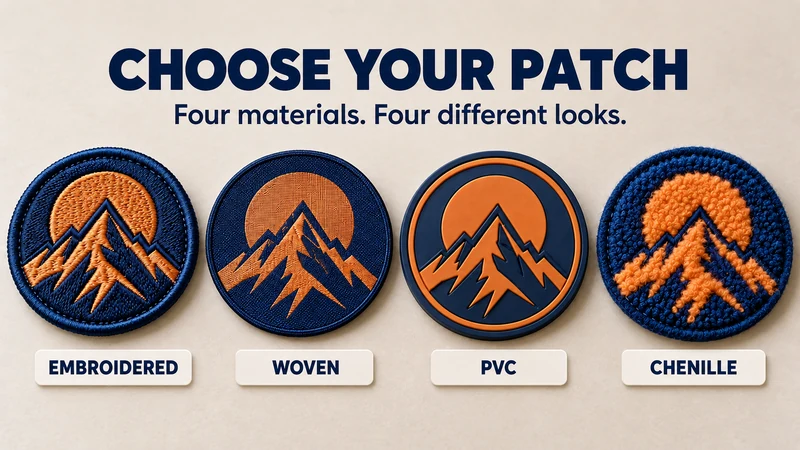
The best patch for your product depends on three things: what your artwork must show, how the finished patch should feel, and where it will be used. Choose embroidered patches for a classic stitched look, woven patches for fine lines and small text, PVC patches for a molded surface on gear, and chenille patches for bold, soft texture on jackets and sportswear.
Those are starting points, not guarantees. A logo that looks excellent across a laptop screen may lose its smallest letters when reduced to a cap patch. Before placing a bulk order, compare the processes at the same finished size and check a physical sample on the actual product.
What does the same logo look like in four patch processes?
Imagine a logo with a bold brand name, a thin outline, and a short line of small text underneath. Each process changes which part of that design gets attention.
| Patch type | What you notice first | What may need changing in the artwork |
|---|---|---|
| Embroidered | Raised stitches and a familiar fabric badge look | Thin outlines and small text may need to be enlarged or simplified |
| Woven | Sharper fine lines and a flatter, smoother face | The design will have less raised texture than embroidery |
| PVC | Solid color areas and molded 2D or 3D relief | Fine gaps, lettering and height changes must work within the mold design |
| Chenille | Soft, prominent yarn texture | Small details usually need embroidery or another technique alongside the chenille |
The question is therefore more useful than “Which patch is best?” Ask: Which parts of this logo must remain readable, and which visual effect matters most?
Choose embroidered patches for a classic stitched badge
Custom embroidered patches work well when the buyer wants the logo to look stitched. Thread direction, coverage and the finished border give the patch a tactile appearance that suits uniforms, caps, jackets, clubs and merchandise.
Embroidery is especially effective for a bold emblem: a clear symbol, readable lettering and shapes with enough room between them. It becomes more difficult when a small patch must carry several lines of tiny text or closely spaced lines. Reducing the artwork file does not reduce the physical width of a stitch.
For a uniform program, check the lettering at the intended patch size rather than approving an enlarged digital proof. If the name or tagline is essential and becomes unclear, a woven patch may reproduce it more effectively.
Choose woven patches when small details must stay clear
Woven patches form the artwork with woven threads and have a comparatively smooth, low-profile surface. They are often the strongest starting option when a logo contains fine outlines, compact lettering or several details within a small area.
That makes custom woven patches useful for apparel branding, detailed uniform marks and designs where legibility matters more than a raised stitched effect. “More detail” still has a limit: line spacing, color separation and final dimensions all need review. A physical sample tells you more than a zoomed-in screen image.
Buyer tip: If you are deciding between embroidery and weaving, request both samples at the same dimensions. Hold them at normal viewing distance. The better choice is the one that communicates the logo clearly on the finished product, not the one that looks most intricate under a camera lens.
Choose PVC patches for a molded finish on gear
PVC rubber patches create the design with molded color areas instead of thread. They are a practical option for backpacks, outdoor products, tactical-style gear and other applications where buyers want a distinct rubber-like face.
A 2D PVC patch uses defined levels and color blocks for a clean graphic appearance. A 3D PVC patch adds rounded or sculpted relief where the artwork calls for more depth. Neither term means every tiny feature will reproduce perfectly: narrow spaces, small letters, color boundaries and the patch’s overall thickness still need to be checked in the mold drawing and sample. Compare 2D PVC patches and 3D PVC patches if depth is part of your design decision.
PVC is often chosen for products exposed to moisture and frequent handling. The finished product’s performance also depends on its attachment, the base material and its use. A patch on a removable bag panel and a patch sewn to a repeatedly washed garment need different application checks.
Choose chenille patches when texture is the design
Chenille makes a visual statement before anyone reads the small print. Its raised, soft yarn surface is associated with varsity jackets, sportswear and heritage-inspired merchandise. If your artwork has large letters or a bold shape, custom chenille patches can make that texture the main feature.
Chenille is usually a poor place to put tiny lettering inside a fuzzy area. A more workable design may use chenille for the large letter or symbol and embroidery for the outline, name or smaller details. When reviewing a sample, look at the yarn coverage, the edges and the way any embroidered detail meets the chenille area.
The right question for a jacket collection is not “Can we turn the entire logo into chenille?” It is “Which part of the logo should be chenille?”
Quick selection chart: which patch fits your product?
| Your priority | Start with | Check before approval |
|---|---|---|
| Traditional uniform or club badge | Embroidered | Letter clarity, stitch coverage, edge and backing |
| Small logo with fine text | Woven | Readability at actual size and line separation |
| Molded logo for a backpack or gear panel | PVC | Molded detail, colors, thickness and attachment |
| Oversized varsity letter or bold jacket graphic | Chenille | Yarn coverage, outlines and garment placement |
| Gradients or photographic artwork | Consider printed patches | Whether printing serves the artwork better than these four processes |
This chart narrows the first sample choice. Your artwork and application decide the final specification.
How should you choose for hats, jackets, bags and uniforms?
Hats: Start with the available decoration area and the cap’s shape. A compact woven patch may preserve more logo detail, while a simplified embroidered design can give a stronger stitched look. Check how the chosen backing or sewing method works on the actual cap.
Jackets: Match the patch’s scale to the garment. Chenille can carry a large varsity-style graphic; embroidery works for a more traditional badge. Review placement, flexibility and how the garment will be cleaned.
Bags and outdoor gear: PVC is worth considering for a molded logo, particularly on frequently handled panels. Confirm whether the patch will be sewn on permanently or attached to a matching hook-and-loop panel. For removable applications, see hook-and-loop PVC patches.
Uniforms: Begin with the information that must remain readable across every size and reorder. Embroidery may suit a bold insignia; woven construction may better serve dense text. Specify the attachment method and approve the patch on the intended uniform fabric.
What should you inspect on each sample?
A sample should answer production questions, not just show that a logo can be made. Ask your supplier to confirm:
- Finished size: Does the patch fit the product and keep essential text legible?
- Color: Are thread or PVC colors approved against the agreed references?
- Detail: Are thin lines, letter openings and spaces between elements still distinct?
- Edge: Is the chosen border or cut appropriate for the artwork’s outline?
- Backing: Will the attachment method work with the actual garment or gear panel?
- Placement: Does the patch sit properly when the product is worn or used?
- Repeatability: Can the approved artwork, colors and construction be referenced for the bulk order and future reorders?
At LOVECOLOUR, the practical starting point is an artwork review at the intended finished size, followed by sample approval before bulk production. If a detail cannot be held reliably in the selected process, it is better to adjust the artwork or process at this stage.
Common mistakes when comparing patch types
Approving only a large digital mockup. A mockup shows the design direction, but it cannot prove that small text will remain readable on a finished patch.
Choosing by material without checking the application. The patch face, backing and product fabric work together. Confirm all three.
Expecting one process to reproduce every effect. Chenille creates texture; woven construction favors fine detail; embroidery emphasizes stitches; PVC creates molded relief. If the artwork needs gradients or photographic detail, review printed patches as another option.
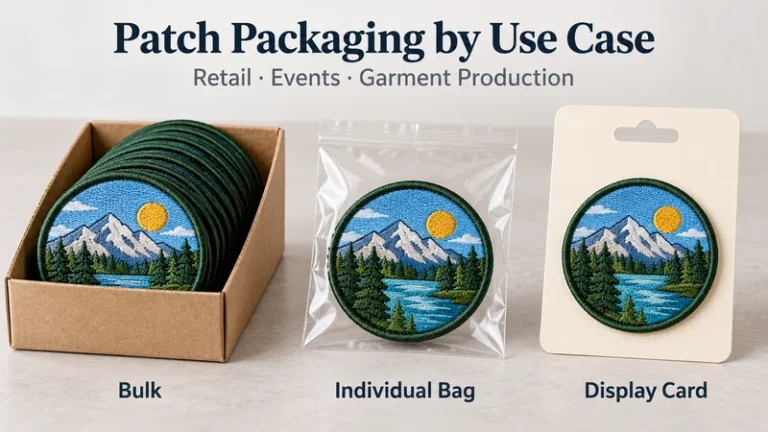
Comparing quotes with different specifications. Two suppliers may quote different sizes, backings, color requirements or packing methods. Put those details on the same specification sheet before comparing price.
What should you send for a useful quotation?
Send your logo artwork, intended patch width and height, quantity, product application, preferred patch type, backing and packaging requirements. Include a photo of the hat, jacket, bag or uniform if placement matters, plus your target delivery date.
You do not have to decide the process before contacting a manufacturer. If you are choosing between two options, say so and identify the non-negotiable part of the design—such as small text, raised texture or a removable attachment. LOVECOLOUR can review the artwork and recommend a suitable route through its custom patches range. For a project-specific review, send the specifications here.
FAQ
Are woven patches better than embroidered patches for small text?
Often, yes. Woven construction can reproduce finer detail in a compact area. The answer still depends on the letter size, font, spacing and patch dimensions, so approve the result at finished size.
Are PVC patches better than embroidered patches for outdoor gear?
PVC is a useful option when you want a molded face on gear exposed to moisture and handling. Attachment and the underlying product matter too. Test the complete patch and product combination for its intended use.
Can chenille patches include small lettering?
They can include smaller details through a combined construction, commonly using embroidery alongside chenille. The lettering needs to be assessed in the proposed sample rather than assumed from the artwork.
Which patch type looks most premium?
“Premium” depends on the product. Chenille can make a varsity jacket feel distinctive; embroidery gives a traditional badge character; woven patches keep a detailed brand mark crisp; PVC creates a defined molded finish. Choose the appearance that fits the collection.
Can I use the same logo file for all four patch types?
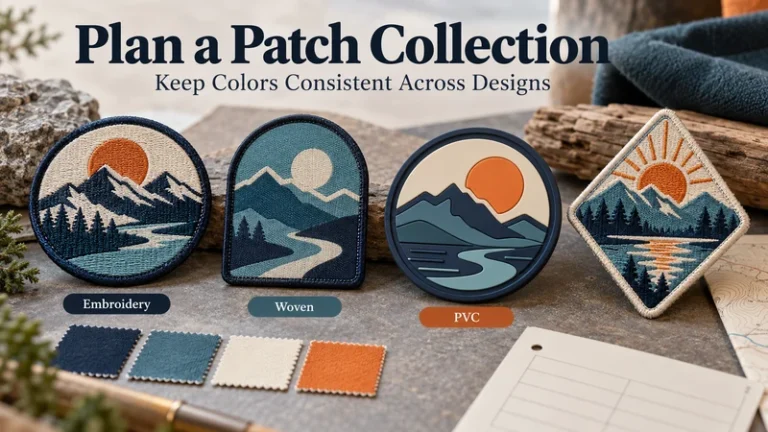
You can submit the same original artwork for review, but the production artwork may need different adjustments for stitching, weaving, molding or chenille. Keep the core brand elements consistent while allowing each process to work properly.
Should I choose a backing before the patch process?
Tell the supplier how the patch will be attached as early as possible. Patch type, base material and backing should be assessed together, especially for heat application or removable patches.
What determines the price of a custom patch?
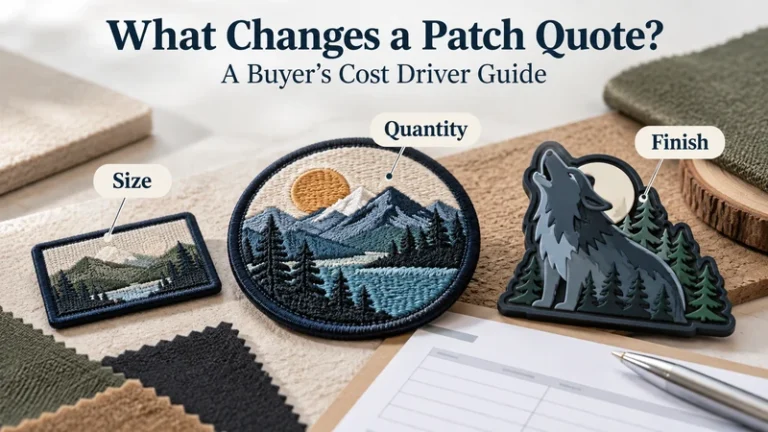
Size, quantity, process, design complexity, number of colors, backing, edge finish and packaging can all change a quotation. Request prices against the same written specification. LOVECOLOUR’s pricing and MOQ guide explains how to prepare that comparison.