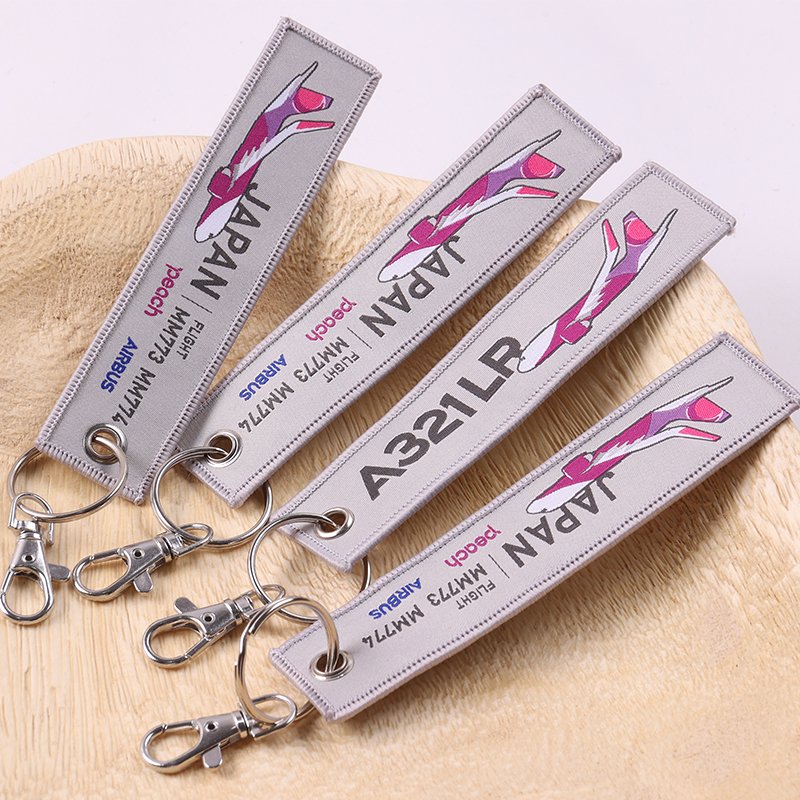
Custom Remove Before Flight Keychains
Custom Remove Before Flight Keychains for Brand Merchandise Make the flight tag format your own. LOVECOLOUR develops custom…
View product →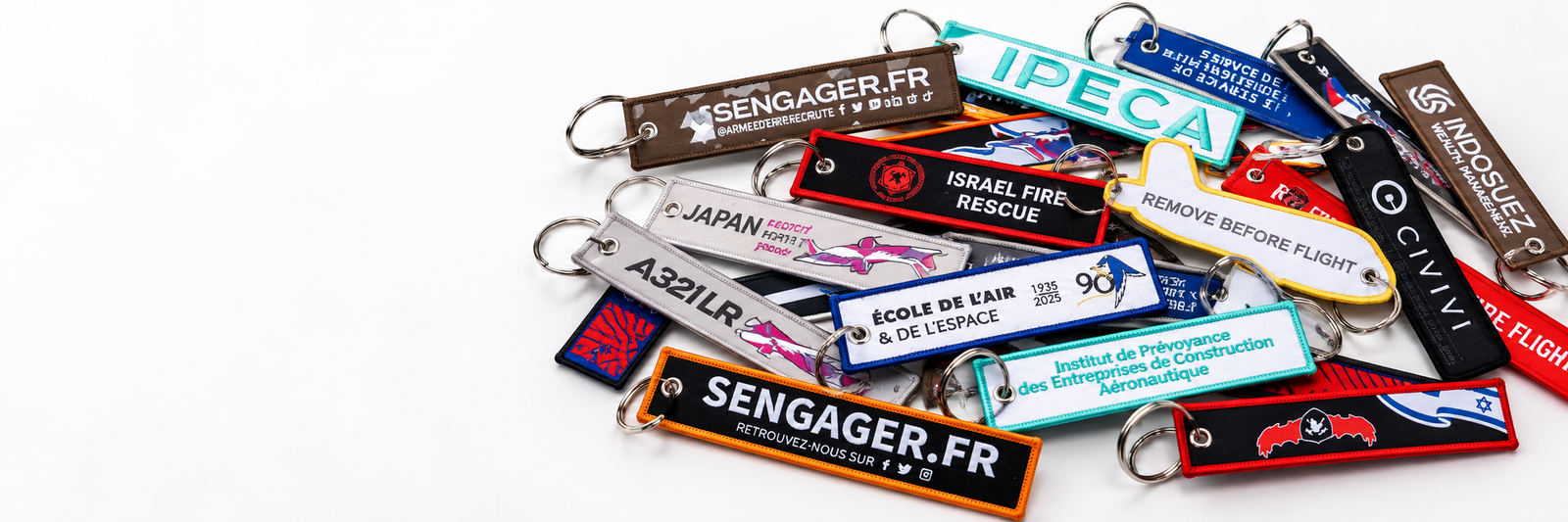
Keychains & small merch
Nine items at a time, newest first.
Custom Remove Before Flight Keychains for Brand Merchandise Make the flight tag format your own. LOVECOLOUR develops custom…
View product →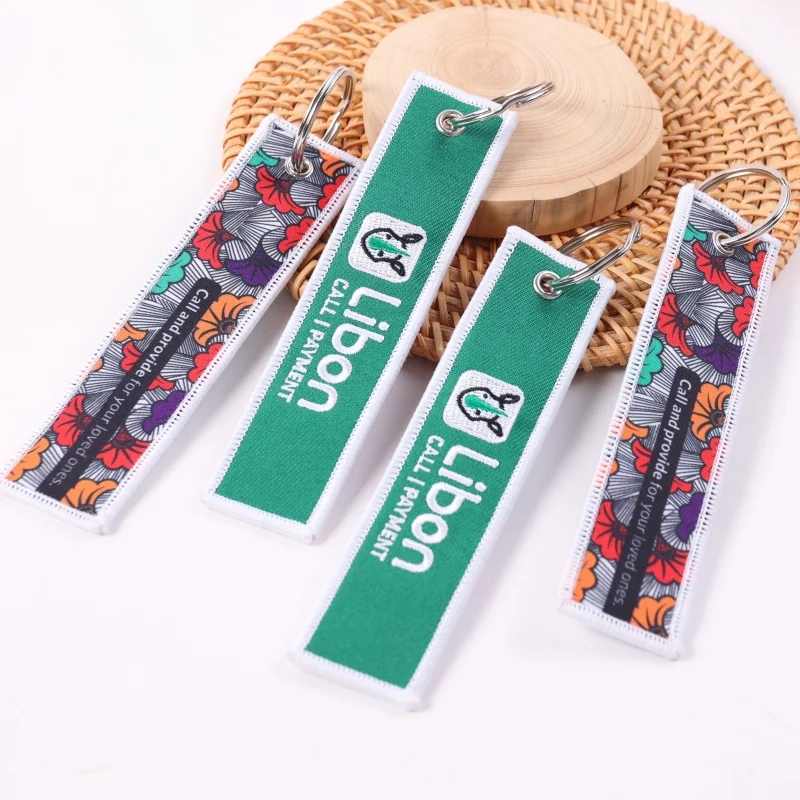
Custom Printed Flight Tag Keychains for Full-Color Merchandise Some artwork needs more than a few thread colors. Custom…
View product →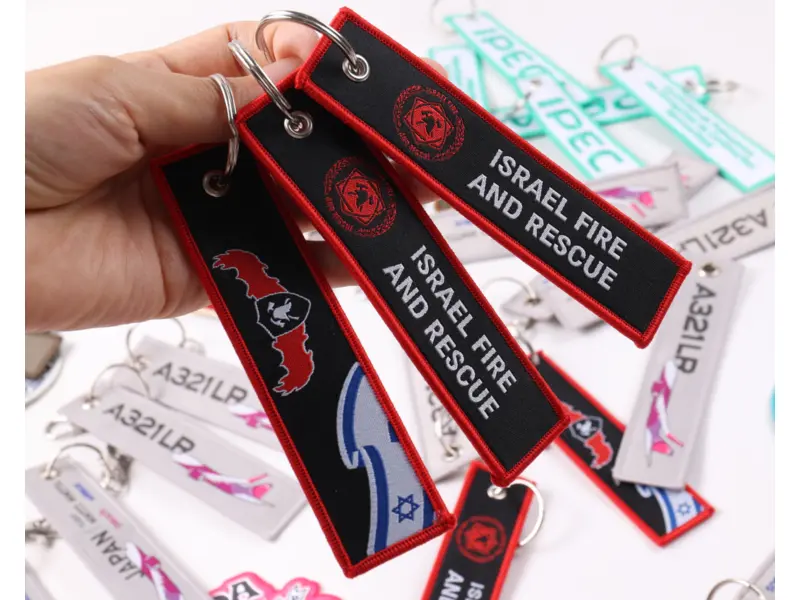
Custom Woven Flight Tag Keychains for Brand Merchandise Put your logo, message or event artwork on a custom…
View product →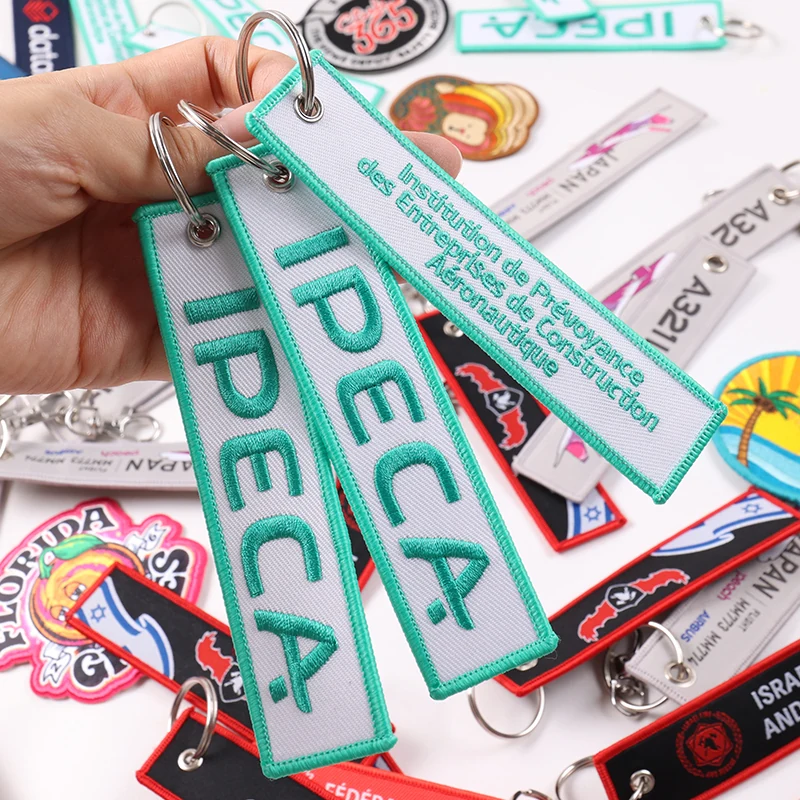
Custom Embroidered Flight Tag Keychains for Brands and Bulk Orders Turn your logo, message or artwork into a…
View product → A small fabric tag can carry a lot of brand detail—if every part has enough room. Custom printed…
View product →Showing 10–14 of 14 keychains
Ask about a keychain specification we have not listedHow a keychain is specified
A patch is sewn on and stays put. A keychain is held, hooked to bags, pushed into pockets and dropped — so the body, the hardware and the strap are specified together, not as three separate decisions.
The body is where the brand mark lives; the hardware is how the keychain attaches; the strap is how it reaches from the hand to the bag. Most keychain failures are hardware failures — a split ring that opens, a clip that will not close, a strap that pulls out of the ring — so the closure is inspected, not just the charm.
That also changes the quote. A keychain is priced as a set, not a charm: the body, the hardware and the webbing each move the number, and so does the packing — loose, per piece or by set. We confirm all of it before quoting, and the approved sample is what the bulk run is measured against.
Placement & buyers
The placement decides the hardware and the size. Tell us where the keychain will be carried and the rest of the specification follows from it.
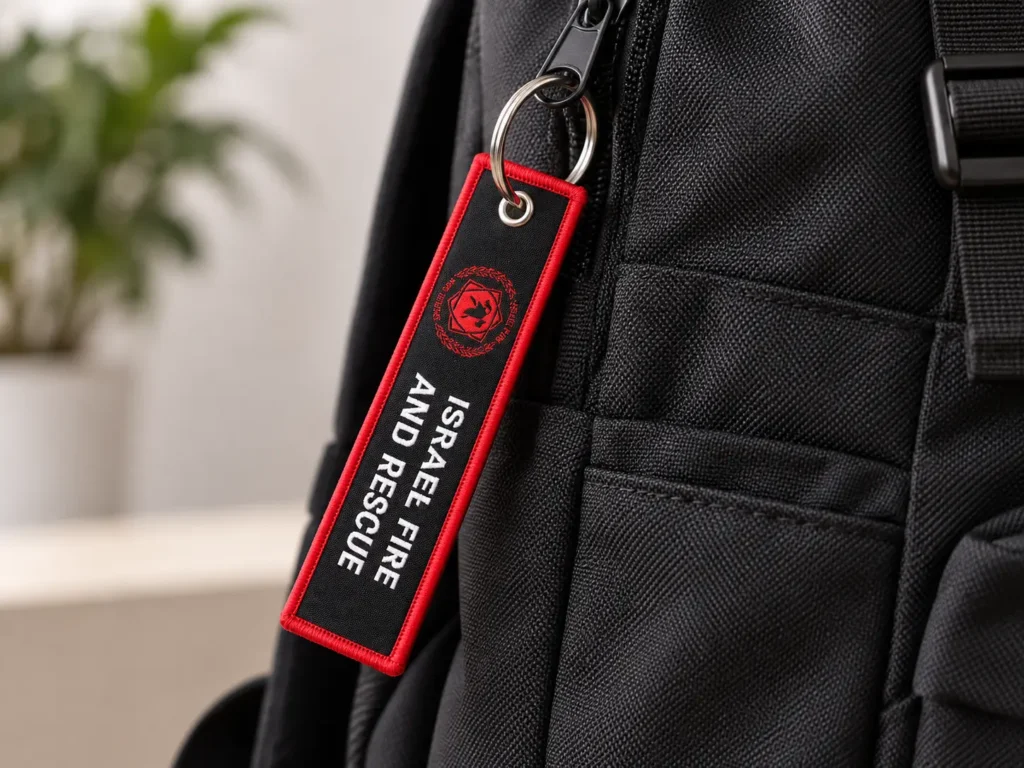
Hooked onto a bag, backpack or belt loop, where the keychain is handled every day and the hardware has to hold.
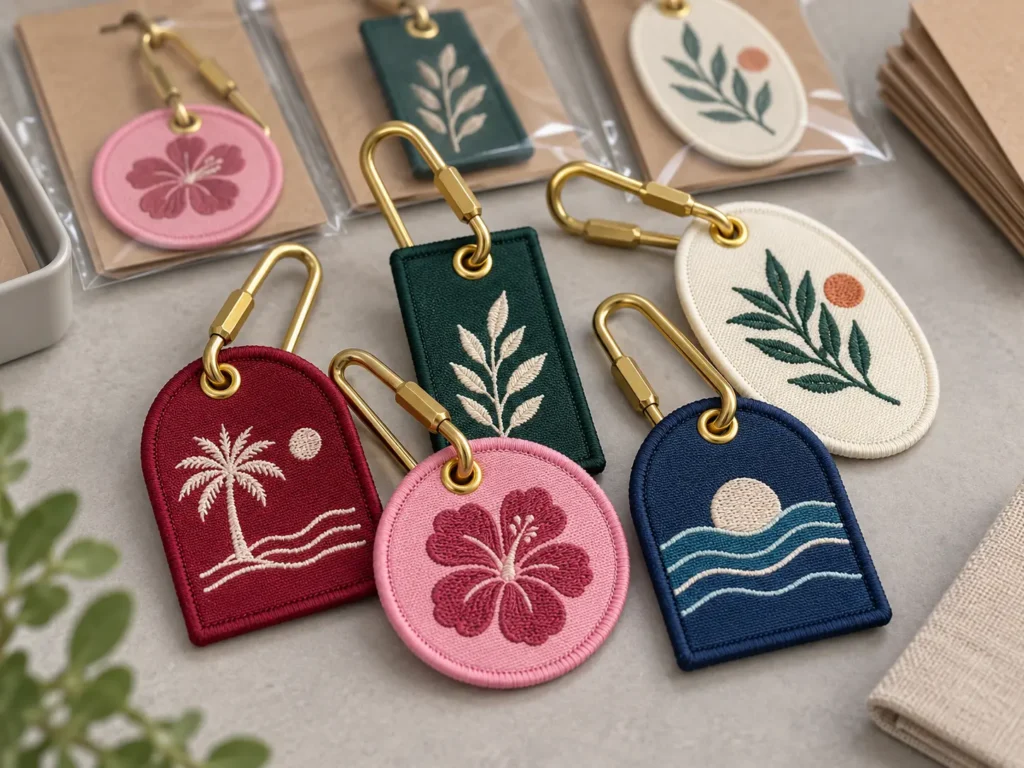
A moulded charm or embroidered fob sold or handed out as merch, where unit cost, colour and pack-out per piece decide the order.
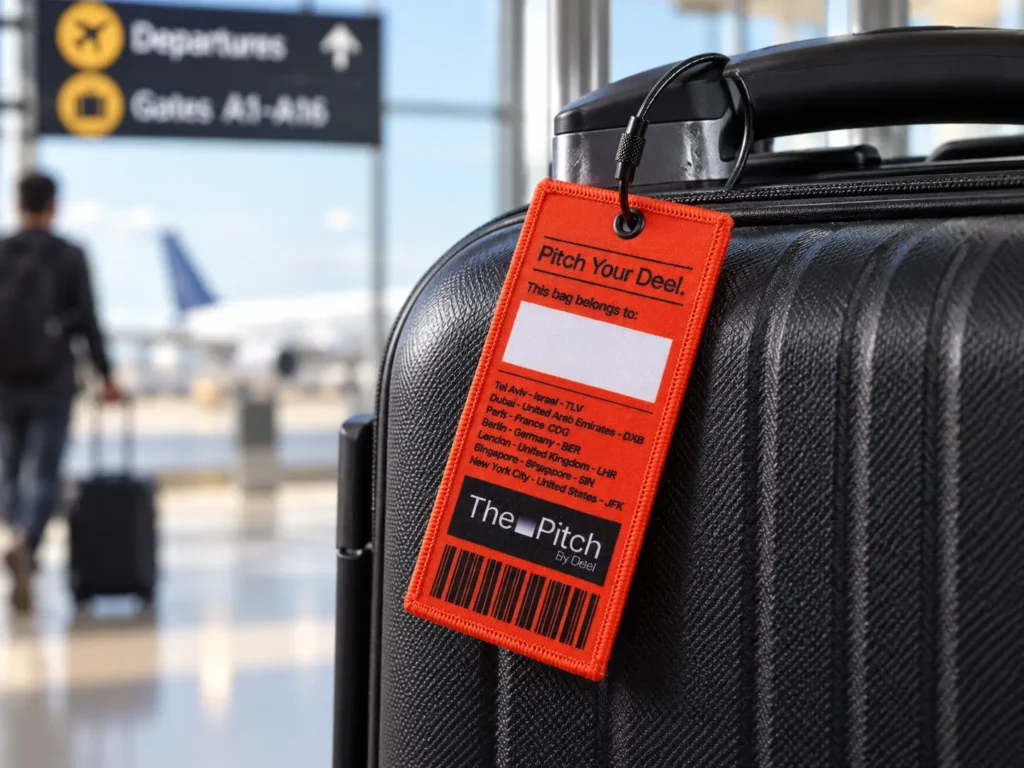
A woven flight tag or souvenir tag on a case or bag, where the label has to stay legible after real travel.
Key fobs and flight tags that ship with a drop, matched to the patches and labels in the same production record.
Giveaways and lanyard combinations where the dates are fixed, so packing by set and an honest rush answer matter.
Small-run city and museum souvenirs with a repeat order path once a design proves itself.
Team and club merch where the keychain is ordered beside the badge and has to arrive on the same schedule.
Per-piece and white-label packing that reaches the fulfilment line ready, with artwork retained for reorders.
Keychain, patch and label sets produced under one record and packed by set or by piece for the end client.
Keychain structures
The artwork decides the structure, not preference: how the mark has to read, how the keychain will be handled and what the hardware has to do. Send the file at its final size and we will say which of these reproduces it faithfully.
01
A webbing loop or a fabric tag carries the brand mark, usually as a woven or printed logo. The everyday option: light, durable and cheap to repeat, so it scales from a small test run to a full drop.
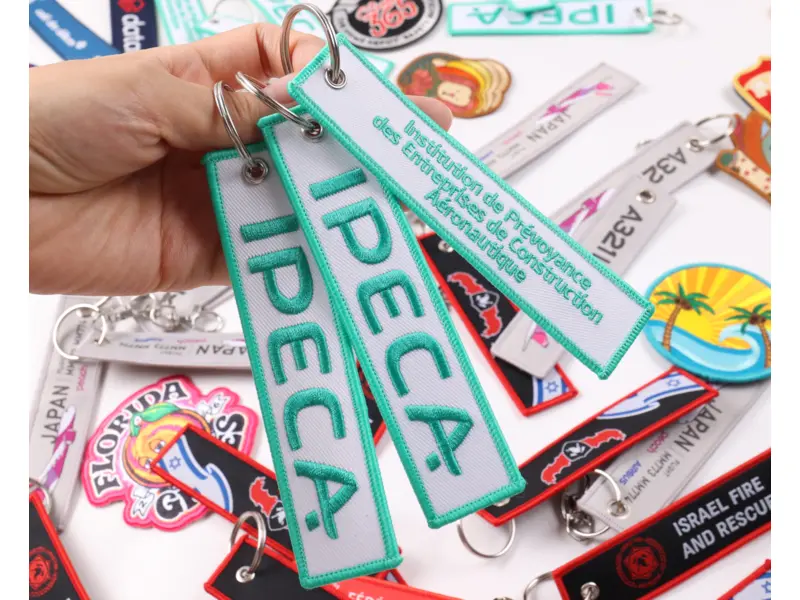 02
02
Produced on the same 50+ computerized embroidery machines as the embroidered patches and lanyards, so an embroidered keychain can match a patch programme stitch for stitch.
 03
03
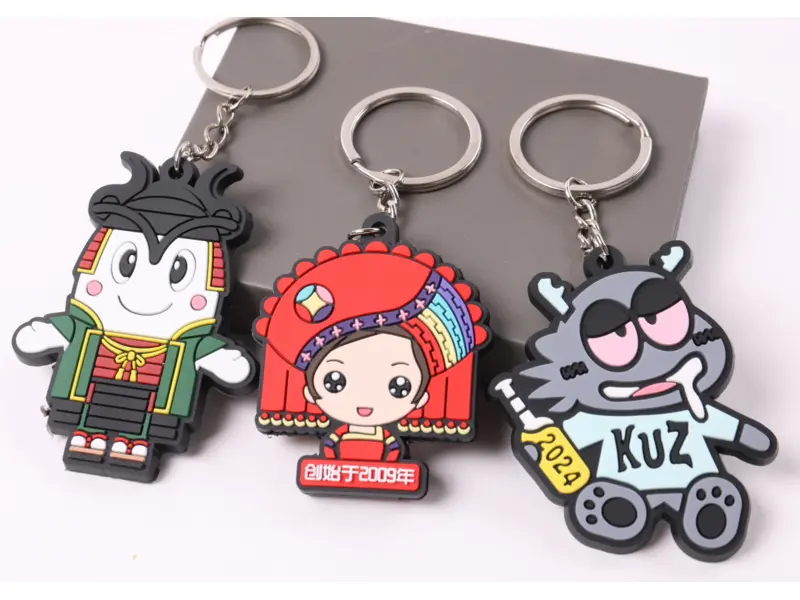
Moulded in 2D or 3D with multi-layer construction and Pantone-matched colour. The option for a charm that takes daily handling, water and being dropped into a pocket.
 04
04
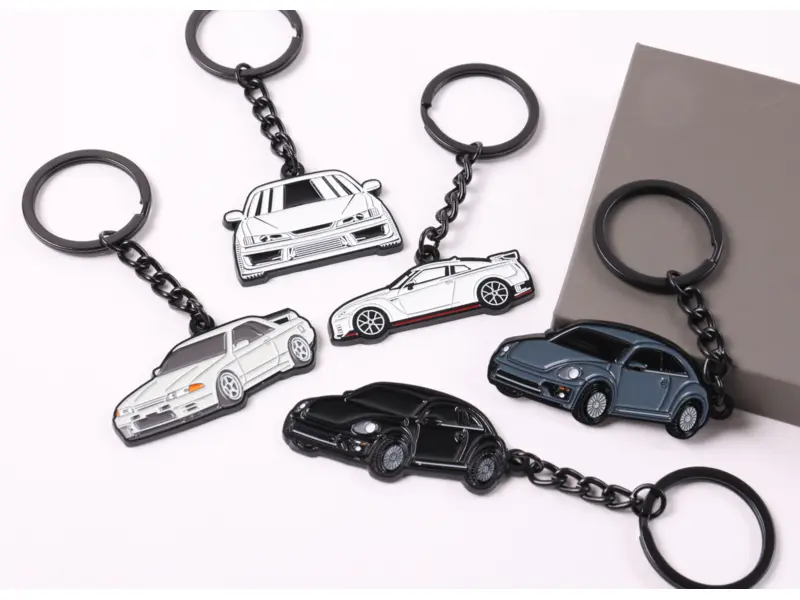
Metal here means the hardware that does the work: split rings, hooks and clips, matched and assembled to the body. We confirm the hardware your design needs rather than claiming a metal process we do not run.
 05
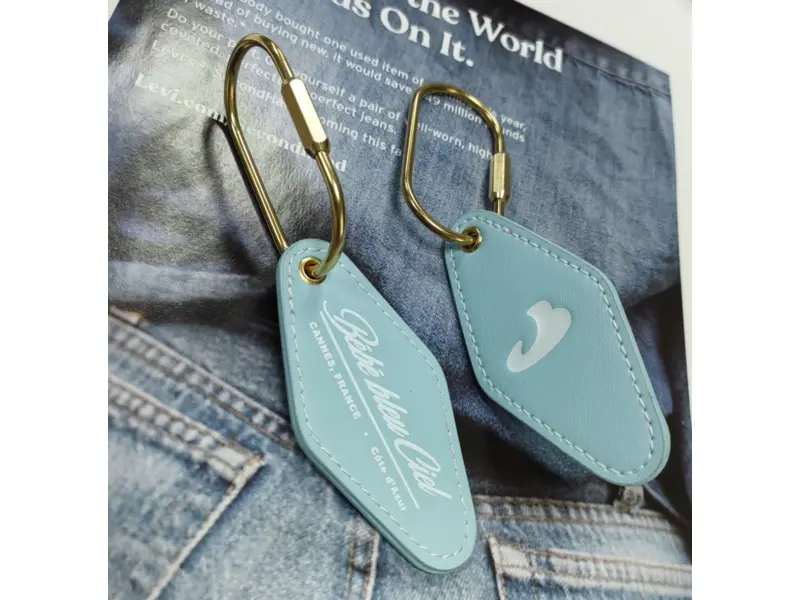
05
Leather is cut and finished as a tag or strap, with the logo worked into the surface and the edge finished for handling. The option that is meant to read as hardware-adjacent rather than as a printed giveaway.
Hardware & attachment
A cheap ring or a loose clip turns a good charm into a returned order. Hardware finish and closure are inspection points, not afterthoughts.
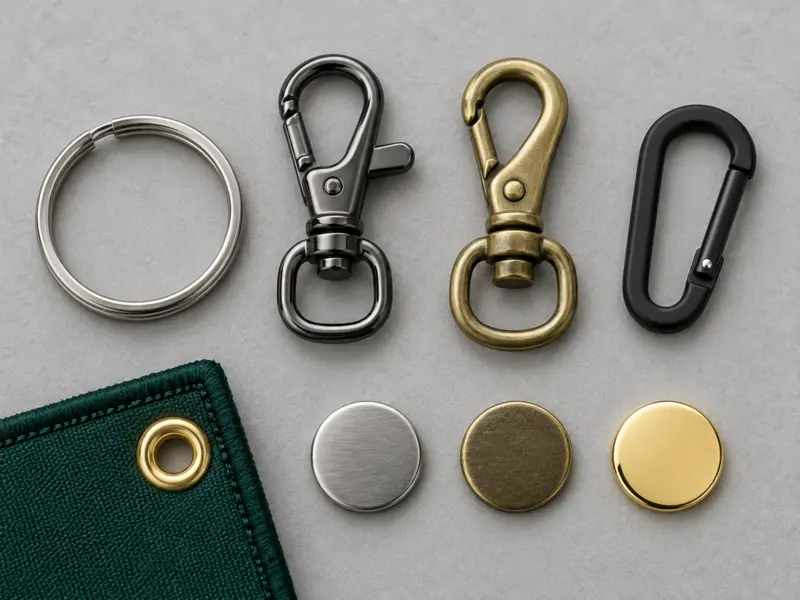
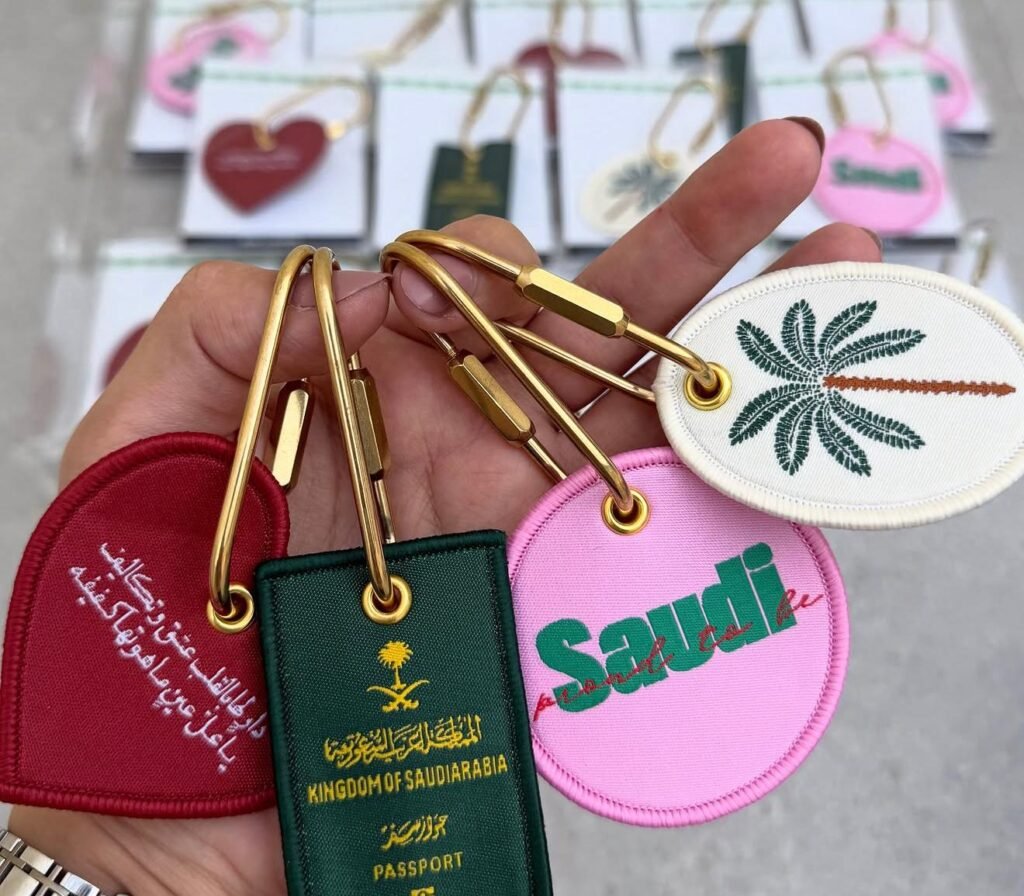
Both plates show the assembly the spec sheet describes, so the hardware list below can be read against the drawing when you brief the design.
The everyday closure for keys and charms; the coil is checked so the ring stays closed.
For bags, loops and quick release, where the keychain is clipped on and off rather than threaded.
Lets the charm spin without tangling the strap, for lanyard-style and belt-loop designs.
A fabric loop that replaces the metal ring where the strap itself is the attachment.
Hardware is matched and assembled in our own facility — the body, the ring and the strap leave as one checked piece, not as parts that meet in your warehouse.
Materials & packing
Material follows the application — what the keychain touches, how often it is handled and how much it weighs. Packing follows the route it takes after the factory.
Polyester, nylon and RPET webbing, plus cotton twill and satin for tag-style bodies, woven or printed with the artwork.
Thread on twill, felt or canvas, in flat, high-density, metallic and multi-colour effects, with a merrowed or cut edge.
Soft PVC and rubber compounds in 2D and 3D, colour-matched against Pantone references, with single or multi-layer construction.
Leather or PU tags and straps with a finished edge, plus split rings, hooks and clips matched to the body.
Standard individual packing, OPP bags or a custom bag, plus neutral and white-label packing for fulfilment.
Quality management here runs on a BSCI social compliance audit and GRS (Global Recycled Standard) for recycled material, and we name them separately rather than blending different audits into one certificate. If your sourcing process needs the certificate names, numbers and the scope each one covers, ask during review — and if the keychain has to state recycled content, raise it with the artwork so the material and the wording are set before sampling.
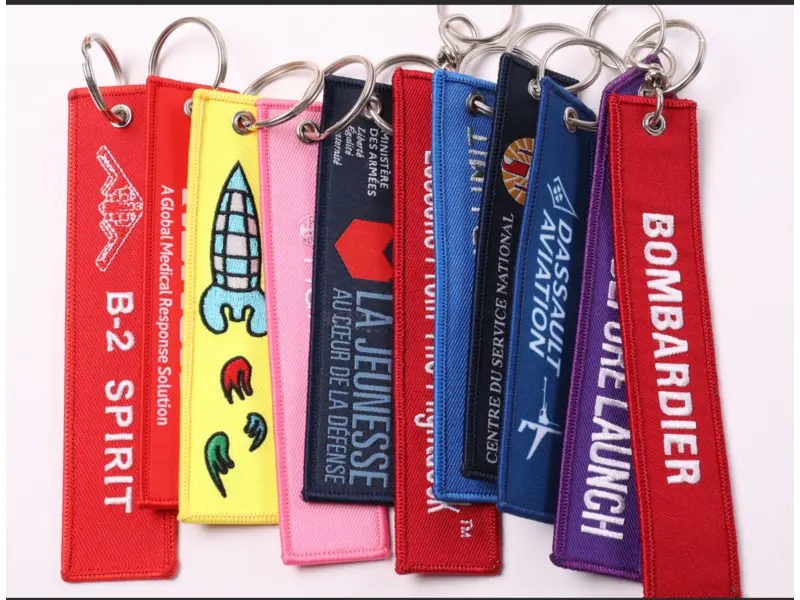
Manufacturing
Keychains run through our 7,000 m² facility in Guangzhou — embroidery, moulding, cutting, hardware assembly and packing — so the body, the ring and the strap stay under one production record instead of meeting in your warehouse.
One facility for artwork review, production, hardware assembly, inspection and packing.
Artwork, production, assembly, inspection and packing teams working from the same written specification.
The same floor produces embroidered keychains and embroidered lanyards beside the patch programmes.
Camera-guided contour cutting and clean edge finishing for the bodies that need a precise outline.
Computerized embroidery floor producing keychains, lanyards and patches from the same artwork records.
Moulding and cutting for PVC and rubber bodies, colour-matched against Pantone references.
Hardware assembly and inspection against the approved sample: ring closure, colour, size and quantity.
Quality control
Written down, because a keychain is three parts that have to look like one: a charm, a ring and a strap that all arrive matching.
How an order runs
Each stage has an owner and a record, which is why a reorder is faster than the first order.
Send the artwork with the intended size, quantity, body structure, hardware and packing. We check the smallest text, colour count and references, and confirm which structure reproduces the design.
The artwork is prepared for the process — embroidery file, mould drawing, weave or print — with colours set to your references, and a proof goes back for sign-off.
A physical sample is produced and sent for approval. Custom samples are quoted, and the approved sample becomes the production standard. Where conditions allow, a sample can be produced in about 2–3 days.
Approved work runs, then the body is finished and the hardware — ring, clip or webbing loop — is attached and closed against the specification.
Inspection against the approved sample, packing to your requirement, carton marks and export documentation before dispatch.
How we work, stage by stage Artwork requirements Lead times & rush orders
FAQ
Short answers to what buyers ask before sending artwork. Anything project-specific is confirmed in writing during review.
Vector artwork is ideal — AI, PDF, EPS or SVG with fonts outlined — and a high-resolution raster file also works. We review line weight, the smallest text, colour count, thread or Pantone references and the finish size before confirming the structure. If the design cannot hold at the size you need, we say so and recommend a different body structure or a larger size instead of producing something that cannot be read.
Each keychain type has its own standard MOQ, and for many custom items it starts at around 100 pieces. There is limited flexibility depending on the structure, the artwork and how the order is put together, and below the standard MOQ the unit price may increase. We confirm the figure for your specification during review rather than publishing one number for everything.
A split ring suits everyday keys and charms, a hook or clip suits bags and quick release, and a swivel suits lanyard-style or belt-loop designs where the charm should spin freely. We confirm the hardware on the spec sheet, and the closure is inspected because that is where a keychain fails first.
Colour matching is a stated inspection point, not goodwill: thread, webbing and hardware are matched to the reference you supply, and the approved sample becomes the benchmark for the bulk run and every reorder. That is how a charm, a strap and a ring arrive looking like one product.
Yes. Keychains are commonly ordered beside patches and labels, and the sets can be packed by piece or by set under one production record, with the same artwork versions and packing marks. That removes the work of reconciling two suppliers before your goods can go out.
Bulk production usually takes 7–12 days after artwork approval. Rush orders are confirmed case by case against production capacity, material, process, artwork status, sample requirements and shipping method, so we do not promise a rush date before those are checked. Where conditions allow, a sample can be produced in about 2–3 days and some bulk runs in 5–8 days.
Inspection depth follows risk: colour matching, logo proportion, small-text clarity, stitching and edge, PVC layering, hardware closure, strap attachment, size and weight, quantity and packing are all written checks, and high-risk or single-piece-defect orders can be inspected piece by piece. The approved sample is the standard in every case.
The approved sample, final artwork, colour references, materials, hardware and packing specification are kept with the project record. A reorder is then produced against that benchmark instead of being re-developed from scratch, which removes the most common cause of a second batch that does not quite match the first.
Keep exploring
Sub-categories go into the structure and specification of one keychain type; the procurement pages cover quoting, dates and artwork.
Page last updated
Direct factory collaboration
Include the placement, the size you have, the quantity, the structure and hardware you are considering, and the destination. We review the detail, recommend the keychain that holds it, and come back with a factory-direct quote — or tell you plainly if we are not the right factory for the job.