How to Choose Custom Brand Labels for Clothing, Hats and Bags
The right custom brand label depends first on where it will sit and what it must do. A main neck label identifies the brand when a customer picks up a garment. A small side-seam tab adds a visible detail without taking over the design. A printed care or content label carries information that must remain readable. An exterior PVC or leather label can turn a backpack or hat into recognizable merchandise.
These labels may share one logo, but they should not automatically share one size, material or construction. Before requesting a quote, map each label to its product, placement and job. That simple step prevents the familiar sampling conversation: “The logo looks great—but the folded label disappears into the seam.”
What jobs do the main label, side tag and exterior logo label perform?
Think of a label system as several small pieces with different responsibilities.
| Label position | Main job | Typical construction to consider | First detail to check |
|---|---|---|---|
| Inside neck or center back | Identify the brand on a garment | Soft woven main label | Comfort, readable logo and finished folded size |
| Inside side seam | Carry care, content or other product information | Printed information label | Legibility, approved wording and accessible placement |
| Outside side seam or hem | Add a visible, discreet brand signature | Folded woven tab | Which side faces out after sewing |
| Hat back strap or side | Brand a small, curved product area | Compact woven tab or suitable exterior label | Placement, fold and sewing access |
| Bag exterior | Make the mark visible during use | Woven, PVC/rubber or leather label | Attachment, wear area and base fabric |
The main brand label does not need to carry every word on the care label. Likewise, a tiny side tab should not be expected to reproduce a dense logo, a slogan and product information at once. Give each label one clear job before choosing its process.
Browse the custom brand labels range to see the available woven, printed, PVC/rubber and leather routes.
Should you choose a woven, embroidered, printed or PVC label?
Woven labels: for a textile brand mark
Custom woven labels are a natural starting point for neck labels, waistband labels, hem tabs and many hat labels. The logo is formed by woven threads, giving it a textile appearance that fits naturally into a sewn product.
A woven label can carry fine lines and compact lettering, but it still needs to be reviewed at its finished physical size. Ask for a sample showing the chosen weave, colors, fold and edge. A design that looks clear as a wide, flat artwork file may read differently after it is folded into a narrow neck seam.
Embroidered details: for texture, with enough space
Embroidery creates a raised stitched effect. It can work well on an exterior patch or a larger decorative mark where the stitching itself is part of the look. It is generally a different choice from a compact, text-heavy main label. If your small label must show several lines of fine type, compare a woven or printed sample before specifying embroidery.
Printed labels: for text and variable information
Printed labels are useful when the design contains long care instructions, fiber information, size details, barcodes or other text-heavy content. Printing may also suit artwork that relies on color effects that a woven structure cannot reproduce as intended.
Check the smallest text on the actual printed label, then test it through the intended care routine. The buyer should approve the information and its market-specific wording; the manufacturer should confirm that the chosen construction keeps it legible at the proposed size.
PVC and rubber labels: for an exterior molded mark
PVC and rubber labels suit bold exterior marks on bags, outdoor gear and selected apparel. Their molded surface can give a logo defined color areas and raised detail. They are usually a better fit for a visible brand symbol than for a soft label sitting against the neck.
Choose the label together with its attachment method. A good-looking molded logo still needs the right sewing area or other suitable construction for the actual bag or garment. If a softer heritage look fits the collection better, compare leather labels for exterior placement.
Where should labels go on clothing, hats and bags?
Clothing: separate inside information from outside branding
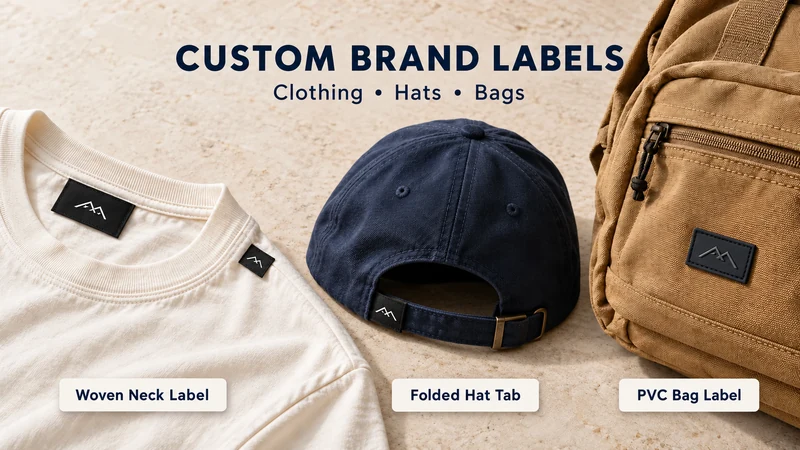
For a T-shirt or sweatshirt, a practical set might include a woven main label at the neck, a printed care and content label in an accessible interior position, and a small folded woven tab at the side seam. The outer tab can be subtle; it does not need to repeat every detail from the main label.
Consider how the garment feels when worn. A beautiful main label can still cause complaints if its edge rubs the neck or its fold creates a stiff corner. Sample it sewn into the actual garment, rather than approving a loose label alone.
Hats: work with the available space
A baseball cap has limited flat space, curved panels and seams. A small folded tab at the back strap or side may work better than reducing an elaborate main logo until nobody can read it. Check the proposed position on the finished cap, including how it looks when the strap is adjusted and how the label will be sewn.
Bags: check handling and attachment
A bag’s exterior label will meet hands, abrasion and sometimes rain. Place it where the mark is visible without interfering with a zipper, pocket or strap. A woven label can give a softer textile look; PVC or leather can create a more pronounced exterior mark. Review the bag fabric, lining and any coating before deciding how the label will be attached.
How do size, fold, edge and sewing position change the result?
These four details should appear on every label specification.
1. State both flat and finished size. “30 × 50 mm” can mean different things when a label is folded. Mark the artwork dimensions, full cut size and visible size after folding. Confirm which measurement the supplier is quoting.
2. Choose a fold that matches the seam. Center fold, end fold, loop or straight cut can each change how much of the logo remains visible. A side-seam tab needs the correct artwork orientation on the faces that show after sewing.
3. Review the edge against comfort and use. An inside neck label needs a different feel from an exterior bag patch. Check the cut or folded edges on a physical sample, especially where the label touches skin.
4. Show the sewing position. A labeled product photograph or a simple measurement from a seam is more useful than “place near the bottom.” Confirm how much space the production line needs to stitch the label without covering the artwork.
Do not judge a folded label only from a flat digital proof. Ask to see it folded and sewn in place before approving the bulk run. The artwork review stage is where orientation, smallest text and finished dimensions should be resolved.
How can small text and care information stay readable?
Start by deciding which information belongs on which label. Keep the main branding clear, and give a text-heavy care or content label enough space for the required copy. Avoid shrinking several lines of information merely to match the width of a small logo tab.
For every printed or woven information label, check:
- The exact approved wording for each product and target market.
- The smallest type at finished size, including any text near a fold or seam.
- Contrast between the text and background.
- Whether the label remains accessible after it is sewn into the item.
- Readability after the product’s intended washing and drying routine.
- Whether different sizes, materials or product versions need different information.
A brand logo label and a required product-information label are not automatically interchangeable. Labeling requirements depend on the product and sales market. Supply the approved content from your compliance team, and have the physical label checked for legibility and placement before bulk production.
How can one product line keep a consistent brand look?
Consistency does not mean making every label identical. It means keeping the recognizable parts of the brand while adapting the construction to the product.
For example, a clothing, hat and backpack collection could use the same simple mountain symbol and two approved brand colors:
- A woven neck label with the full brand name on the T-shirt.
- A small folded woven tab using the symbol alone on the cap.
- A molded PVC exterior label using the symbol on the backpack.
- A printed information label carrying the approved product-specific text inside the garment.
Approve a common logo file and color references, then create a separate specification for each label. Compare the finished items together under normal light. The colors and shapes should feel related even though thread, ink and molded PVC do not look exactly alike.
If packaging or additional brand accessories are part of the same launch, identify them in the project brief so artwork versions and packing instructions remain coordinated.
What should you send when ordering custom brand labels?
A useful RFQ should cover both the label and the product receiving it. Send:
- Product list: Clothing, hats, bags and each style or SKU that needs a label.
- Label purpose and placement: Main label, side tab, care label or exterior logo.
- Artwork: Logo files, approved wording and color references.
- Measurements: Flat size, folded size and visible area, where applicable.
- Construction: Woven, printed, PVC/rubber or another requested material.
- Fold and edge: The intended fold, cut and finishing method.
- Attachment: Sewn into a seam, sewn flat or supplied loose for your production line.
- Quantity: Total units and the split by design, size, color or information version.
- Product reference: Photos, measurements or samples of the actual garment, hat or bag.
- Care and packing: Intended washing conditions, how labels should be grouped and the required delivery date.
If you are choosing between two constructions, request a sample of each at the same finished size. The sample approval process should capture the fold, color, wording, placement and attachment that bulk production must follow.
FAQ
What is the difference between a main label and a care label?
A main label primarily identifies the brand. A care or content label carries product information. They can be separate labels, or a project may combine information where the construction and applicable requirements allow. Decide the content and placement for each product and sales market.
Are woven labels suitable for small logos?
Often, yes, but the result depends on the logo’s fine lines, letter shapes, color separation and finished size. Ask for a sample at the actual dimensions, especially for a narrow hat or side-seam label.
Should I use a PVC label on a T-shirt neck?
A molded PVC label is usually considered for an exterior brand mark rather than a soft neck-contact label. Review comfort, placement and attachment on the actual garment before choosing it.
Which label is best for a backpack?
It depends on the desired look and the bag construction. Woven offers a textile appearance, while PVC or leather can make a more pronounced exterior mark. Check the placement, fabric, lining and attachment method before approving a sample.
Can the same artwork be used on woven, printed and PVC labels?
The original logo can guide all three, but each process may need its own production artwork. Fine lines, color boundaries, smallest text and relief must be reviewed for the chosen material and finished size.
Do I need to specify the fold in my purchase order?
Yes. Include the fold type, artwork orientation, flat dimensions and visible dimensions after folding. Otherwise, two suppliers can quote apparently identical labels that look different once sewn.
What should I approve before a bulk order?
Approve the physical label and, when possible, a label attached to the real product. Check artwork, color, size, fold, edge, readability, placement, care performance and packing instructions against the final specification.
Planning labels for a new collection? Send LOVECOLOUR your artwork, product photos, label positions and quantities. We can review the construction for each placement and prepare a sample plan before bulk production.